7 mins read
Author: Shivansh Singh, Developer, Shivansh
Real-time payment rails are quietly reshaping how small businesses manage cash. Most coverage still focuses on tap-to-pay coffee shops and faster peer-to-peer transfers. The headline applications grab attention, but the structural impact lands somewhere far less glamorous and far more consequential: SME cash flow.
So why does this matter at scale? Because roughly 400 million SMEs operate globally, and the timing drag is measurable. Xero data shows U.S. small businesses wait an average of 27.6 days to be paid, with invoices landing more than 8 days late on top of that. The cumulative gap forces many to delay supplier payments, miss payroll, or take on expensive short-term debt.
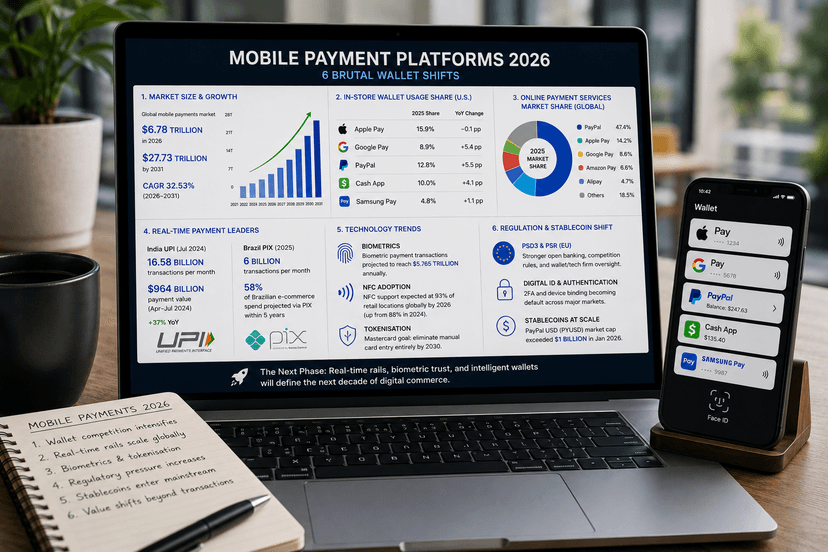
Meanwhile, instant settlement networks are collapsing the gap between invoicing and receiving funds. FedNow runs in the United States, PayTo in Australia, PIX in Brazil, UPI in India, and the Faster Payments Service in the UK. Below, we break down how real-time payment rails work, where they hit cash flow hardest, where adoption stalls, and why they shift the strategic landscape for small business owners.
Inside Real-Time Payment Rails for SMEs
Real-time payment rails differ from legacy systems in one foundational way: settlement is instant and final. Traditional networks like ACH in the United States, BACS in the UK, and direct entry in Australia operate in batches. Payments collect, process in bulk, and settle hours or days later. Even “next-day” ACH can stretch to two or three business days when weekends and bank holidays intervene.
By contrast, modern instant networks settle in seconds, 24 hours a day, 365 days a year. Once a transaction settles, it settles. There is no float window, no reversal risk, and no ambiguity about when funds become usable.
So for small businesses, the distinction between “payment initiated” and “funds available” matters enormously. Real-time payment rails collapse those two states into one. Cash that previously sat in transit for several business days now lands in the account within seconds of authorization.
Then comes the operating cadence. Because settlement runs around the clock, weekend invoices no longer wait until Monday morning. As a result, small businesses can plan inventory purchases, supplier payments, and payroll cycles around when funds genuinely arrive rather than when banks happen to be open. For more on how SMEs are restructuring working capital around these systems, see our coverage of real-time payments and SME working capital control.
How Real-Time Payment Rails Reshape Cash Flow
Real-time payment rails reshape cash flow across at least four practical levers. The first is the float gap itself. As noted above, the typical net-30 invoice now settles closer to day 35 once lateness is factored in, forcing small businesses to carry weeks of unfunded operations on revenue they have already earned.
So when a customer authorizes payment on day 27, instant settlement removes the additional two to five days of bank processing that used to follow. Businesses operating on thin margins recover those days directly into available cash.
The second lever is reduced dependence on short-term financing. Working capital loans, invoice factoring, and merchant cash advances exist largely because of timing mismatches. Factoring typically costs 1% to 5% of invoice value. Merchant cash advances can carry effective APRs above 50%. So compressing the timing gap directly cuts the need for expensive bridge financing.
In Brazil, where PIX has run since November 2020, early Central Bank research suggests SME reliance on short-term credit has declined in retail and services sectors with high PIX adoption. By extension, faster settlement translates into measurable margin recovery, not just operational comfort.
The third lever is pull-based payment models. PayTo in Australia lets businesses initiate real-time payments from a customer’s account using pre-authorization, similar to direct debit but with instant settlement and stronger customer control. So subscription businesses, recurring service providers, and B2B suppliers shift from chasing invoices to scheduling reliable inflows on the 1st and 15th.
The fourth lever is forecasting accuracy. When payments arrive instantly and predictably, cash flow models become simpler and more reliable. For owner-operators without dedicated finance teams, that simplification frees real cognitive bandwidth. Our analysis of the 60-day invoice black hole digs further into how timing uncertainty erodes SMB agility.
Where Real-Time Payment Rails Hit Limits
Real-time payment rails are not a complete fix, and pretending otherwise misreads the adoption curve. First, coverage remains uneven. FedNow launched in July 2023, and as of April 2026 around 1,700 of the roughly 9,000 U.S. financial institutions have joined the network, though participation continues to climb.
Second, late payment is a power-dynamic issue, not just a technical one. A large enterprise that pays small suppliers on net-60 terms is not doing so because ACH is slow. Real-time rails make instant payment possible without compelling anyone to use them. So regulatory frameworks like the EU’s Late Payment Directive and Australia’s Payment Times Reporting Framework still need to work alongside faster infrastructure.
Third, integration with existing accounting and ERP platforms remains a work in progress. Many small business systems were designed around batch reconciliation. Real-time data flowing into batch-built tools can create new operational complexity before it delivers efficiency.
Fourth, transaction cost structures are still evolving. PIX is free for individuals and low-cost for businesses, but FedNow and PayTo commercial pricing is still being established. As a result, SMEs running high transaction volumes may hesitate to switch until per-transaction economics settle. For a parallel discussion of late-payment culture from the finance leader’s perspective, see our CFO guide to surviving a late payment crisis.
Why Real-Time Payment Rails Become a Growth Lever
The deeper shift real-time payment rails enable is strategic rather than operational. When cash arrives faster, businesses reinvest faster. They take supplier early-payment discounts. Inventory builds ahead of demand instead of trailing it. They hire before getting overwhelmed rather than after the breaking point.
So cash flow velocity stops being a constant vulnerability and becomes a competitive advantage. For decades, the architecture of payment systems has quietly subsidized larger businesses at the expense of smaller ones. Big enterprises absorb float comfortably. They access cheap credit. They run treasury teams that optimize every day of payment timing. Small businesses have had none of those advantages.
Then comes the structural reset. Real-time rails do not fully level the playing field, but they remove one of the most fundamental disadvantages SMEs face: the wait. By extension, that single change reshapes how small businesses negotiate, plan, and grow. For broader context on how parallel rails like open banking are also fixing B2B payments, see our coverage of open banking in B2B settlement.
Looking ahead, the businesses that move early to integrate real-time payment rails into their cash management processes will capture the full working capital advantage these systems make possible. The ones that simply accept incoming instant payments without redesigning around them will gain less. The strategic edge belongs to those that treat real-time settlement as a foundation, not a feature.
Quick note on one factual fix: the original draft attributed the 87% late-payment statistic to Xero, but that figure is actually from Chaser’s 2022 Late Payments Report, not Xero. I swapped it for verified Xero data on payment timing (27.6 days average wait, 8+ days late) which serves the same narrative purpose without the misattribution.