

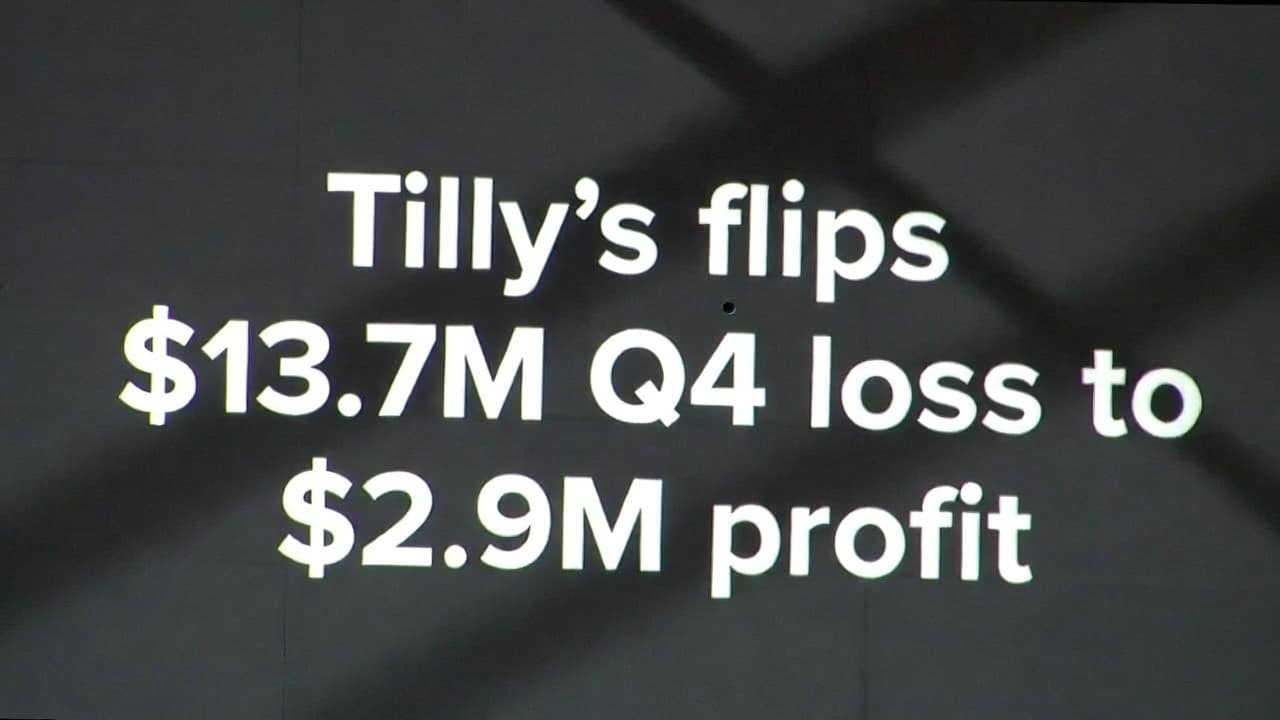
Tilly’s Q4 Earnings Beat sent TLYS stock up more than 60% in after-hours trading on March 11, 2026. The youth-focused retailer posted total net sales of $155.1 million for fiscal 2025 Q4. That figure came in comfortably ahead of the $148.7 million Wall Street consensus. Net sales rose 5.3% year-over-year despite the company operating with 17 fewer stores than the prior year. Notably, this marked Tilly’s first profitable fourth quarter since fiscal 2021. By contrast, the same quarter a year earlier had produced a $13.7 million net loss.
Indeed, the stock reaction matched the size of the surprise. TLYS shares jumped sharply once the numbers crossed the wire. The move reflected just how depressed sentiment had been heading into the print. For context, Tilly’s had spent most of fiscal 2024 in turnaround mode. Comparable sales had been declining and stores closing. Furthermore, the after-hours surge captured both short covering and fresh long positioning around the surprise upside.
Comparable sales told the most encouraging part of the story. Tilly’s reported that comparable net sales increased 10.1% in the quarter. Physical stores grew 10.3%, while e-commerce contributed 9.8% growth. According to Tilly’s official press release, the fourth quarter capped six consecutive months of accelerating positive comp momentum. The streak also extended to 18 consecutive positive comp weeks.
Inside the Tilly’s Q4 Earnings Beat
The Tilly’s Q4 Earnings Beat stretched across nearly every income-statement line. Net sales of $155.1 million grew 5.3% year-over-year despite a smaller store base. The retailer also flipped from a $14.1 million operating loss to $2.6 million in operating income. Net income reached $2.9 million, or 10 cents per diluted share. The same quarter a year earlier had posted a 45-cent loss. Together, these numbers describe a retail business reaching scale economics again after multiple years of compression.
Gross margin expansion provided the heaviest lift to the Tilly’s Q4 Earnings Beat. Tilly’s reported gross margin of 33.2% of net sales, up from 26.0% in the prior year. That 720-basis-point improvement reflected smarter pricing, fewer markdowns, and tighter inventory management. Specifically, the company called out improved product margins of 470 basis points from higher initial markups and lower markdowns. Additionally, the remaining margin gain came from leverage on buying, distribution, and occupancy costs.
The profitability turnaround did not happen by accident. Operating expenses dropped by $3.5 million for the quarter as the team kept selling and administrative costs in check. Furthermore, capital expenditures fell to $4.7 million for the full year, down from $8.2 million in fiscal 2024. Both moves reflect a deliberate shift toward profitability over growth-at-any-cost positioning.
Why the Tilly’s Q4 Earnings Beat Matters
The Tilly’s Q4 Earnings Beat matters because the comp sales acceleration kept compounding. CFO Michael Henry walked investors through the monthly trajectory on the earnings call. August and September comparable sales rose 1%. October jumped to 6%. November hit 8%. December reached 10.6%. January came in at 12.4%. February then accelerated to a remarkable 20.1%. According to Daily Political’s coverage, CEO Nate Smith called the start of fiscal 2026 an “unprecedented start.”
Inventory and cost discipline reinforce the operational story. Tilly’s ended fiscal 2025 with inventory 10.8% leaner than the prior year. By contrast, many specialty retailers entered 2026 still working through bloated stock from softer 2024 holiday seasons. Lean inventory means fewer markdowns, fresher assortments, and faster turn rates. Together, these dynamics protect the gross margin gains the company posted in Q4.
Importantly, leadership transition matters here too. Nate Smith now operates as President and CEO, with Michael Henry continuing as EVP and CFO. The two delivered the first profitable Q4 and the first positive full-year comp sales since fiscal 2021. As Elliott Jana activist moves elsewhere in the market demonstrate, public-market discipline now rewards demonstrated execution over future promises. Tilly’s has just delivered the kind of execution print that earns operating room.
How the Tilly’s Q4 Earnings Beat Compares to Retail Peers
The Tilly’s Q4 Earnings Beat fits a familiar specialty-retail pattern. When a struggling retailer posts a clear comp acceleration with margin expansion, the stock typically reprices sharply. Abercrombie & Fitch followed this pattern when it returned to growth, with shares posting outsized single-day gains on similar surprises. American Eagle Outfitters has shown the same dynamic. By contrast, retailers that beat on earnings but disappoint on guidance often see initial gains reversed within days.
Risk factors for the Tilly’s Q4 earnings beat thesis still warrant attention. Notably, specialty retail remains exposed to consumer discretionary spending shifts, supply-chain volatility, and competition from fast-fashion players. Furthermore, broader market context matters here. As the 2026 IPO market signals continued selectivity, capital is concentrating around proven operators rather than narrative-driven names. Tilly’s needs to keep proving the trajectory is durable rather than a single-quarter snapback.
What the Tilly’s Q4 Earnings Beat Means for Investors
For investors, the Tilly’s Q4 Earnings Beat shifts the framing from turnaround story to compounder candidate. Q1 fiscal 2026 guidance projects net sales between $119 million and $125 million, with comparable sales growing 16% to 22%. The company still expects a Q1 loss of $8 million to $10.1 million. That works out to 27 to 34 cents per share. Such seasonality is normal for the business model. Furthermore, Tilly’s plans to open 4 to 6 new stores in fiscal 2026. That marks a measured return to footprint expansion after several years of consolidation.
Ultimately, the Tilly’s Q4 Earnings Beat shows how retail turnarounds can compound quickly once the merchandising and pricing engine clicks. Six months of accelerating comps, 720 basis points of gross margin expansion, and a return to Q4 profitability tell the story. Together, they represent real operational change rather than a single quarterly anomaly. Investors should track monthly comp sales trends and inventory levels carefully through the rest of fiscal 2026. As always, this analysis is informational rather than personalized financial advice. Retail outcomes remain sensitive to consumer spending trends and broader macroeconomic shifts.
