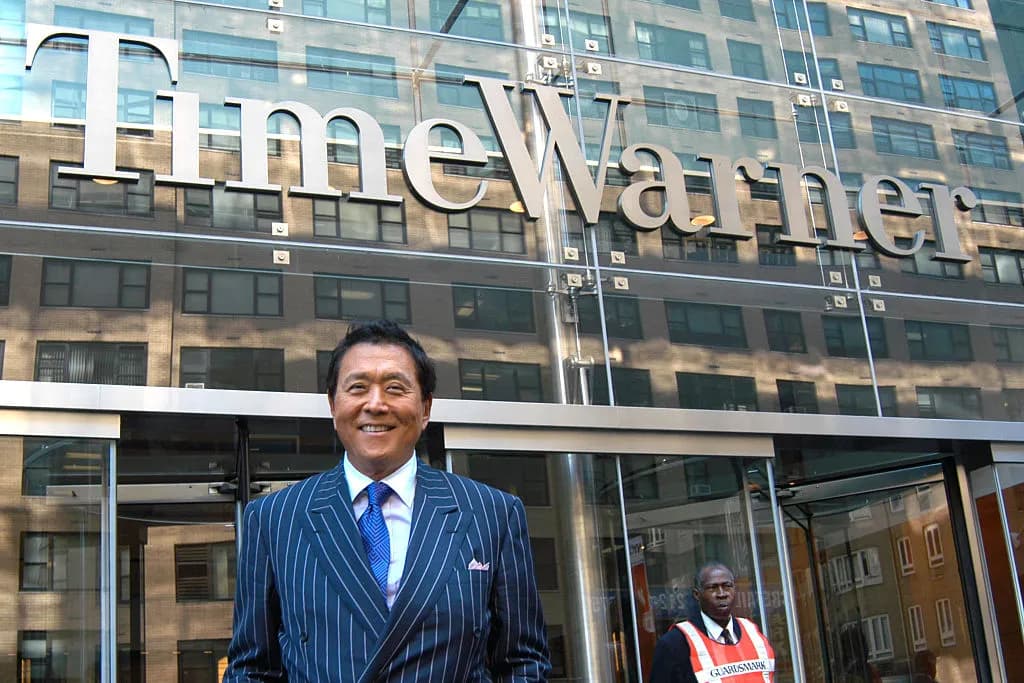
The Kiyosaki embrace failure mantra at the heart of Rich Dad Poor Dad has become the through-line of Robert Kiyosaki’s personal finance philosophy. The argument is straightforward: fear of failure stops most people from building wealth, and the Kiyosaki embrace failure framing reframes mistakes as the most valuable lessons available to entrepreneurs and investors.
According to Money, Kiyosaki captures the view as “failing boldly and rising rich,” a position he has pushed for nearly three decades since the 1997 release of Rich Dad Poor Dad, which has now sold more than 32 million copies worldwide.
How fear of failure blocks wealth-building
Kiyosaki argues that the apprehension of failure traps people in three predictable ways. It keeps them in dead-end jobs they would otherwise leave. It deters them from launching a business of their own. It also pushes them away from investing, because the prospect of losing money feels worse than the upside of gains feels good.
That last point lines up with decades of behavioral finance research. As Morgan Stanley explains, loss aversion describes how investors weigh losses as more painful than equivalent gains feel pleasurable, often leading them to take too little risk over time. Daniel Kahneman and Amos Tversky’s prospect theory pegged the ratio at roughly two to one, meaning the pain of a $100 loss feels close to the pleasure of a $200 gain.
This asymmetry has practical consequences. It pushes investors to sit in cash longer than their plan calls for, to hold losing positions hoping for a rebound, and to skip retirement contributions during volatile periods. Whether or not a reader buys the broader Kiyosaki worldview, the underlying psychology he targets is well documented. Disciplined investing approaches like those covered in Bogle’s investment strategies on FintechBits help counteract those tendencies through structure, diversification, and time in the market.
Reframing mistakes as financial education
The Kiyosaki embrace failure framework rejects the school-yard view that mistakes warrant punishment. In its place, Kiyosaki positions every error as a piece of education that no textbook could deliver, because the lesson is paid for in real consequences and real money. Each failed venture, missed trade, or budget that fell apart becomes an input into a refined strategy the next time around.
The practical implication is iteration. Adjust the budget after a month that overshot. Revisit the asset allocation after a downturn that exposed too much concentration. Note the cost of a delayed retirement contribution and decide whether to backfill it. None of these are dramatic moves, but the Kiyosaki embrace failure posture argues they compound over years into a meaningful financial foundation.
Why age does not limit the Kiyosaki embrace failure path
Kiyosaki also pushes hard against the idea that wealth-building has an expiration date. Whether someone wants to start a business at 30 or pivot into investing at 60, the principle is the same. Past mistakes are not disqualifying. They are tuition already paid.
People later in their working lives carry built-in wisdom about how money flows through their hands, what spending patterns look like under stress, and which investment products oversold themselves. The Kiyosaki embrace failure thesis treats that accumulated insight as an asset, one a younger first-time investor still has to acquire the hard way.
Late-stage starts are also more common than the popular wealth-building narrative suggests. A 2018 study from MIT, the U.S. Census Bureau, and Northwestern found that the average age of a successful startup founder in the United States is around 45, and that founders in their 50s are nearly twice as likely to launch a top-performing company as those in their 30s. The data cuts against the assumption that wealth-building windows close after a certain age.
Where the Kiyosaki embrace failure thinking has limits
The track record matters when assessing any financial commentator, and Kiyosaki’s is mixed. As Medium’s Coping with Capitalism noted, Kiyosaki has called for the next “biggest crash in history” repeatedly over more than two decades, with several predictions that never arrived on schedule. His company Rich Global LLC filed for bankruptcy in 2012. Followers who sat on the sidelines waiting for one of the called crashes missed substantial market gains.
That history does not invalidate the Kiyosaki embrace failure mindset on its own terms, but it does argue for caution. Bold action and prudent diversification are not opposites. Most personal finance professionals would frame the takeaway this way: take the psychological lesson about reframing fear, but pair it with conventional risk management rather than concentrated bets driven by macro forecasts.
Kiyosaki embrace failure applied to 2026 markets
Kiyosaki’s recent commentary leans heavily on what he calls real assets. As TheStreet reports, his current shortlist runs gold, silver, oil, food, Bitcoin, and Ethereum, with the rationale that scarcity beats inflation and money printing over long horizons. Earlier in 2026, he warned of a major stock market downturn driven by debt and geopolitics, framing any dip as a buying opportunity for the prepared, according to Business Today.
These calls are exactly the kind of concentrated, contrarian positions that benefit from the bold half of “fail boldly, rise rich.” They also carry the volatility risk that critics regularly flag. Anyone applying this lens to current markets needs to weigh both halves honestly. None of the above is investment advice.
Practical applications of the Kiyosaki embrace failure mindset
For most readers, the mindset is more useful than the asset picks. Common setbacks include selling a stock just before it surged, delaying retirement contributions out of caution, or misjudging how much cash flow a side venture would generate. Coverage of Buffett’s recent caution to investors against costly mistakes on FintechBits underlines that even seasoned operators face the same recurring traps.
The lesson is to convert each mistake into a question. What did the budget assume that turned out to be wrong? Which behavioral bias drove the trade? Tools that lower the entry bar to fiduciary financial guidance, such as the platform covered in Astor’s $5M seed funding to democratize investment advice, have made it easier for retail investors to apply that kind of structured reflection without paying for traditional advisor minimums.
The Kiyosaki embrace failure principle works best as an attitude that sits underneath a broader financial plan, not as a substitute for one. Reframe fear, learn from each error, and keep moving. Wealth-building rewards the people who stay in the game.