6 mins read
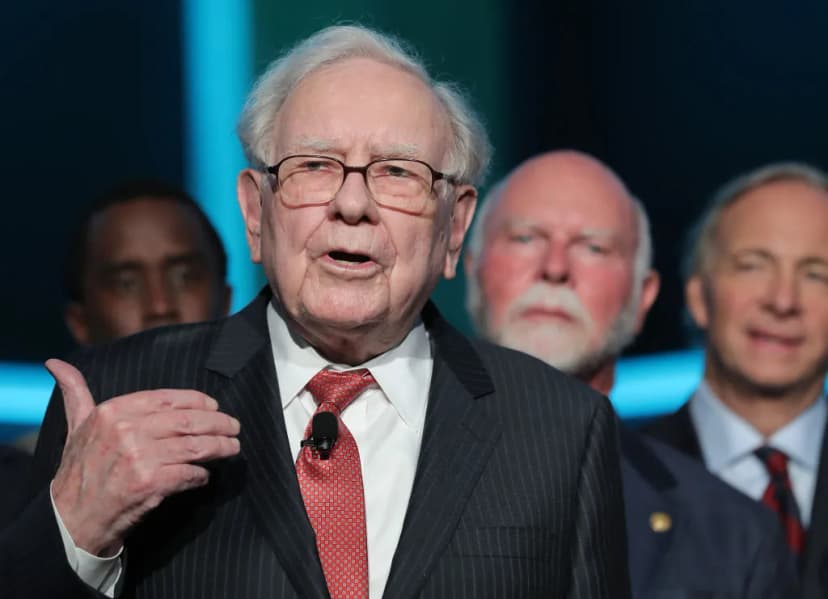
The Buffett costly mistake at the top of his advice list is letting emotions drive investment decisions. Warren Buffett has built a 60-year track record at Berkshire Hathaway by treating that single discipline as the foundation under everything else, and the Buffett costly mistake warning carries extra weight in 2026 as markets sit at all-time highs and his cash pile hits records.
Buffett stepped down as Berkshire’s CEO at the end of 2025, with Greg Abel taking the operational reins in January 2026. He remains chairman, and the investing principles that drove Berkshire’s compound annual growth of nearly 20 percent over six decades are still the lens he applies in his letters and interviews.
The Buffett costly mistake at the heart of bad investing
The mistake takes two predictable forms. During market downturns, fear of further losses pushes investors to sell at the bottom and lock in damage. During strong bull markets, the fear of missing out pulls them into rapidly rising assets that lack solid fundamentals. Both moves get treated as prudent risk management at the moment they happen, and both routinely look like errors a year later.
As Behavioral Edge reports, Buffett frames the discipline as checking emotions at the door before investing. The point is not that good investors feel nothing during volatility. It is that they refuse to let those feelings drive transaction decisions. The Buffett costly mistake is treating an emotional reading of the market as new information that should change a long-term plan.
Fintechbits analysis
Why the Buffett costly mistake hits investors over 50 hardest
The damage is asymmetric across age groups. A 30-year-old who panic-sells during a 30 percent drawdown still has decades for compounding to make the lost ground irrelevant. A 60-year-old who does the same may be locking in a permanently smaller retirement.
Investors approaching retirement with substantial savings, particularly those who have crossed the $1 million mark, feel both faces of this trap more acutely. A poorly timed sale during a downturn can force later retirement, reduced annual spending, or both. A late-stage chase into a frothy sector can erase years of careful saving in a single correction. The math of recovery time, not just returns, is what changes the cost calculation as the retirement runway shortens.
The “be greedy when others are fearful” framework
Buffett’s most-quoted line, coined in his 1986 letter, captures the contrarian discipline behind the warning. The point is to lean against the crowd when the crowd is most confident in either direction. As The Motley Fool details, Berkshire has now been a net seller of stocks for 12 consecutive quarters, the longest such streak of his tenure, and is sitting on roughly $382 billion in cash and short-term Treasuries.
That posture is not panic. Berkshire still holds more than 40 stocks worth over $300 billion, including long-term positions like American Express and Coca-Cola. The lesson for retail investors is to apply the same criteria-based filter Buffett applies, sell positions where conviction has weakened, and hold the ones backed by durable competitive advantages. Avoiding this trap does not mean sitting out the market. It means refusing to react to it.
The Buffett costly mistake meets a frothy 2026 market
The setup for 2026 is unusually testing. The S&P 500 has spent recent months near record highs, AI valuations remain stretched, and the so-called Buffett Indicator has moved well above the levels that preceded the 2022 correction. As TrustScoreFX summarises, Buffett has cautioned investors against debt-driven equity exposure and concentrations built on speculative valuations rather than business fundamentals.
His February 2025 letter included the line that “often, nothing looks compelling,” a candid signal that the conditions for high-conviction buying are absent at current valuations. The relevance of the Buffett costly mistake framing rises in environments like this, where FOMO is the dominant emotion across both retail and professional flows. As The Globe and Mail covered in detail, the cash pile is the public record of that posture.
Practical steps to avoid the Buffett costly mistake
The translation into individual practice is straightforward. Long-term investors should focus on businesses with durable advantages they would be content to hold for ten years or more. Low-cost index funds remain Buffett’s standing recommendation for the vast majority of retail investors who do not want to pick individual stocks, because they sidestep most of the behavioural traps that drive emotional decision-making.
Pre-retirees benefit from gradually shifting allocation toward lower-risk assets as the retirement date approaches. Those already in or near retirement often run an income strategy built on dividend-paying stocks and bonds, paired with a cash reserve covering one to two years of living expenses. As covered in the FintechBits roundup of top high-yield savings accounts for 2026, competitive APYs of 4 percent or more make that reserve productive rather than dead weight. The disciplined index-and-hold approach laid out in Bogle’s investment strategy guidance pairs naturally with the Buffett framework on costs, time horizon, and emotional control.
Why avoiding the Buffett costly mistake compounds over time
The numbers behind Buffett’s career make the case better than any single quote can. Berkshire’s roughly 20 percent compound annual growth rate over 60 years, against the S&P 500’s roughly 10 percent, is the result of getting a small number of large decisions right and refusing to give back the gains through emotional churn. The Buffett costly mistake lens treats temperament rather than IQ as the durable competitive advantage in investing.
For retail investors, the modern toolkit makes that discipline easier to maintain than it has ever been. Platforms like the one covered in Astor’s $5M seed round to democratize investment advice bring fiduciary, AI-assisted guidance to portfolios that previously had no access to it.
None of the above is investment advice. The honest takeaway is that the Buffett costly mistake principle, treat emotional reactions as noise rather than signal, holds up better than any specific market call. Markets will keep moving. The investors who avoid the costly mistake are the ones still in the game when the next opportunity arrives.