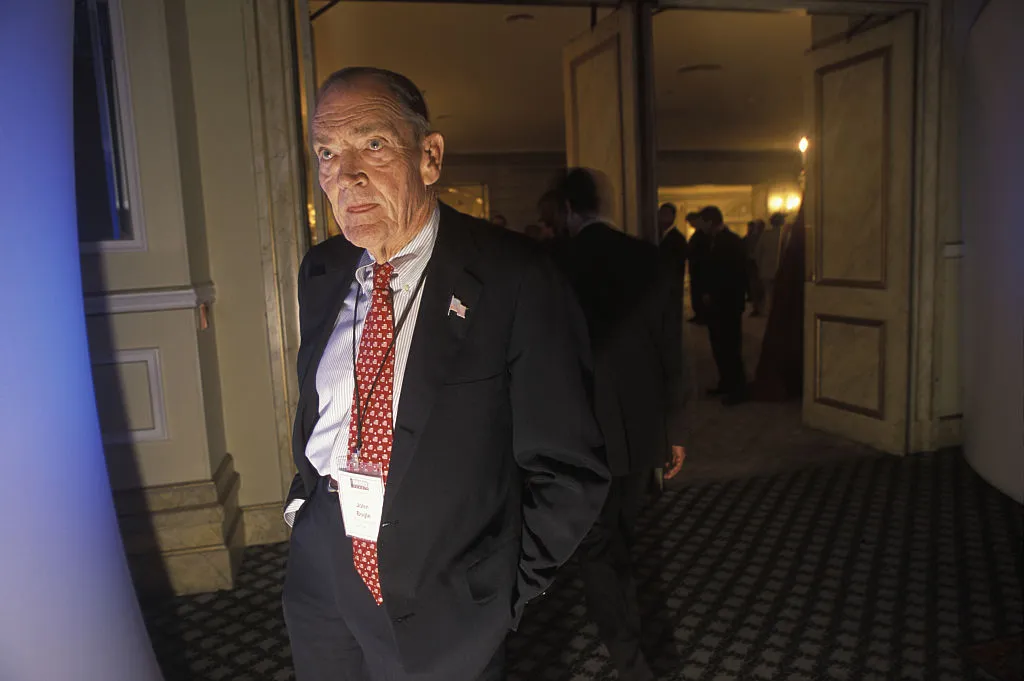
The Bogle investment strategies pioneered by Vanguard founder Jack Bogle remain among the most reliable playbooks available to retirement savers, particularly those over 50 looking to make the most of their final working decades. The three-part framework of minimizing fees, staying invested, and maximizing contributions is straightforward enough to follow without an advisor, yet powerful enough to add tens of thousands to a portfolio over a working career.
Bogle, who founded Vanguard in 1975 and passed away in 2019, built his legacy on the argument that costs and patience matter more than stock picking. The Bogle investment strategies that flowed from that argument shaped how millions of households now think about retirement.
Cut fees first
The cheapest way to improve investment returns is to stop paying for them to be eroded. Bogle was the architect of low-cost index funds tracking benchmarks like the S&P 500, with several major index funds now running at expense ratios below 0.10 percent. On a $10,000 investment, that is less than $10 a year in fees.
Actively managed mutual funds, by contrast, often charge expense ratios near 1 percent, or roughly $100 a year on the same $10,000 investment. On a $250,000 portfolio held over twenty years, the gap between a 0.10 percent and a 1 percent expense ratio compounds into tens of thousands of dollars of forgone returns. The math behind that compounding is the most underappreciated element of the Bogle investment strategies.
The fee discipline also becomes more important as portfolio size grows. A 1 percent fee on a $1 million portfolio is $10,000 a year, every year, in perpetuity. The same dollar amount could fund a meaningful share of retirement spending instead of flowing to a fund manager whose net-of-fee performance often trails the index.
Stay invested for the long haul
The second pillar of the Bogle investment strategies is the discipline to hold positions through volatility rather than trying to time entries and exits. Most retail investors lack the time, data, and emotional reserve to reliably outperform the broader market through individual stock selection. Index funds and ETFs sidestep that problem by delivering broad market exposure without the cognitive load.
Bogle was also blunt about the cost of trend chasing. Sectors that surge in a given cycle, such as electric vehicle stocks during the pandemic-era boom, often give back much of those gains in the following correction. Investors who entered late and sold during the drawdown frequently locked in the worst possible outcome. This is the same temperament-over-IQ argument captured in coverage of Buffett’s costly mistake to avoid in 2026 markets on FintechBits, where emotional reactions are framed as the dominant drag on retail performance.
The practical translation is automation. Set up automatic monthly contributions and an annual rebalancing schedule, then leave the portfolio alone. Time in the market beats timing the market in nearly every long-horizon study.
Maximize 2026 catch-up contributions
The third leg of the framework is uniquely valuable for investors in their 50s and 60s. As the IRS confirmed in Notice 2025-67, the 2026 contribution limits rose meaningfully across the major retirement vehicles. The 401(k) employee contribution limit is now $24,500, up from $23,500 in 2025. The IRA limit moved to $7,500 from $7,000.
Workers aged 50 and over can stack catch-up contributions on top. The 401(k) catch-up rose to $8,000, lifting the total annual cap to $32,500. The IRA catch-up rose to $1,100, taking that ceiling to $8,600. Workers aged 60 to 63 retain access to the SECURE 2.0 super catch-up of $11,250, pushing the combined 401(k) total to $35,750.
One change matters for higher earners. Starting January 1, 2026, employees who earned $150,000 or more in 2025 must make their catch-up contributions on a Roth basis rather than pre-tax. As Charles Schwab details, that requirement only applies to employer-sponsored plans, not IRAs, but it changes the tax treatment of those final-stretch dollars and warrants a check-in with payroll. Pairing the higher caps with the fee discipline at the heart of the Bogle investment strategies is what compounds the most over a 10 to 15-year retirement runway.
Why the Bogle investment strategies matter more in 2026
Markets entered 2026 sitting near record highs with AI valuations stretched and the so-called Buffett Indicator above the levels that preceded the 2022 correction. As Mercer Advisors noted in its commentary on the new limits, savers benefit from planning allocations early so they capture the full benefit of the increased deferrals before market conditions force harder choices.
Industry voices have echoed the point. As Fox Business reported, Lisa Featherngill, national director of strategic wealth and business advisory at Comerica Wealth Management, framed the higher 2026 caps as added breathing room for savers facing longer and more expensive retirements. The point lands harder when the Bogle investment strategies are layered on top, because each additional dollar contributed at low cost compounds over the runway that remains.
The temptation in frothy environments is to chase whatever sector is leading. The Bogle investment strategies lean explicitly against that pull. They also leave room for a healthy cash component: as covered in the FintechBits roundup of top high-yield savings accounts for 2026 investors, competitive APYs near 4 to 5 percent now make a one-to-two-year cash buffer productive rather than dead weight.
Modern tools amplify Bogle investment strategies
The democratization of low-cost index funds was Bogle’s defining contribution. Today’s tools extend that reach further. Robo-advisors and AI-native platforms apply the same fee-conscious, hold-the-line discipline to portfolios that would once have required a human advisor with a $500,000 minimum. The Bogle investment strategies scale naturally onto these rails.
Astor’s $5 million seed round to democratize investment advice is a recent example, with a fiduciary AI agent giving retail investors structured guidance on holdings, risk, and diversification. As Fidelity walks through in its 2026 401(k) primer, the toolkit for translating Bogle’s philosophy into action has never been more accessible.
None of the above is investment advice. The honest takeaway is that the Bogle investment strategies continue to age well because they ask very little of the investor beyond patience and a willingness to leave their portfolio alone. For savers in their 50s, the 2026 contribution