

The Iraq fintech ecosystem in 2026 is a story of gradual reconstruction rather than overnight transformation. After years of conflict, institutional fragmentation, and dependence on oil revenues, the country is leaning on digital financial services to widen inclusion, improve transparency, and modernize its economy. The biggest near-term forcing function is the Central Bank of Iraq’s mandate that all government payments move to electronic channels by July 2026, a deadline already reshaping how every financial institution and fintech in the country plans for the year.
This is the through-line that defines the country’s digital finance shift today: a state-led push, a small but growing private sector of payment specialists, and a deep cash-reliance problem that still has to be solved one user at a time.
The macro context for the Iraq fintech ecosystem
Iraq’s economy continues to lean heavily on hydrocarbons, with oil generating over 90 percent of government revenue and export earnings. GDP per capita stands at roughly $6,500, a number that reflects resource wealth alongside uneven development and persistent unemployment. Internet penetration sits near 75 percent and mobile penetration above 90 percent, giving fintech a usable base layer to build on even where banking infrastructure is thin.
Financial inclusion remains the key constraint. World Bank figures put formal bank account access among adults at about 30 percent, one of the lowest rates in the region. International institutions have framed digitization as a governance lever, a tool to widen participation, formalize the economy, and curb leakage. That framing matches what digital finance is now being asked to deliver in practice.
How Baghdad anchors the Iraq fintech ecosystem
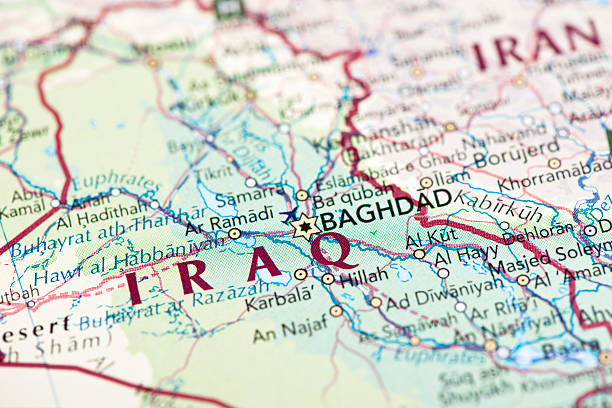
Baghdad serves as the financial nucleus, hosting the Central Bank of Iraq alongside the country’s largest financial institutions. Roughly 85 percent of total banking assets sit with state-owned entities, led by Rafidain Bank, Rasheed Bank, and the Trade Bank of Iraq. That concentration shapes how reform happens: change tends to flow top-down through the CBI rather than bottom-up through startups.
The historical baseline is cash-heavy and informal. Limited branch networks, low trust in institutions, and a strong informal economy long kept formal finance out of reach for most households. The Iraq fintech ecosystem began breaking that pattern when the CBI authorized mobile wallets in 2016, with ZainCash and AsiaHawala among the first licensees. Adoption accelerated during the pandemic as government disbursements moved to electronic rails, and the volume curve has continued upward since.
Five CBI pillars driving the Iraq fintech ecosystem
The CBI’s reform agenda runs across five reinforcing tracks. The first is electronic payment expansion through POS systems, digital wallets, and merchant acceptance, aimed squarely at reducing cash dependency. The second is salary digitization, with government wages and pensions increasingly routed through electronic channels for transparency and to widen banking touchpoints. The third is tighter regulation of payment service providers, with stronger licensing and oversight creating a more structured operating environment.
The fourth track is the national financial inclusion strategy, which expands access to banking services and digital payments through a coordinated public-sector approach. The fifth is the early-stage exploration of open banking and interoperability frameworks, where data-sharing standards and a national instant-payment switch are being scoped. As The Fintech Times noted in its 2026 country profile, the sector is shaped more by policy execution than by pure startup innovation. Sitting on top of all five pillars is the July 2026 cashless mandate. As The National reported, that deadline pairs with a planned national instant-payment platform and ongoing scoping of a digital dinar.
Qi Card, Zain Cash, and the Iraq fintech ecosystem leaders
The Iraq fintech ecosystem counts roughly 50 fintech and digital financial service providers, concentrated in payments and digital banking rather than spread across a diverse startup mix. Qi Card, owned by International Smart Card, is the standout. Launched in 2007 to disburse public-sector salaries and pensions, it now claims over 11 million users and a network of 23,000 POS terminals reaching every Iraqi governorate, with around six in ten transactions starting from a smartphone wallet or QR tap. Its services have expanded into retail and bill payments, remittances, BNPL, and micro-savings.
Zain Cash has onboarded more than 1.2 million users on its mobile wallet, while AsiaHawala covers digital payments and FastPay focuses on mobile payments and remittances, according to Iraq Business News. The same report tracked over two trillion Iraqi dinars in e-payment transactions in August 2024 alone. The growth trajectory has not been free of controversy, with The Wall Street Journal alleging in 2025 that Qi Card was exploited in dollar arbitrage schemes linked to sanctions evasion, a reminder that scaling digital rails outpaces controls if compliance does not keep up.
Where the Iraq fintech ecosystem still falls short
Regulatory friction remains the most-cited constraint on the Iraq fintech ecosystem. Current CBI requirements for an e-payment license demand three years of audited profits, which excludes most local startups before they can prove a model. Data protection rules, e-KYC standards, and a national digital ID framework are still being scoped rather than enforced.
Interoperability is the second gap. Wallets, banks, and payment gateways remain partially siloed, which limits the network effects that make digital payments cheaper and stickier than cash. As GEC Newswire outlined in a recent industry interview, scaling Iraq’s digital payment system depends on three things working at once: clearer regulation, real interoperability, and physical and digital touchpoints in underserved areas. As HHL tracked in its banking sector guide, the CBI is also moving banks toward establishing their own correspondent relationships, a structural shift that supports more resilient cross-border payments over time.
Why the Iraq fintech ecosystem matters in a regional context
Iraq is not the only African or Middle Eastern reconstruction story worth watching. The same arc, where state-led digitization meets a small private sector and an underbanked population, plays out in other emerging markets profiled on FintechBits. Coverage of Cabo Verde’s fintech ecosystem in 2026 and Central African Republic’s fintech developments describes parallel sequencing, where mobile penetration outruns banking infrastructure and regulators have to design forward.
A regional lens also makes clear why the talent and infrastructure pull from established hubs matters. As mapped out in the FintechBits profile of Tokyo as the leading technology hub in 2026, capital and engineering capacity tend to cluster, and emerging ecosystems benefit from the partnership pipelines those hubs generate. For the Iraq fintech ecosystem, the next 12 months will hinge on whether the cashless mandate ships on time, whether the instant-payment platform launches with real interoperability, and whether the regulatory perimeter loosens enough for new entrants to challenge the incumbents.
