8 mins read
The grind is dead. Or at least, it should be.
In 2022, the fintech world got a wake-up call nobody could ignore. The Federal Reserve hiked rates, cheap capital dried up overnight, and some of the biggest names in the game watched their valuations crumble. Klarna went from $45.6 billion to $6.7 billion. Stripe took a 50% haircut. Sequoia Capital sent founders a blunt message: “Money is no longer free.”
What came out the other side was a completely different playbook. Growth at all costs was replaced by something far less exciting on paper but far more effective in practice: capital efficiency. Global fintech VC funding dropped from roughly $92 billion in 2021 to under $39 billion by 2023. QED Investors estimated that more than half of fintechs would run out of cash by late 2024 without new funding. The survivors were the ones who had already stopped chasing growth for its own sake.
We wanted to know what this shift looks like on the ground. So we asked CFOs, CTOs, and founders in finance and fintech one simple question: What are sustainable success strategies that go beyond the “grind mindset”?
Their answers came back with a surprising amount of overlap.
The Old Model is Broken
Here is the thing most people get wrong about fintech’s pivot to sustainability. They think it is about working less. It is not. It is about working on the right things.
McKinsey’s Corporate Horizon Index studied 615 US companies over 14 years and found that long-term-oriented companies delivered 47% higher revenue growth and were 50% more likely to land in the top quartile for total shareholder returns. But the real kicker? When McKinsey looked specifically at fintechs, profitable and unprofitable companies grew revenue at the same rate of 13%. The difference was entirely in how they managed costs. Profitable fintechs cut costs by 3%. Unprofitable ones let them blow out by 27%.
That is not a growth problem. That is an operations problem. And it is exactly what the leaders we spoke to zeroed in on.
“Sustainable success in the fintech sector was previously based on the principle of ‘growth at all costs’, but has transformed to a model of capital efficiency.
Any grind mentality is usually a result of trying to get results that should be taken care of by improving operations. We have found that highly resilient founders consider their available hours as a limited financial asset and therefore build systems that are automated and scalable, creating space for their business to co-exist during periods of high risk when they must pivot.
One way to go beyond the ‘unit economics’ as a metrics exercise is to establish it as your daily operational benchmark/metaphor. When your margins are healthy and your burn rate is steady, you will feel less psychological pressure to go to work on weekends. That is the value created by a team, where the technology does most of the work, which enables the leaders to make high-leverage decisions instead of executing low-leverage activities.
Research from McKinsey indicates that companies that are focused on creating sustainable growth receive significantly more total return on their investments than companies focused on short-term results. Therefore, discipline will provide a larger and longer return rate than intensity.
In the end, your goal is to create a business that can survive without you because if your company requires your continuous exhausting presence to operate, then you have created a high-stress job versus a sustainable business and if you align your engineering investments with your business results, your growth will not exponentially correlate with increased stress.
Founders often feel that moving away from the grind signifies weakness but in a regulated, high-stakes business such as fintech, clarity has the potential to be the most valuable asset. To take care of your own mental energy is not just a choice, it is a fiduciary obligation to your investors.”
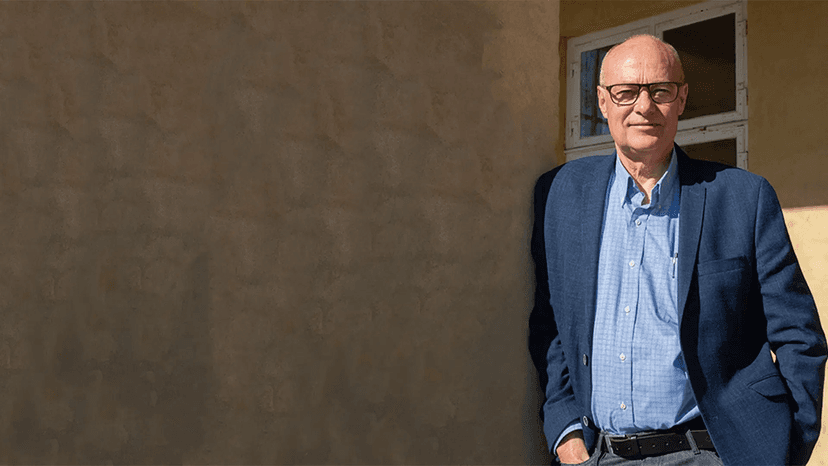
Abhishek Pareek, Founder & Director, Coders.dev
Systems Beat Stamina
The evidence backs this up across the board. Ramp, now valued at $22.5 billion, reported that its AI agents cut manual expense reviews by 85%. Klarna’s AI assistant handles two-thirds of all customer service chats, saving the company roughly $40 million a year. And according to Protiviti’s Global Finance Trends survey, the percentage of CFOs using AI more than doubled from 34% in 2024 to 72% in 2025.
The pattern is clear. The founders who are winning are the ones who build machines that run without them standing over them every minute. Nearly 40% of funded startups now use fractional or outsourced finance leadership at some point, cutting costs by 30 to 50% compared to a full-time CFO hire. Frameworks like EOS (the Entrepreneurial Operating System, used by over 29,000 companies) give founders a structured way to delegate, set quarterly priorities, and run their business without being the bottleneck for every decision.
And it is not just the billion-dollar companies seeing results.
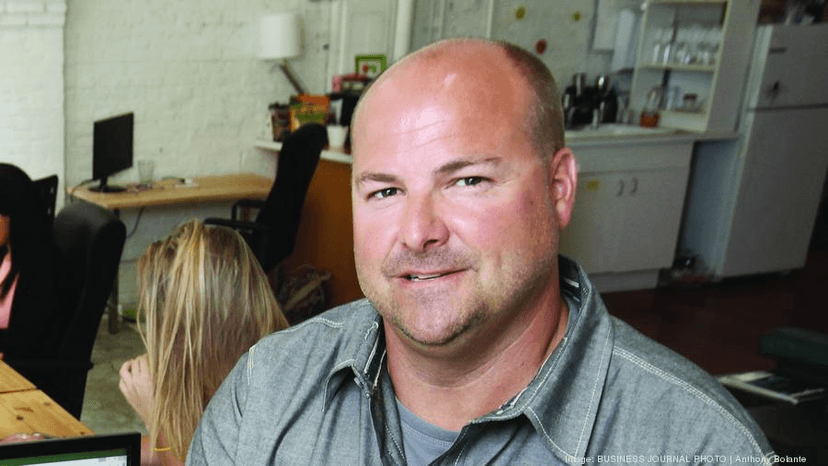
“I’m a finance leader who helped grow a company to a million dollars in sales. Along the way, I learned that working yourself to the bone is actually a bad move. It just leads to mistakes and exhaustion. Instead, I built a system where the business can grow without me doing everything. I handed off most of my daily chores to smart software and my trusted team. That offered me 15 hours a week. We made use of smart tools for checking suppliers to save time and reduce our risks. We also took the help of AI automation to complete our monthly paperwork in just 36 hours. That time was equal to 10 days earlier. I allowed my managers to handle their budgets. As they feel trusted, they work with us for a longer time without making any mistakes. When other companies were doing 80 hours a week, we were able to grow by 22% by working only 40 hours a week.”
Dhari Alabdulhadi, CTO and Founder, Ubuy Qatar
Protect the Asset (That is You)
There is a growing body of evidence that founder burnout is not just a personal problem. It is a business risk. Harvard Business School research found that 65% of startup failures come down to human factors, with 20% directly tied to mental health. Meanwhile, 72% of founders report that running a startup has negatively affected their mental health.
The leaders who last have figured out that protecting their own energy is not optional. It is strategic. Brad Feld, co-founder of Foundry Group and Techstars, meditates daily, mandates 8 hours of sleep, and takes quarterly digital detoxes after his own battles with depression. Patrick Collison steered Stripe back to $2.2 billion in free cash flow not by grinding harder, but by cutting 14% of staff and focusing on what mattered. Linear, a project management startup valued at $1.25 billion, built a billion-dollar business on 40-hour weeks and asynchronous communication.
The math works when you protect the person doing it.
“I have witnessed too many bright individuals burn out due to neglect of the mathematics of themselves. The only way to remain in the game in my work is to be in the cash flow like a stable utility.
Build an Operational Buffer Until we establish a three month cushion in operation, we do not even consider new recruits or growth. That is why I recommend forgetting the urge to climb at light speed on a daily basis.
Robotize To Conserve Mental Energy. This is a piece of advice that you have, hopefully, heard a million times, and I am going to repeat it one more time as it really works. According to my experience in the field, automating tax and back-office will not have the grind eating your schedule.
Success is not a race to the finish line but a marathon in which you will only be sustained by your money and your sanity.”
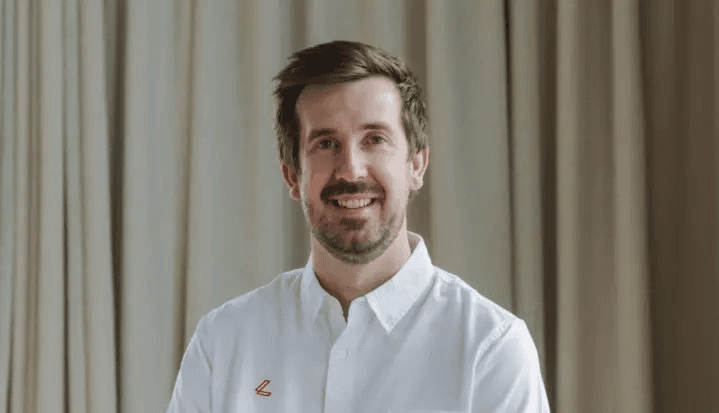
Olivier Wagner, Founder and CEO, 1040 Abroad
The Bottom Line
The grind mindset was built for a world of cheap money and infinite patience from investors. That world does not exist anymore. The founders and finance leaders who are building companies that last have figured out something simple: discipline beats intensity, systems beat stamina, and your own wellbeing is not a nice-to-have. It is the foundation everything else is built on.
The data says the same thing the people in the trenches are saying. Work smarter, automate the grind, protect your runway, and protect yourself. The companies that come out on top in the next five years will not be the ones that worked the most hours. They will be the ones that spent those hours on the things that mattered. That is the sustainable success strategy for 2025 and beyond.