

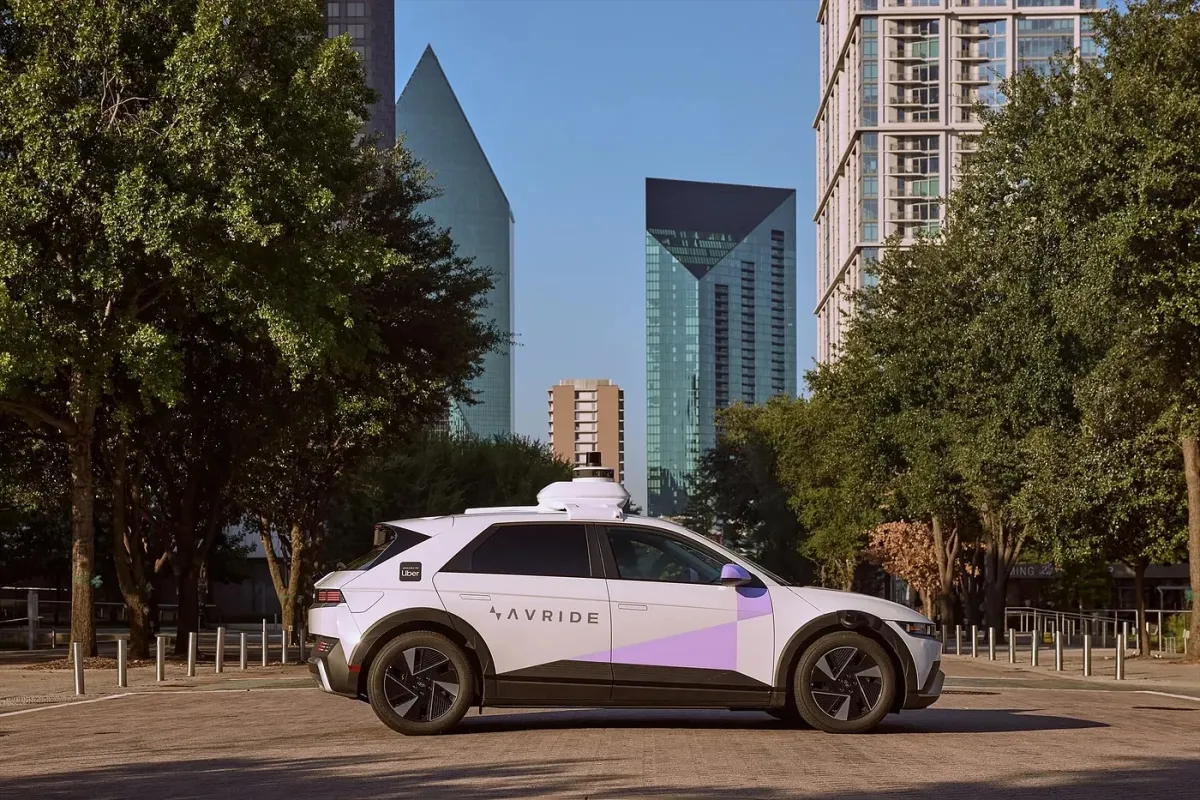
Self-driving car incident in Texas has placed renewed scrutiny on autonomous vehicle companies operating in residential neighborhoods. A mother duck was struck and killed by an Avride robotaxi near Mueller Lake Park in Austin earlier this week, and the fallout from the community has been swift. While wildlife collisions involving human-driven cars are common, this particular self-driving car incident in Texas has raised pointed questions about whether autonomous technology is truly ready for public streets.
How the Self-Driving Car Incident in Texas Unfolded
The story gained traction after a Mueller neighborhood resident shared a detailed account on a community Facebook group. According to local broadcaster KXAN, the resident reported witnessing the Avride vehicle pass through the area without slowing down. The autonomous car had a human safety operator seated behind the wheel, yet it did not stop after striking the duck. This self-driving car incident in Texas immediately prompted dozens of responses from concerned neighbors.
The mother duck was not just any neighborhood animal. She had nested in a pot outside a local Italian restaurant for several years, and residents regularly brought her food and water. According to FOX 7 Austin, a nearby taproom employee described her as a local legend. Losing her intensified the emotional weight of this self-driving car incident in Texas far beyond what a typical roadkill report might generate.
Community Response and Egg Rescue Efforts
Residents quickly organized to protect the duck’s surviving eggs. According to Axios Austin, neighbors placed them in an incubator to give the ducklings a chance at survival. That effort reflects the depth of attachment this Mueller community felt toward the animal, and it also underscores how a single self-driving car incident in Texas can reshape public attitudes toward new technology.
Many residents expressed frustration not only about the duck’s death but also about the growing presence of robotaxis on their residential streets. Some questioned whether autonomous vehicles belong in areas where pedestrians, children, and wildlife regularly share the road. Others noted that the self-driving car incident in Texas reminded them of broader safety concerns they had previously set aside. This conversation mirrors a national trend, with a 2025 AAA survey finding that 68 percent of American drivers remain uncomfortable with fully autonomous vehicles.
Avride’s Investigation and Disputed Stop Sign Claim
Avride confirmed to TechCrunch that the vehicle was operating in autonomous mode at the time of the collision. The company’s spokesperson, Yulia Shveyko, stated that the team has thoroughly reviewed all onboard data and replayed the scene multiple times in simulation. However, one element of the resident’s account remains contested. The original Facebook post claimed the vehicle also failed to stop at a nearby stop sign. Avride has disputed that assertion, saying its data shows the car came to full and appropriate stops at every relevant sign.
Regardless of the stop sign dispute, this self-driving car incident in Texas has prompted Avride to take several corrective steps. The company has excluded certain streets around Mueller Lake from its active testing routes. It has also begun evaluating technology improvements through controlled simulation experiments, aiming to enhance wildlife detection without compromising overall safety performance in other driving conditions.
Self-Driving Car Incident in Texas Highlights Broader Industry Challenges
Avride is far from the only company operating autonomous vehicles in Austin. Waymo, which recently expanded its data-sharing partnership with Waze, runs a commercial robotaxi service in parts of the city through a collaboration with Uber. Tesla launched its own robotaxi program in Austin in mid-2025, initially with human safety monitors and more recently without them. Zoox has also been testing its vehicles in the area. Together, these companies have turned Austin into one of the country’s most active proving grounds for autonomous driving technology.
Yet this self-driving car incident in Texas illustrates a tension that persists across the industry. Companies can log millions of autonomous miles and demonstrate strong safety records in simulation, but a single emotionally resonant failure can erode public trust overnight. If a vehicle cannot detect and avoid a duck crossing the road, residents will inevitably ask what else it might miss. That question matters, because the same sensor limitations that failed to identify a ground-level animal could potentially affect detection of small children, pets, or cyclists in certain conditions.
For Avride specifically, the path forward requires transparency. The company will need to share clear findings from its investigation and demonstrate measurable improvements to its perception systems. Earning community trust in neighborhoods like Mueller depends on more than just mileage data. It requires showing residents that their concerns lead to tangible changes in how these vehicles operate.
What This Means for Autonomous Vehicle Regulation
This self-driving car incident in Texas arrives at a politically sensitive moment for autonomous vehicle regulation. Texas has historically maintained some of the most permissive rules for self-driving technology in the United States, which is part of why so many companies chose Austin as a testing ground. However, growing public concern could shift that regulatory landscape. State lawmakers previously urged Tesla to delay its robotaxi launch until new safety regulations took effect in late 2025, and incidents like this one add fuel to calls for stricter oversight.
At the federal level, the National Highway Traffic Safety Administration has been monitoring autonomous vehicle deployments more closely following several high-profile incidents across the country. Whether this particular self-driving car incident in Texas attracts federal attention remains to be seen, but the pattern of community pushback is becoming harder for regulators to ignore. As agentic AI continues to reshape regulatory frameworks globally, the question of how to govern autonomous systems on public roads grows more urgent with each new incident.
For now, the Mueller neighborhood mourns a familiar face, and Austin residents watch to see whether the companies testing in their city will treat this moment as a genuine turning point or simply another data point on the road to full autonomy.
