AI Revolutionizes Protein Structure Prediction
Google DeepMind’s use of deep learning to predict complex protein structures has marked a significant breakthrough in science, fundamentally influencing numerous biological processes. However, as AI models continue to generate potential treatment candidates, the industry faces a new challenge: the practical characterization of these candidates for testing and mass production.
10x Science Secures $4.8 Million Seed Funding
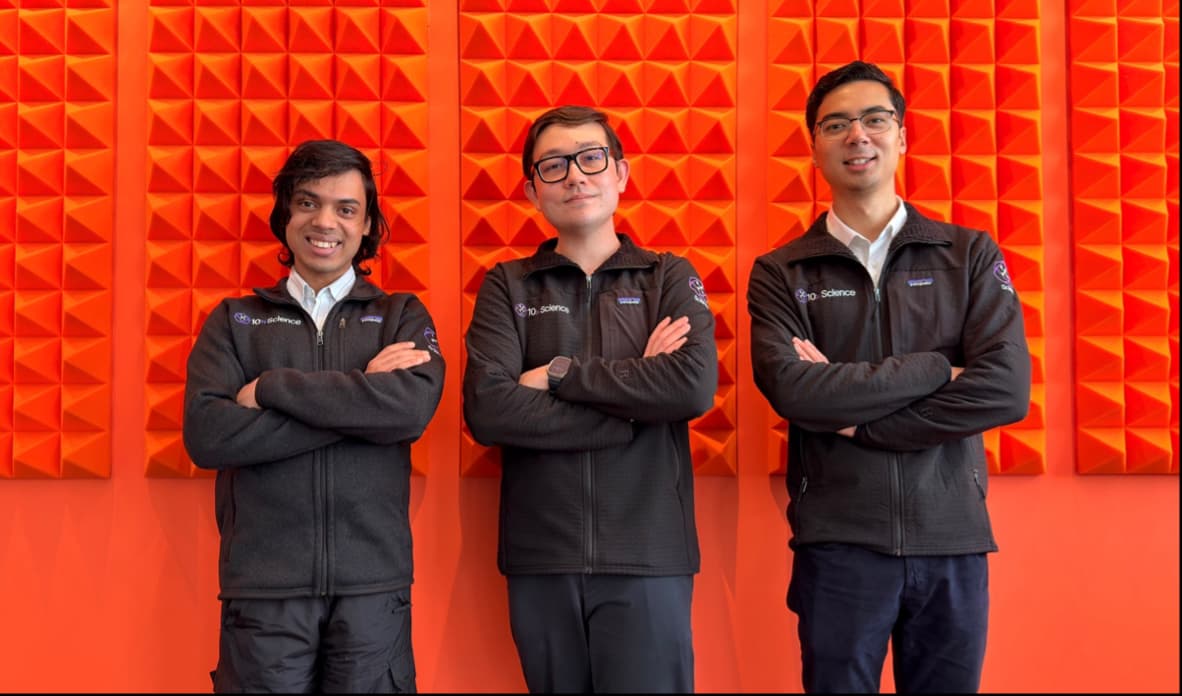
To address this bottleneck, 10x Science has emerged as a promising startup, recently announcing a $4.8 million seed funding round. This funding round was led by Initialized Capital, with participation from Y Combinator, Civilization Ventures, and Founder Factor. Founded in December 2025, 10x Science was established by a trio of experts: chemical biologist David Roberts, biologist Andrew Reiter, and Vishnu Tejus, a seasoned entrepreneur with a background in computer science and AI.
The Challenge of Drug Candidate Development
As Roberts explained, biopharma companies benefit from robust predictive tools when creating drug candidates, but they encounter limitations during the characterization phase. “You can add as many candidates as you want to the top of the funnel, but they all have to pass through this characterization process. Everything needs to be measured,” he stated, underscoring the complexities involved in drug development.
Importance of Protein Structure Understanding
Grasping the structural makeup of proteins is essential for researchers focusing on biologic drugs, which are engineered in living cells to target specific diseases. Drugs like Keytruda, manufactured by Merck, exemplify this approach by enabling the immune system to identify and combat cancer cells effectively.
Founders’ Experience and Background
Roberts, Reiter, and Tejus collaborated in the lab of Nobel laureate Dr. Carolyn Bertozzi at Stanford, where they examined the interplay between cancer cells and the immune system. Their frustration with the limitations in understanding molecular interactions spurred them to pursue innovative solutions in protein characterization.
Advancements in Mass Spectrometry
The most precise method for assessing molecular composition is mass spectrometry, a technique that examines the mass and charge of molecules. While highly accurate, this approach produces complex data that demands significant interpretation efforts, which can be time-consuming and resource-intensive.
Combining Algorithms with AI for Enhanced Analysis
10x Science aims to simplify this process by integrating deterministic algorithms rooted in chemistry and biology with AI agents capable of interpreting spectrometry data. The team has invested considerable effort in training models to analyze spectrometry data while ensuring compliance with regulatory requirements.
Real-World Applications and Future Prospects
Matthew Crawford, a scientist at Rilas Technologies, has utilized the 10x Science platform and observed notable efficiency improvements in his work. He commended the AI model’s ability to autonomously source relevant data and provide insightful conclusions. As 10x ramps up collaborations with pharmaceutical companies and academic researchers, the founders aim to refine their offerings and broaden their customer base while enhancing understanding of biological systems through comprehensive protein characterization.
According to 10x executives, success in characterizing proteins could pave the way for a groundbreaking understanding of molecular intelligence. Additionally, the platform’s subscription-based model provides investors with a less risky entry point into the biotech realm, offering value to drug development regardless of the ultimate market success of individual products.
Industry experts predict that 10x Science’s innovative approach could democratize access to sophisticated analytical techniques, enabling researchers who lack extensive resources to derive quick and actionable insights from mass spectrometry data, thereby accelerating their drug development processes.