Madagascar’s fintech landscape in 2026 reflects a story of measured progress rather than abrupt change, focused on necessity-driven financial inclusion. In a nation where geography, income disparities, and infrastructure challenges have hindered access to formal financial services, digital finance is emerging as a significant enabler.
The Malagasy economy, modest in scale, relies heavily on agriculture sectors such as vanilla, cloves, and rice, mining industries like nickel and cobalt, textiles, and an evolving services sector, particularly trade and telecommunications. However, the country ranks among the poorer nations in Africa, with a gross domestic product (GDP) per capita of just $600. Persistent development issues have kept Madagascar entrenched in low-income status, as reported by the World Bank.
Digital Economic Transformation: Inclusion Through Connectivity
Madagascar’s digital economic transformation is influenced by various structural limitations, particularly in rural regions where physical infrastructure is sparse. As a result, digital technologies are increasingly utilized to overcome geographic barriers, thereby expanding economic participation.
Currently, mobile penetration in Madagascar stands at approximately 75%, while internet penetration is lower at about 40%. The government, along with development partners such as the World Bank and the United Nations Capital Development Fund (UNCDF), has prioritized the advancement of mobile and internet connectivity, digitization of public services and payments, and support for digital entrepreneurship as well as small and medium enterprise (SME) development.
Financial Services Sector: Mobile-Led Transformation
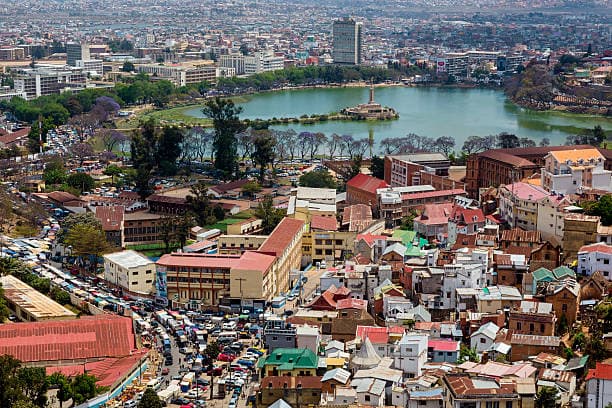
Antananarivo serves as the country’s financial hub, hosting regulatory bodies, banks, and emerging fintech activities. Bank of Africa Madagascar, part of the larger Bank of Africa Group, has been instrumental in enhancing financial services and digital banking capabilities.
Historically, Madagascar’s financial services sector has suffered from underdevelopment, characterized by inadequate banking infrastructure and limited financial inclusion. However, digital financial services, particularly mobile money, are beginning to alter this landscape.
Mobile money platforms have become essential gateways to financial services, allowing individuals to send and receive funds, pay for goods and services, and access basic financial tools. This trend mirrors a broader movement across sub-Saharan Africa, where mobile money is circumventing traditional banking barriers.
The Central Bank of Madagascar has undertaken several initiatives aimed at fostering greater financial inclusion. These initiatives include efforts to enhance payment infrastructure, promote interoperability between banks and mobile money operators, and improve transaction efficiencies, thereby modernizing the national payments system.
Additionally, policies aimed at promoting mobile money and digital payments have recognized the crucial role of mobile financial services in enhancing financial inclusion. The central bank has also strengthened regulatory frameworks for electronic money institutions, ensuring stability and consumer protection.
Efforts to implement the national financial inclusion strategy have focused on expanding access to financial services, particularly for rural populations and SMEs. Madagascar’s fintech strategy is rooted in its National Financial Inclusion Strategy (NFIS 2018-2022) and subsequent initiatives designed to shift from a cash-based economy to a digital-first framework.
Recently, Madagascar launched the digital initiative “Choose Digital Madagascar” to attract investments in its digital economy. This initiative aims to structure and energize the country’s digital ecosystem, positioning it as a global tech hub while showcasing local talent.
Financial Inclusion: Low Baseline, Gradual Improvement
While financial inclusion in Madagascar remains limited, progress is evident. Estimates indicate that approximately 25% of adults possess a formal bank account, while a larger percentage engages with mobile money services. This demonstrates a notable dynamic: although traditional banking access is limited, digital channels are broadening their reach.
While current usage concentrates on payments, there exists significant potential for expanding into credit, savings, and insurance services.
Fintech Ecosystem: Small but Growing
Madagascar’s fintech ecosystem is in its infancy, with around 20 fintech and digital financial service providers predominantly focused on payments and mobile money. Key players include MVola, a leading mobile money service facilitating payments, transfers, and financial inclusion.
Other notable entities encompass Orange Money Madagascar, delivering digital financial services across urban and rural areas, Airtel Money Madagascar, which works to expand mobile-based financial services, and Bank of Africa Madagascar, emphasizing digital banking and financial inclusion initiatives.
These actors highlight a defining feature of Madagascar’s fintech landscape: telecom-led and bank-supported innovation, as opposed to a large independent startup ecosystem, a trend mirrored in other regions of the African continent.
Conclusion: Inclusion Through Incremental Progress
Madagascar’s journey in fintech is characterized by gradual yet significant strides. Despite existing challenges, the country is laying the groundwork for a more inclusive financial system, demonstrating that even small advancements can lead to meaningful improvements in economic participation over time.