

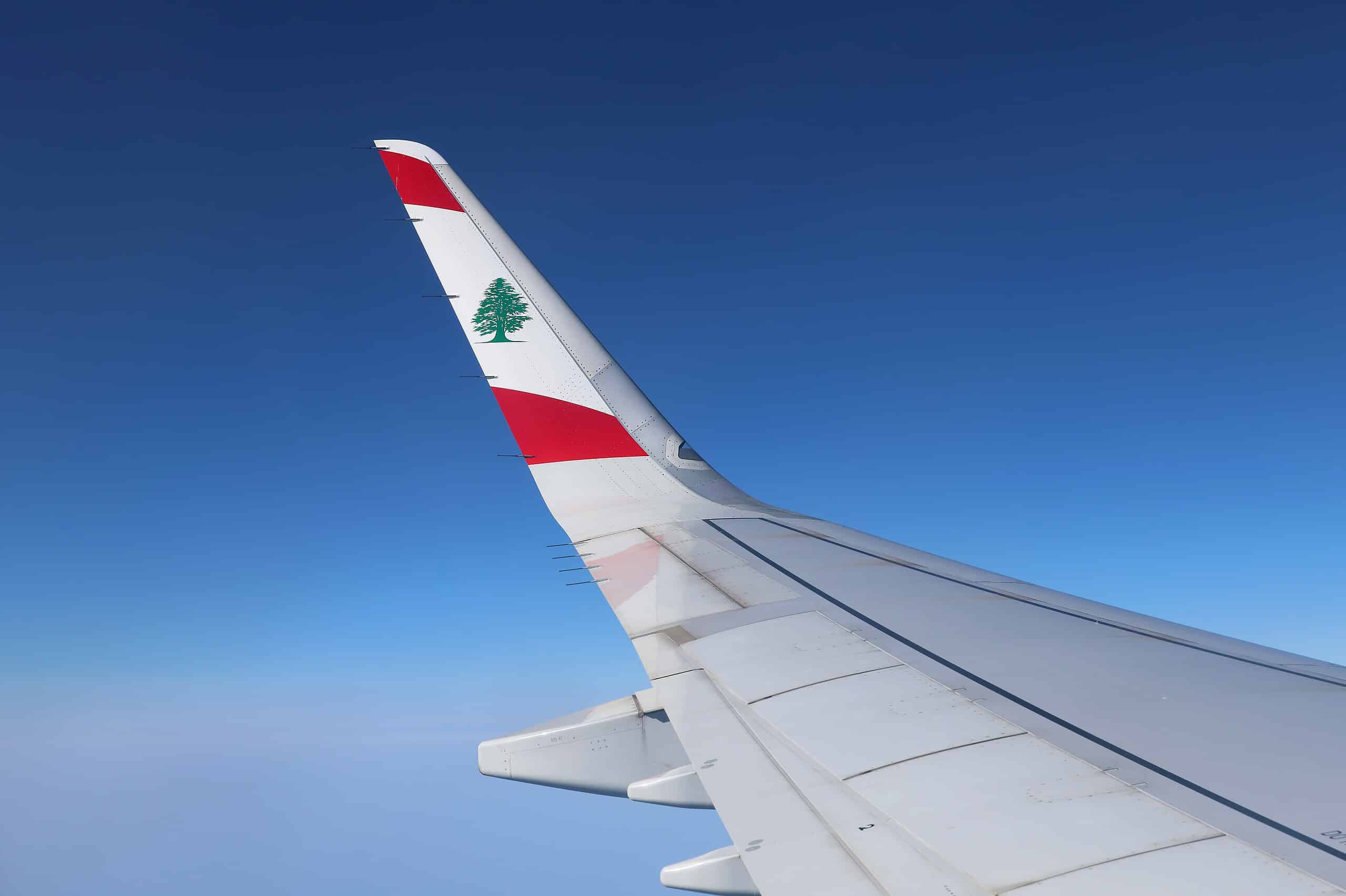
Beirut Airport operations have become Lebanon’s fragile lifeline since the US-Israeli war on Iran erupted on February 28, 2026. Captain Mohammed Aziz leads that effort as head of the country’s Civil Aviation Authority and former senior advisor to Middle East Airlines (MEA). While most regional carriers suspended flights, his team kept Rafic Hariri International running under near-daily Israeli strikes. The story cuts into risk management, insurance strategy, and disciplined cost control under live conflict.
Now, regional airspace closures have forced rerouted flights and mass cancellations across the Gulf. Lebanon sits at the sharpest edge of that pressure. Israeli strikes hit Beirut’s southern suburbs within minutes of the main runway. Despite this, MEA kept flying through the worst weeks.
How Beirut Airport Operations Stay Open
According to France 24 reporting from April 2026, the facility stayed open throughout the crisis, with MEA flights departing even as smoke from nearby strikes lingered over the tarmac. Aziz attributes that continuity to daily coordination with the US embassy and constant radar tracking. Beirut Airport operations depend on two things: accurate intelligence and fast decision-making.
“Our priority is to keep the airport open safely despite the prevailing situation,” Aziz told Global Finance. Israeli authorities typically issue targeting notifications around Beirut in advance. Meanwhile, controllers watch radar for incoming strikes and hold aircraft airborne during any overlap with military activity.
Because only two or three near-miss incidents have occurred, confidence in the protocol remains high. On April 1, for example, Beirut Airport operations paused road access for roughly 30 minutes while crews cleared debris near the perimeter. However, flights continued without interruption during the cleanup.
MEA Carries the Weight Alone
MEA now flies all routes except those into closed Gulf hubs like Kuwait, Doha, and Abu Dhabi. As a result, the airline has lost roughly 40% of its traffic. Gulf carriers ceased service into Beirut early in the conflict. European airlines halted the whole region from day one.
According to TIME’s coverage of the Iran war travel disruption, regional airspace closures stranded thousands of passengers and forced carriers to cancel or reroute thousands of flights. Qatar Airways, Emirates, Etihad, and Flydubai all pulled Beirut routes within the first week.
Currently, MEA’s fleet of 22 aircraft runs on a defensive footing. Five or six planes stay parked abroad to limit exposure. That means only 16 aircraft actively rotate, and most fly below full capacity. Some routes that once took Airbus A330s now run on A321s, trimming insurance liabilities and per-flight losses.
L’Orient Today reported that by March 24, 2026, only MEA and Royal Jordanian were running daily flights into Beirut. All other carriers pushed resumption into April or May. Still, MEA treats its duty as non-negotiable. “It’s crucial for the airline to sustain connectivity between Lebanon and the rest of the world,” Aziz said. The precedent stretches back to flight suspensions during the 1975-1990 civil war and the 2006 Israel-Hezbollah conflict.
The Risk Machinery Behind Beirut Airport Operations
So how does a wartime carrier justify staying aloft? Through relentless daily review. Every call on Beirut Airport operations runs through a meeting involving civil aviation leadership, MEA management, and Lebanese security authorities. The group keeps constant channels open to government ministers, embassies, and foreign aviation regulators.
Meanwhile, changes move fast when conditions shift. EASA issued Conflict Zone Information Bulletin 2026-03-R6 on February 28, covering Lebanese, Iranian, Israeli, and Gulf airspace. That advisory forced European operators to suspend service, and it continues to shape the insurance calculus around Beirut Airport operations.
As a result, MEA and regulators coordinate in real time. Aziz stressed that foreign carriers can afford to pause, but Lebanese aviation cannot walk away. The carrier has no substitute market.
Insurance, Fuel, and the Hidden Cost Stack
Insurance now drives the economics of Beirut Airport operations more than ticket demand does. Premiums fluctuate daily based on loss data and risk modelling. Insurers shift coverage limits, raise rates, or attach new conditions on short notice. Therefore, the finance team stays in constant contact with underwriters. Across the industry, war-risk premiums on hull and liability policies can triple within days of a regional escalation.
Fuel pricing has moved just as violently. A ton of jet fuel that cost $700 before the war now runs around $1,500, more than doubling the pre-conflict baseline. On top of that, rerouted flight paths compound every trip. Beirut to Dubai used to take three hours direct. Now the route threads through Oman, Saudi Arabia, Egypt, and Cyprus before arriving, pushing block time past five hours.
Those longer legs raise crew hours, maintenance cycles, and fuel burn in lockstep. For context, AI-driven supply chain risk tools are reshaping similar decisions across logistics, and the aviation parallel is direct. Every delay compounds through the P&L.
Yield Management and Wartime Pricing
MEA cannot fully offset the new cost stack. However, yield management takes the edge off. The carrier adjusts ticket prices by seat occupancy, discounting when demand slumps and lifting fares when loads tighten. In turn, revenue per flight stabilises enough to keep the network running. Even so, the math only works because MEA faces no direct competition on key routes. Lebanese expats and business travellers have nowhere else to turn.
Aziz framed the trade-off bluntly. The wartime strategy earns customer loyalty that should pay dividends once stability returns. Every flight becomes both an operation and a brand investment.
Additionally, payroll has expanded. Staff receive bonuses for reporting to duty. The airline funds sleeping accommodations near the terminal so crews can stay close to their aircraft.
The Recovery Case for Beirut Airport Operations
Other regional hubs have taken radically different approaches. China’s inland connectivity push with ASEAN shows how strategic aviation investment can expand reach during volatile periods. Beirut Airport operations run the opposite play, defending a single gateway under fire.
According to Asharq Al-Awsat, international airlines began returning to Beirut on April 14, 2026, after roughly 40 days of suspension. Qatar Airways and Iraq’s UR Airlines resumed service following US assurances that Israel would spare the airport. Aziz emphasised that the facility never closed. Instead, airlines themselves suspended service due to safety risks.
Even so, recovery remains fragile. Aziz sees an upside in the quiet terminal. Traveller volumes sit at 20-25% of normal levels. As a result, the authority is fast-tracking terminal upgrades that would usually take a year. He expects completion within two or three months. Full traffic recovery will hinge on whether the ceasefire framework holds, and whether insurers lower war-risk surcharges on Beirut routes.
The Takeaway for Aviation Finance Teams
For aviation finance leaders elsewhere, Beirut Airport operations offer a live case study in continuity under pressure. Insurance flexibility, daily risk governance, and disciplined cost control hold the system together. Meanwhile, much like firms managing operations during a financial squeeze, the lesson is simple. Resilience lives in the details, and keeping Beirut Airport operations running today will define Lebanon’s aviation recovery tomorrow.
