6 mins read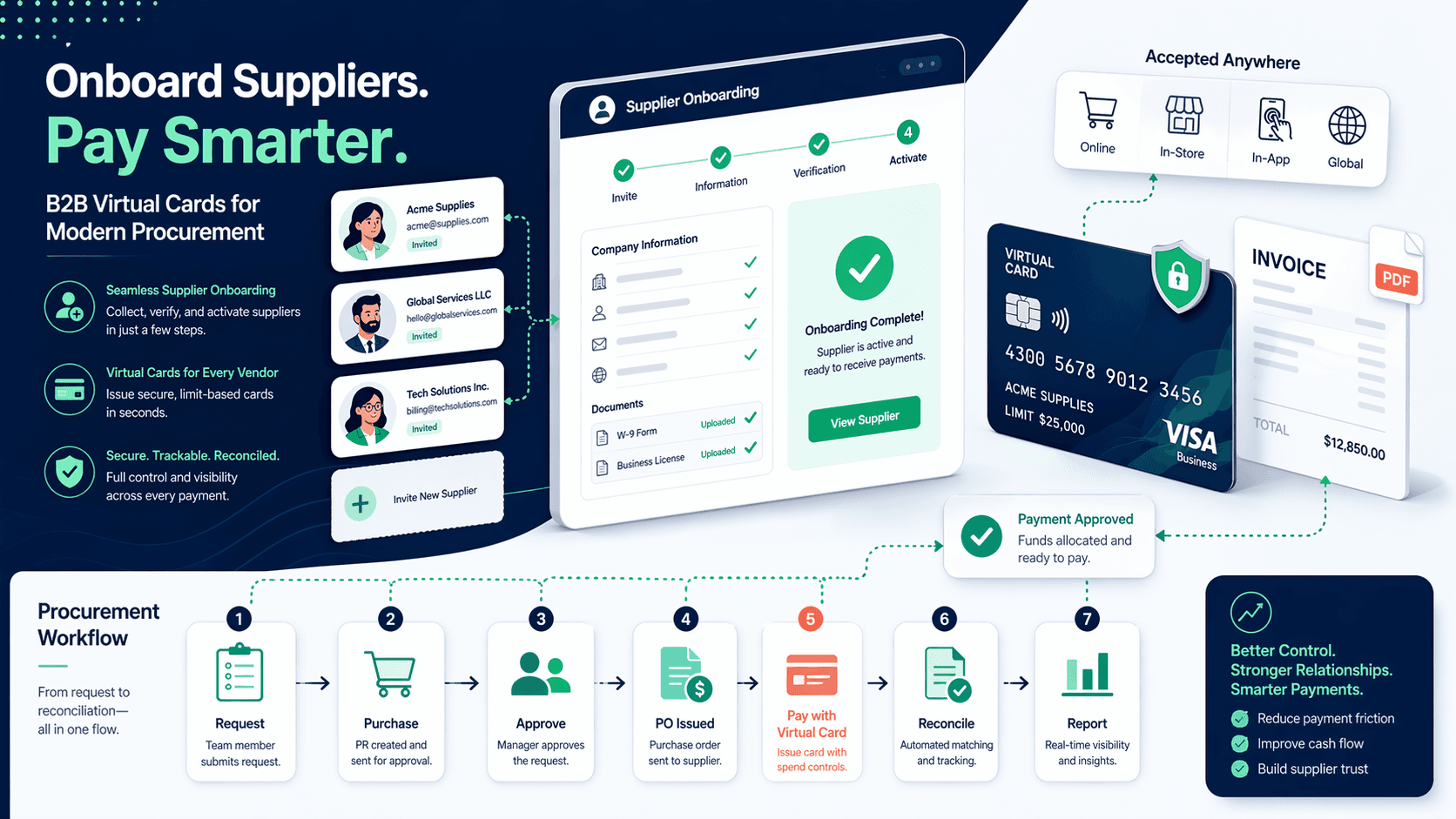
Author: Pratik Singh Raguwanshi, Manager, Digital Experience, LiveHelpIndia
B2B virtual cards have emerged as a powerful tool for modern finance teams, and at first glance they deliver exactly what the marketing promises: streamlined disbursement, granular spend control, and tighter fraud protection than a plastic corporate card ever offered. That story holds at low volumes. It holds right up until monthly spend pushes through six figures, and then the operational reality starts to look different.
The initial appeal of B2B virtual cards is efficiency. Each card comes with a defined limit, a defined merchant category, and a defined expiry, which takes entire classes of policy breach off the table before they happen. Security sits one layer deeper, with tokenised card numbers that do not survive outside the intended transaction. For a finance team fielding 20 one-off vendor payments a week, that is genuine value.
The nuance arrives with scale. Understanding the hidden costs requires looking past the marketing copy and into the procurement workflow, the ERP integration, the reconciliation queue, and the supplier experience. That is where B2B virtual cards either earn their place or quietly generate more drag than the legacy process they replaced.
The market is moving faster than most finance teams realise
Adoption is accelerating, and the base is already large. According to PYMNTS Intelligence research with American Express, the B2B virtual card market is projected to quadruple from $14.65 billion in 2025 to $61 billion by 2032, with 82% of current users planning to expand use in the next year fintechbits. Juniper Research data puts 2025 global virtual card payment volume at around $5.2 trillion, with roughly three quarters of that flowing through B2B channels.
In short, if you are still treating B2B virtual cards as a pilot, your peers are not. The competitive pressure to scale adoption is real. So is the pressure to scale it correctly.
Integrating B2B virtual cards into procurement workflows
Implementation is not about issuing cards. It is about integrating them. Finance, procurement, and IT teams need to map current workflows together, identify the highest-volume vendor categories, and build card issuance into the purchase-order process rather than bolting it on afterwards.
The decision points are concrete. Which vendors accept cards at acceptable interchange? Which purchase types justify single-use cards versus recurring ones? How do approval thresholds map to card limits? Getting these right at pilot scale is manageable. Getting them right at 500 vendors and 10,000 monthly transactions is a different problem, and that is where the hidden cost surfaces first.
System design decides whether scale is an asset or a liability
Robust system design is non-negotiable once volume climbs. That means automated card creation, activation, and deactivation tied to the purchase-order lifecycle, real-time transaction monitoring with anomaly flagging, and seamless data flow into ERP and accounting systems. Each capability individually sounds like table stakes. Missing any one of them at scale creates a reconciliation backlog that can take finance teams weeks to unwind.
Data volume compounds the problem. Every virtual card transaction generates merchant information, category codes, amounts, timestamps, and purchase-order context. Multiply that by thousands of monthly transactions and manual reconciliation stops being viable. Meanwhile, sophisticated matching tools become the difference between insight and noise.
Supplier onboarding is where most programmes quietly fail
Supplier friction is the least glamorous part of any B2B virtual cards rollout, and the most commonly underestimated. Many suppliers default to ACH or paper checks, and interchange fees on card acceptance can push larger invoices into negotiation territory. A TSYS analysis of the B2B card market notes that payees frequently balk at interchange fees of 3% or higher, making large-ticket items unpalatable and smaller volume transactions relatively expensive compared with ACH CoinMarketCap, which is one reason virtual card volume still trails ACH by an order of magnitude.
The fix is operational, not technical. Clear supplier communication, dedicated support channels, and a realistic conversation about where card payment makes sense versus where ACH is the better tool. For businesses running extended vendor networks across professional services outsourcing arrangements, the coordination workload grows quickly, and a deliberate onboarding programme becomes the difference between adoption and avoidance.
Cross-border adds another layer. Multi-currency B2B virtual cards reduce FX exposure, but they also introduce foreign-merchant categorisation quirks that can confuse reconciliation systems not built for them. Infrastructure moves like Stripe’s partnership with Luckin Coffee on cross-border payments show how quickly the payment stack is maturing internationally, but programme owners still need to plan for the data quirks that come with it.
Fraud prevention at volume looks different from fraud prevention at pilot
B2B virtual cards carry real fraud-control advantages, specifically single-use tokens, merchant locking, and tight spend ceilings. However, at six-figure monthly volume, those defaults are not enough on their own. Real-time anomaly detection becomes essential, and pattern-based flagging needs tuning against the company’s specific spend profile rather than a vendor default.
Tools like AI-driven transaction monitoring have matured considerably, with modern models learning from spend patterns in real time rather than relying on static rule sets. For B2B virtual cards programmes at scale, this is the layer that separates resilient from reactive. In practice, rule-based systems handle the obvious cases. Pattern-based systems catch the structured abuse that surfaces only when volume creates cover.
Automation is what makes the economics work
Automation is the backbone of B2B virtual cards at scale. Manual card issuance breaks at a few hundred cards a month. Manual reconciliation breaks sooner. The programmes that deliver real ROI automate card creation against purchase orders, automate transaction enrichment against vendor master data, and automate reconciliation against ERP ledgers. The finance team’s job shifts from data entry to exception handling.
The data exhaust matters too. Spend patterns, supplier performance, category-level trends, all of it surfaces naturally from B2B virtual cards activity when the reporting layer is designed for it. Companies with complex back-office footprints, including those running professional services back-office outsourcing, tend to see the largest analytical upside, because virtual card data fills visibility gaps that older payment rails leave open.
From transactional tool to strategic asset
The final shift is conceptual. B2B virtual cards start as a convenience and, done well, become a strategic asset. Granular spend controls enforce policy automatically. Real-time visibility sharpens forecasting. Category-level data strengthens supplier negotiation. None of this shows up in the vendor pitch deck, but all of it compounds over time.
The practical takeaway for finance leaders is this. B2B virtual cards at scale are not a technology decision, they are an operating-model decision. Treat the rollout as system design rather than procurement, staff it accordingly, and measure success on reconciliation time and exception rate rather than on cards issued. The businesses that get this right are converting payments infrastructure into a competitive advantage. The ones that do not are generating a different kind of operational drag from the one they set out to solve.
“The true cost of virtual cards at scale is not in the transaction fees, but in the operational friction and system design that are often overlooked until growth demands a deeper examination.”
Pratik Singh Raguwanshi, LiveHelpIndia