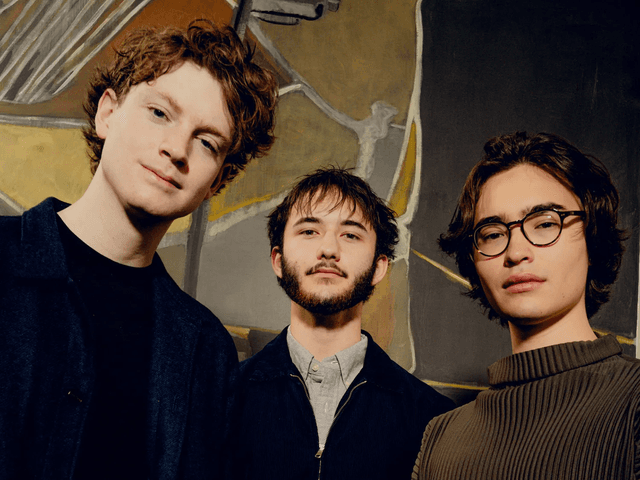
The Astor seed funding round closed at $5 million this week, giving the SEC-registered AI investment advisory platform fresh capital to bring personalized financial guidance to everyday American investors. The Astor seed funding announcement arrives as retail investing surges to record levels, often without the professional advice that typically accompanies it.
Astor seed funding round and investor lineup
The Astor seed funding round was led by Monashees, a Latin American venture capital firm with offices in SĆ£o Paulo, Mexico City, and Silicon Valley. Y Combinator joined the round, alongside Goodwater Capital, Gilgamesh Ventures, 468 Capital, Valutia, Sunshine Lake, and individual investors drawn from the leadership ranks of Stripe and OpenAI. Per the official announcement on PR Newswire, the round was filed and announced on April 23, 2026.
Since launching, Astor has attracted thousands of users and connected over $200 million in brokerage accounts to its platform. As Fortune reports, the company’s current site already lists more than 5,000 users and over $300 million in connected accounts, suggesting traction has accelerated since the announcement.
The Astor seed funding capital will go toward growing the product, engineering, and growth teams, while broadening the service lines on offer. Co-founder and CEO Bruno Koba confirmed the company is built on a multi-agent architecture that draws on Anthropic models, distinguishing it from general-purpose AI tools.
The Brazilian advisor model that inspired the pitch
Astor was co-founded by Bruno Koba and Daniel Tulha, who both grew up in Brazil. There, being matched with a financial adviser when opening a brokerage account is standard practice, regardless of how much money a customer brings to the table. Upon moving to the United States, both founders were struck by how many Americans manage their investments without any professional input.
The pair joined Y Combinator’s Summer 2025 cohort to develop their solution. Koba previously worked as a fintech investor at Monashees and as a data scientist at Nubank, where he developed machine learning models to extend credit access to millions of Brazilians. Tulha brought engineering experience from Stripe and Robinhood, where he worked on financial infrastructure at global scale.
According to FinTech Global, the founders’ cross-market perspective is what drew investors to the table. The Astor seed funding thesis hinges on translating the Brazilian advisor model into the American retail investing market.
The US market does already host robo-advisor incumbents, including Betterment and Wealthfront, that have collectively gathered hundreds of billions of dollars in assets under management. Where those services lean on automated rebalancing of model portfolios, Astor positions itself as a conversational fiduciary advisor that engages users in natural language and builds recommendations from each customer’s actual holdings rather than from a default model allocation.
Closing the $500K advisor minimum gap
Traditional financial advisers in the United States commonly require clients to hold a minimum of $500,000 in assets, leaving the majority of Americans without access to tailored professional advice. The Astor seed funding is aimed squarely at that underserved segment.
The advisory gap matters because retail investing has surged. According to FINRA data cited in the company’s announcement, 61 percent of investors under 35 now rely on social media for investment decisions. Meme stocks, crypto speculation, and prediction markets have turned financial markets into a form of entertainment for many users.
Bruno Koba, co-founder and CEO of Astor, framed the issue plainly. He noted that many people around him were investing independently, with numerous individuals treating their brokerage accounts like a casino. He added that in Brazil, even the most basic advisor offers the reassurance that someone is paying attention to your money. In the United States, that support is largely absent unless a person already has wealth.
This positioning aligns with broader concerns covered in Bogle’s investment strategy guidance on FintechBits, where disciplined approaches to personal investing have repeatedly proven more durable than speculative trading.
How the Astor AI investment platform works
The Astor platform connects directly to users’ existing brokerage accounts, assessing their portfolios based on performance, risk, and diversification. It then provides personalized recommendations through conversational AI delivered by text or voice.
The multi-agent system breaks portfolio analysis into specialized agents, with separate components handling market context, individual security review, and personalized response generation. This structure mirrors enterprise fintech architectures where modular agents reduce hallucination risk and improve auditability, both of which matter when an AI is operating under SEC oversight.
Crucially, the platform operates under a fiduciary duty, legally obligating it to act in clients’ best interests. As Morningstar notes, this regulatory standing distinguishes Astor from social media advice and general-purpose AI chatbots that operate without oversight.
The fiduciary distinction connects to a wider conversation about how fintech companies balance AI automation with human expertise in regulated finance, where compliance, trust, and transparency carry as much weight as raw model capability.
Astor’s recommendations also account for a customer’s broader financial situation, including credit card balances and life events such as planning for a wedding. This whole-portfolio view sets the company’s investment thesis apart from one-shot robo-advisor models that focus narrowly on asset allocation.
Why the Astor seed funding signals a broader shift
Fabiola QuinzaƱos, partner at Monashees, framed the round as a guidance problem rather than a product problem. She argued that most individuals do not need more investment products. They need effective guidance, and Astor empowers them with the knowledge to take control of their financial future.
She added that Bruno offers the perspective of an investor from his time at Monashees while also personally understanding the issue, and Daniel provides the technical expertise from developing financial products at Stripe. The full-circle story of a Monashees investor becoming a Monashees-backed founder gave the firm additional conviction.
The Astor seed funding announcement arrives in a wave of similar bets on AI-native fintech tools, including a $5.1 million pre-seed round for an AI-driven social network within iMessage. Investors are clearly willing to back founder teams that combine fintech credibility with AI-first product design.
For now, the Astor seed funding round positions the startup to scale into a market where over 100 million American retail investors lack ongoing access to a fiduciary advisor. As reported by TipRanks, the immediate focus is product depth and team expansion, with service line growth following close behind.
The broader signal from this Astor seed funding round is that AI-native advisory platforms operating under fiduciary obligation may be the format that finally closes America’s advisory access gap.