

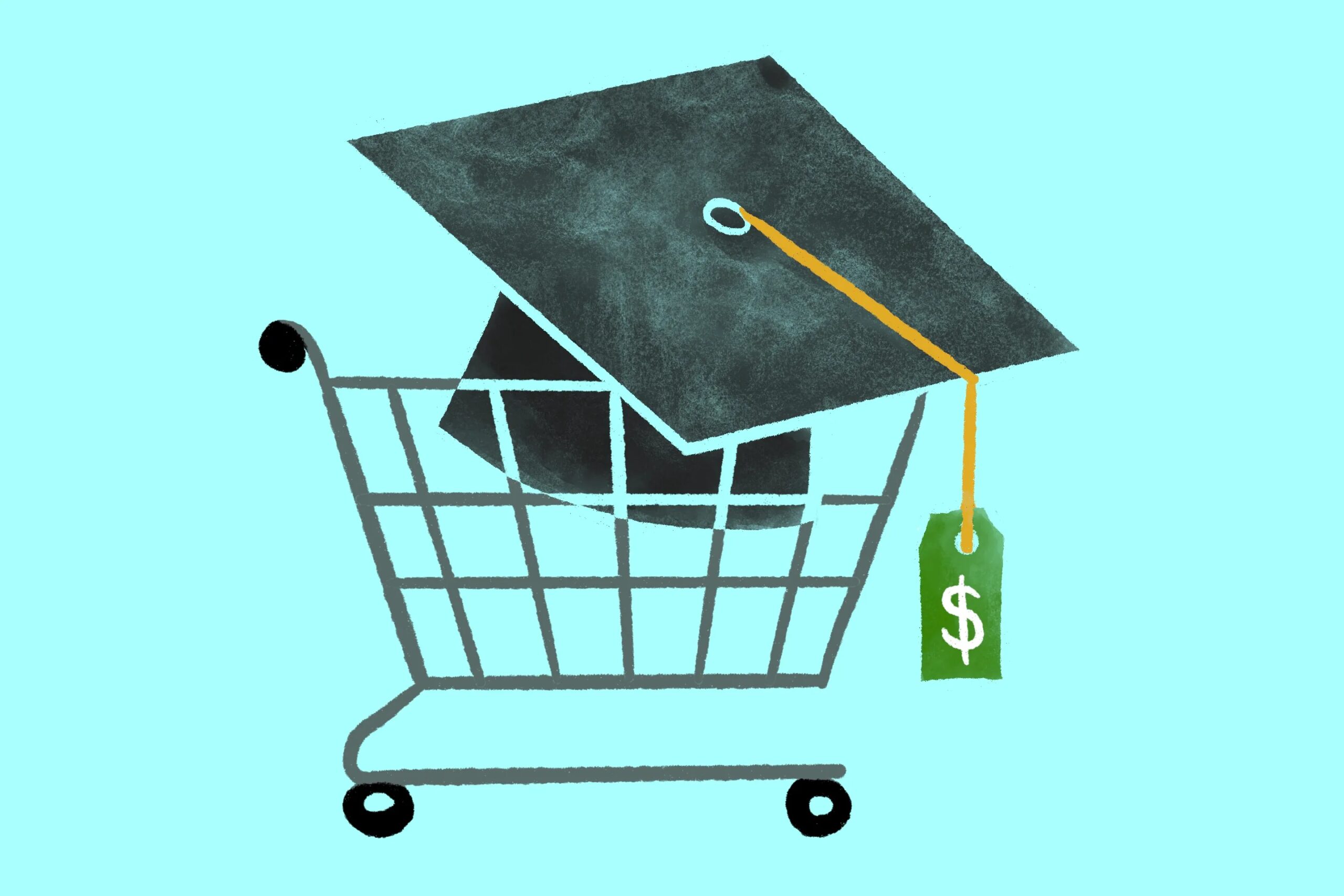
College tuition continues to escalate, placing a significant financial burden on families. As costs have risen alongside stagnant incomes over the past few decades, the average net price at a four-year public institution now accounts for approximately 25% of a typical household’s income.
To cope with rising expenses, students increasingly rely on financial aid. Yet, many still face funding shortfalls even after utilizing grants and federal student loans. The National Center for Education Statistics estimates that around one million students annually resort to private student loans to fill these gaps.
Private student loans can pose risks, as they typically carry higher costs than federal loans and lack the same protective measures for borrowers. However, when approached judiciously, they may serve as a necessary option for some families. If considering private loans as a means to finance education, prospective borrowers should heed these guidelines.
1. Assess Your Borrowing Needs
Making informed borrowing decisions is vital. According to data from the U.S. Bureau of Labor Statistics, individuals with a bachelor’s degree earn nearly 66% more weekly than those with only a high school diploma, alongside favorable unemployment rates.
Prior to borrowing, accurately determine the total amount needed for tuition, living expenses, textbooks, and additional fees. Prospective students exploring colleges can utilize net price calculators provided by institutions for preliminary estimates.
If already engaged in the college application process, completing the Free Application for Federal Student Aid (FAFSA) is crucial. This form is necessary not only for federal grants but also for state scholarships and federal loans known as Direct subsidized and Direct unsubsidized loans.
Colleges utilize FAFSA data, and sometimes the CSS Profile, to assess financial aid awards. Following acceptance, students receive an award letter detailing attendance costs, including tuition and room and board, as well as any financial aid they qualify for. The remaining amount after subtracting scholarships and grants will indicate potential borrowing needs.
Furthermore, it’s essential to consider repayment plans. Compare the average starting salary for chosen fields of study against the anticipated borrowing amount. Financial experts typically advise that total borrowed funds, combining both federal and private loans, should remain within the expected starting salary range.
2. Maximize Federal Financial Aid
Financial aid experts universally recommend exhausting federal financial aid options before turning to private loans. The FAFSA determines eligibility for various federal and state aid, including loans from the U.S. Department of Education.
Unlike private loans, which require creditworthiness checks, federal student loans are generally accessible to most U.S. citizens in good academic standing. While enrolled at least half-time, loan payments are automatically deferred.
Despite impending changes to federal repayment options, at least one income-driven repayment plan will continue to be available to all borrowers. Additionally, federal loans offer fixed interest rates, and subsidized loans have interest paid by the Department of Education while students are in school. Borrowers face annual loan limits ranging from $5,500 to $12,500 based on their year in school and dependency status.
For those requiring additional funds, Parent PLUS loans may cover the entire cost of attendance, offering fixed interest rates and no immediate repayment obligations. However, these loans are issued under the parent’s name and require a credit check, making it essential for parents with good credit to compare these loans against private education offerings.
3. Consider a Cosigner
Private loans necessitate an assessment of the borrower’s creditworthiness, unlike federal loans. A strong credit history and stable income—often elusive for recent high school graduates—are essential for securing a private loan.
4. Compare Lending Options
While renowned lenders like Sallie Mae and College Ave dominate the private loan landscape, numerous banks, credit unions, and online lenders also provide education loans. As private student loans are not uniformly structured, it is vital to shop around for interest rate quotes and carefully assess terms, fees, and borrower benefits.
Consulting the financial aid office at prospective colleges may yield recommendations for preferred lenders. Students should also take advantage of online marketplaces such as Credible or LendKey to compare various loan offers using a single application. Pre-qualification options help assess offers without impacting credit scores.
5. Understand Interest Implications
Interest rates for private loans can either be fixed or variable. In contrast to federal loans, where fixed rates are annually set, private loan rates can vary widely based on the lender and the borrower’s credit history.
Federal student loan interest rates were fixed at 6.39% for Direct Subsidized and Direct Unsubsidized loans disbursed between July 1, 2025, and June 30, 2026. For private student loans, fixed rates fluctuate between approximately 3% and 18%, while variable rates range from about 4% to 17%. Interest on private loans begins accruing immediately, which adds to the overall debt when repayments begin post-graduation.
When evaluating loan offers, it’s important to focus on the annual percentage rate (APR), as it encapsulates the total cost of borrowing, including fees. Although most private lenders do not charge origination fees, understanding the APR remains critical.
6. Inquire About Repayment Terms
Typically, federal student loan repayment begins six months after graduation or dropping below half-time enrollment. Various repayment plans allow borrowers to adjust their monthly payments based on income. However, changes due to new legislation may affect availability starting with loans taken out after July 2026.
Conversely, private loans generally require immediate payment, although many lenders provide in-school deferment options. Repayment terms for private loans often range from five to 15 years. Before committing to a loan, students should clarify repayment options, potential grace periods, and policies governing forbearance in circumstances of financial hardship.
Borrowers should also ask if there’s a possibility to release a cosigner in the future and explore borrower benefits such as discounts for automatic payments or incentives for maintaining good academic performance.
7. Develop a Payment Strategy
Prior to borrowing, create an outline of anticipated monthly payments to ensure affordability. Utilizing a loan repayment calculator can aid in visualizing monthly obligations based on the loan amount borrowed, the repayment term, and the applicable interest rate.
If these calculated monthly payments appear unmanageable, students should contemplate lowering their borrowing amount, possibly by selecting a more affordable college.
8. Prepare Necessary Information
Processing times for lenders can span from several weeks to a month following an application. To facilitate a smooth borrowing process, gather essential documentation ahead of time.
Necessary information includes your Social Security number, permanent address, and date of birth, as well as details from your school regarding attendance costs. Additional documentation may comprise proof of income, your school’s name and address, academic program, and expected graduation date.
If a cosigner is involved in the application, their personal details, signature, financial data, and verification documentation will also be required.
9. Use Extra Funds Strategically
Many students opt not to make loan payments while in school due to financial constraints. However, any extra funds should ideally be directed towards interest payments, especially for unsubsidized loans, as unpaid interest will capitalize upon graduation.
Because private loans often carry significantly higher interest rates than federal loans, prioritizing interest payments on private loans can help manage debt more effectively post-graduation. Should it be feasible, making interest-only payments during school can yield substantial long-term savings.
Additionally, for further insights and strategies related to college financing, check out articles on ways to reduce college costs, top colleges in America, and guidance on obtaining student loans.