

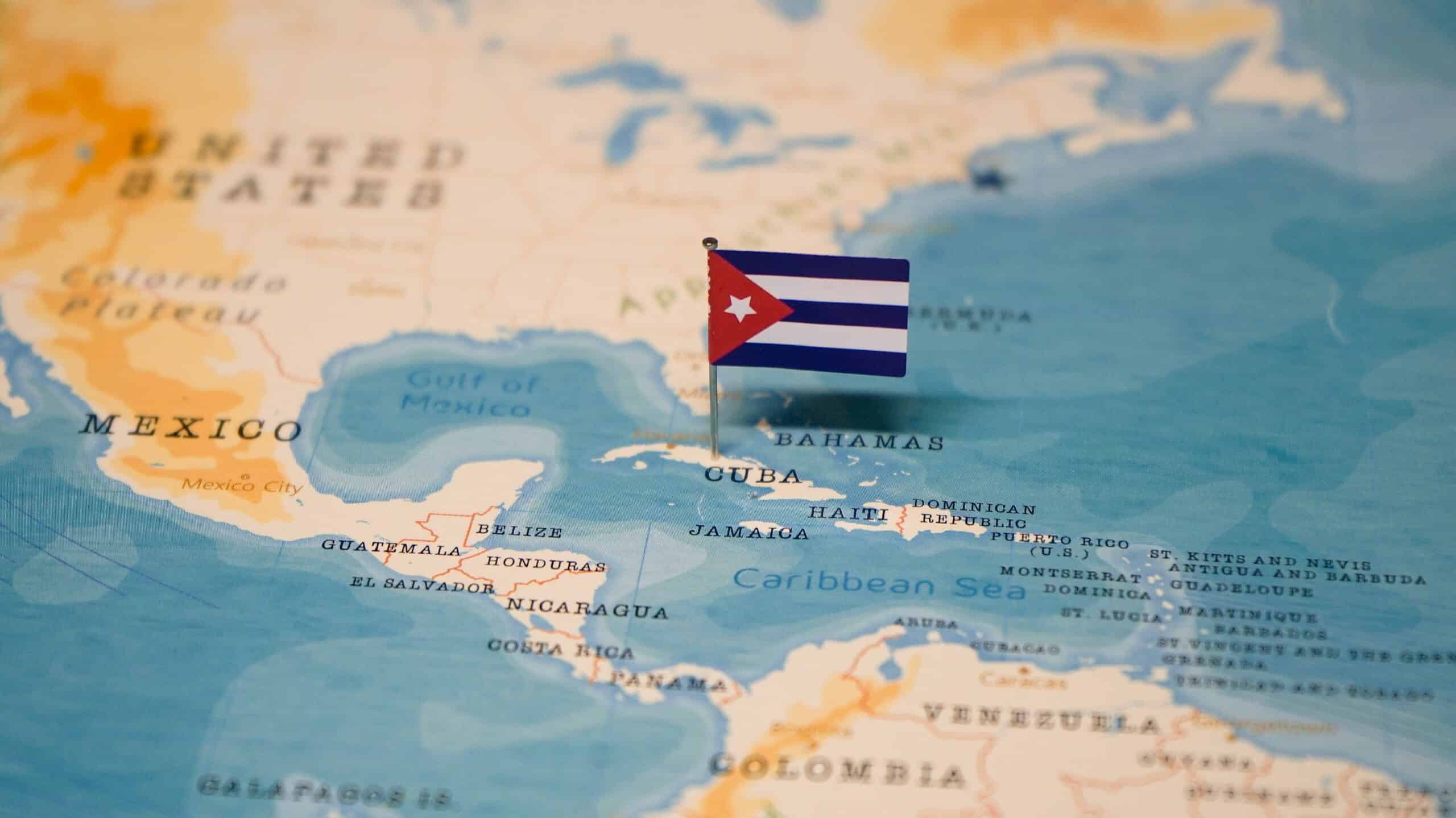
Cuba diaspora investment reforms went into force this month, marking the most significant pivot Havana has made toward private capital in decades. Decree-Law 114/2025, approved by the Council of State in December and published in the Official Gazette on March 3, became operative on April 3, 2026. The framework opens four new partnership pathways between state-owned enterprises and private actors, including the more than two million Cubans living abroad.
Meanwhile, the government has lifted the residency requirement that long blocked emigrants from owning or co-owning businesses on the island. So Cuban nationals abroad can now open foreign-currency accounts at Cuban banks and partner with private firms without permanent residency.
Yet the timing tells the deeper story. With fuel shortages, prolonged blackouts, food scarcity, and an intensified U.S. embargo squeezing the economy, Havana is reaching out to actors it once treated as adversaries. Below, we break down the framework, the pressure behind it, the capital implications, and the real risks investors face.
Inside the Cuba Diaspora Investment Framework
Cuba diaspora investment now flows through four pathways set out under Decree-Law 114. First, foreign parties, private local firms, and state enterprises can form mixed limited liability companies, or SRL mixta. Second, state entities can acquire shares in existing private SRLs.
Third, state companies can absorb private SRLs entirely. Fourth, parties can sign economic association contracts without forming a new legal entity. Each pathway grants the joint venture authority to operate bank accounts, set prices and wages, and manage its own imports and exports.
Then comes the migration piece. The State Council passed a separate decree creating a special migration category for Cuban citizens abroad who invest in the domestic economy. As a result, the framework now aligns with Migration Law 171 and Foreign Investment Law 118.
Beyond the technical structures, the political signal matters. Cuba previously banned mixed companies between state and private capital under the 2021 mipymes legalization. So Decree-Law 114 fills a legal void that had blocked formal collaboration for nearly five years. For broader regional context on capital flows, see our coverage of LATAM fintech investment trends.
Why Cuba Diaspora Investment Reforms Came Now
Cuba diaspora investment reforms reflect economic pressure, not ideological softening. The country faces what analysts call its worst crisis in decades. Fuel imports have dropped sharply since late 2025 as the Trump administration tightened embargo enforcement.
Power outages now stretch across multiple provinces. Medical procedures get postponed. Food shortages persist. As a result, the state-run system can no longer carry the load alone.
Meanwhile, private micro, small, and medium enterprises have stepped into the gap. These mipymes, legalized in 2021, now employ roughly 30% of the workforce and supply essential goods and services across the country. So the government has tacitly acknowledged what the data already showed: private capital and entrepreneurial talent are now load-bearing parts of the economy.
By extension, the diaspora becomes the obvious next source. Two million Cubans living abroad, mostly in the United States, hold capital and connections that domestic actors cannot replicate. Oscar Perez-Oliva Fraga, Cuba’s Minister of Foreign Commerce and Investment, framed the change directly during a state television interview, saying there are no limitations on diaspora participation.
How Cuba Diaspora Investment Will Reshape Capital Flows
Cuba diaspora investment could redirect significant volumes of expatriate capital if the framework holds. The two million-strong diaspora has historically sent remittances home, but ownership stakes were off-limits. So the policy shift converts a one-way transfer into a potential equity flow.
Banking access is the practical lever. Cubans abroad can now hold foreign-currency accounts at Cuban institutions for the first time. According to Global Finance Magazine, that represents a meaningful structural opening for cross-border capital movement.
Then comes the venture pathway. SRL mixta structures let diaspora investors team up with mipymes that already operate at scale across food production, retail, professional services, and logistics. As a result, capital can target functioning businesses rather than greenfield projects with execution risk.
For investors weighing emerging-market exposure, the parallels with other reformist openings matter. Our analysis of Cabo Verde’s fintech ecosystem shows how small open economies attract diaspora and partner capital when the regulatory framework gets clear enough. Cuba is testing a similar premise under far more constrained conditions.
Risks Facing Cuba Diaspora Investment
Yet Cuba diaspora investment carries risks that paper over none of the harder realities. Property rights remain the central concern. The case of Frank Cuspinera Medina, a Cuban-American who reported from prison that fabricated charges were used to expropriate his company, illustrates what diaspora investors face when disputes arise.
Then comes the legal architecture. Cuba lacks independent courts, and confiscation remains a tool within the legal system. So contractual disputes resolve through institutions that answer to the same government that regulates the investment.
U.S. sanctions add another layer. Most dollar-denominated transactions still hit blocks under the embargo, which only Congress can fully lift. Marco Rubio, U.S. Secretary of State, dismissed the Havana measures as inadequate to address the underlying crisis. So American-based investors face heavy compliance friction even when they want to participate.
Capital repatriation is the other live concern. Since late 2025, several foreign companies have reported difficulties moving funds out of Cuba. By extension, diaspora investors may find that getting money in is easier than getting returns out. For context on how cross-border capital structures hold up under stress, see our coverage of European fintech transactions.
Looking ahead, Cuba diaspora investment will succeed or stall on whether Havana protects investors when the political winds shift. The framework looks open on paper. The execution still depends on a state apparatus that has not yet shown it can self-restrain.