

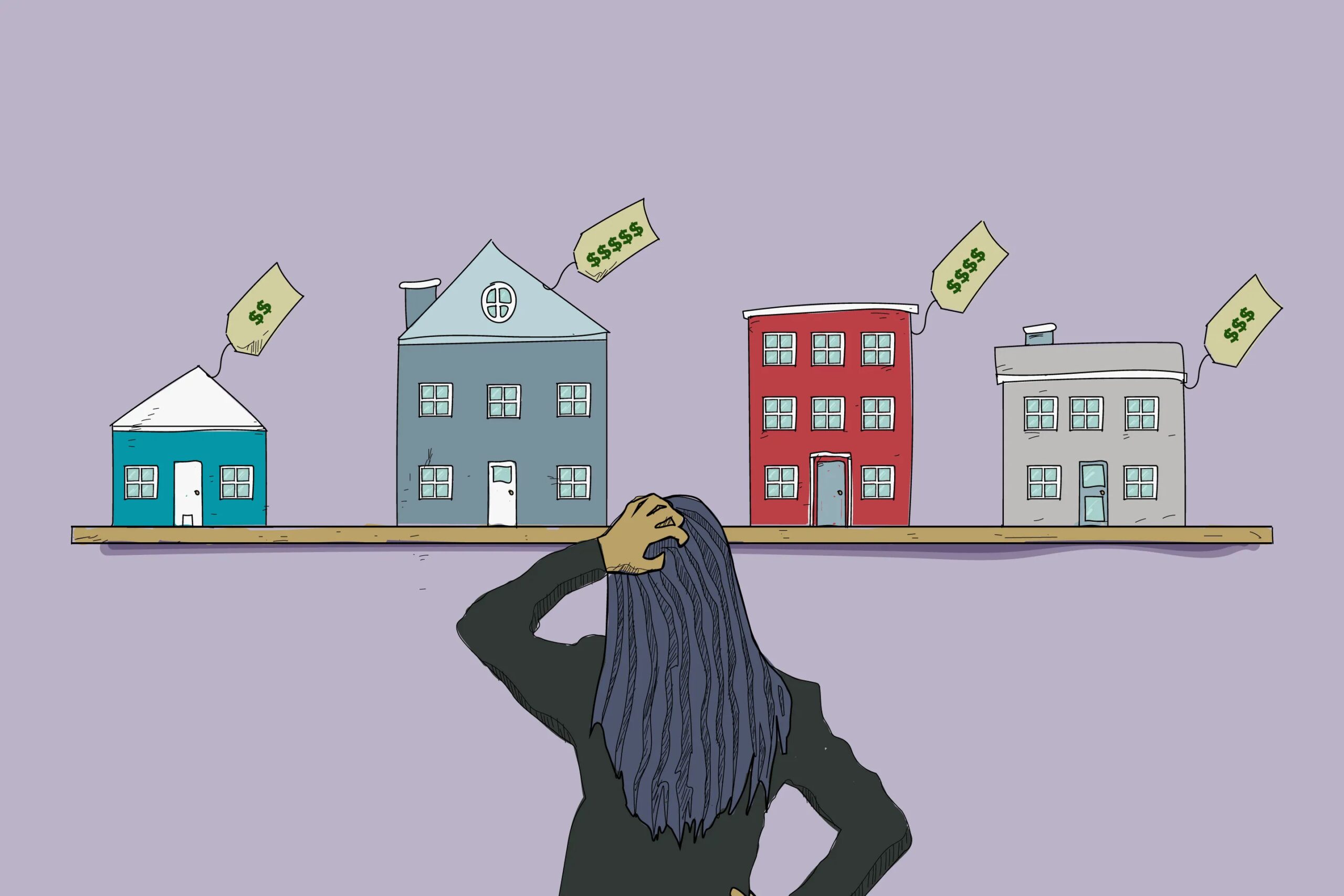
Embarking on the journey to homeownership begins with assessing your financial capacity and establishing a budget. Understanding how much you can spend comfortably is crucial.
-
Your home affordability hinges on various factors, including income, debt-to-income ratio, and mortgage terms.
-
An affordability calculator can help estimate your homebuying budget.
-
Updated February 2026
Purchasing a home represents a major investment and serves as a foundation for long-term financial stability. As you begin this process, it is essential to determine how much you can realistically afford and to set a clear budget.
Several criteria impact your affordability, including your credit score, mortgage type, down payment, and monthly earnings. Gaining insight into these elements is fundamental, particularly for first-time buyers. Utilizing our mortgage calculator can equip you with necessary information to proceed effectively in your homeownership journey.
In this guide, we will explore essential considerations for potential homebuyers.
Understanding Home Affordability
Buying a property can significantly impact your financial landscape for years to come. Therefore, it’s important to meticulously calculate your monthly income and expenditures before making any commitments.
Factors influencing how much home you can buy mainly include:
- Loan amount, mortgage rate, and duration of the loan.
- Gross monthly income.
- Total monthly debts or ongoing expenses, such as credit card bills, student loans, car payments, and other obligations.
- Property taxes, which can vary by state and are typically paid annually or biannually.
- Current mortgage rates and associated closing costs, which differ based on location.
- Homeowners association (HOA) fees, if applicable.
Most buyers opt for conventional mortgage loans, generally requiring a minimum down payment of 3% of the property value. A minimum credit score of 620, a debt-to-income ratio not exceeding 36%, and a monthly payment limited to 28% of pre-tax income are typical parameters.
Lenders will evaluate a buyer’s ability to cover all costs tied to home buying, including closing costs and insurance fees. A larger down payment can enhance your budget, as it reduces the amount you need to borrow, allowing for higher-priced options. Additionally, the interest rate you qualify for, which is largely determined by your credit score, plays a critical role.
It is essential to consider other loan types that may offer more favorable conditions. Our best mortgage lenders resource provides reviews of various lending institutions that could meet your specific requirements.
Affordability with FHA Loans
Your financial situation and credit score will determine the availability of an FHA loan, which typically has more lenient criteria than conventional mortgages.
FHA loans impose maximum qualifying ratios of 31/43 for most applicants with credit scores above 500, meaning no more than 31% of income should go towards housing costs and 43% towards total debt. This makes FHA loans particularly advantageous for individuals with lower incomes or limited credit histories.
If your credit score exceeds 580, you might qualify for a DTI ratio of up to 40/50, provided you meet additional criteria. Generally, compensating factors such as healthy savings, extra income, a large down payment, or a high credit score may be necessary.
Borrowers with scores of 580 or higher can also benefit from a down payment as low as 3.5%, compared to the typical 10% required for lower scores.
It’s important to be aware of the maximum loan limits associated with FHA loans. For single-family homes, these limits vary by county, ranging from $541,287 in low-cost areas to $1,249,125 in high-cost regions, with a common limit of $832,750 in most areas. Below is a summary of these limits:
| One unit | Two units | Three units | Four units | |
|---|---|---|---|---|
|
Maximum limit in low-cost areas: |
$541,287 |
$693,050 |
$837,700 |
$1,041,125 |
| Maximum limit in high-cost areas: |
$1,249,125 |
$1,599,375 |
$1,933,200 |
$2,402,625 |
Affordability with VA Loans
Though VA loans typically have a maximum debt-to-income ratio of 41%, the Department of Veterans Affairs supports loans for those with higher ratios if other conditions are satisfied. These loans do not have specific credit score requirements, although individual scores can influence interest rates, and borrowers may qualify for 0% down payments.
VA loans are reserved for active U.S. military personnel, veterans, and eligible spouses, who must also fulfill specific service criteria to qualify.
Affordability with USDA Loans
USDA loan terms offer more flexibility compared to conventional loans, with no required down payment, allowing for financing up to 102% of the home’s value by including the mortgage insurance fee within the loan.
However, income eligibility limits exist (borrowers’ income must not exceed 115% of the median household income), as well as conditions on the home’s price and dimensions. While you may afford a certain amount, qualifying could restrict you to a less expensive property.
To examine these specific requirements, visit the USDA website for details on qualifying areas and income thresholds by county. Generally, eligibility is confined to rural and select suburban areas.
Calculating Home Affordability
Before delving into real estate listings, establish a price range you can manage. Money’s home affordability calculator provides estimates based on your debt-to-income ratio or predetermined budget.
After inputting your details, you will receive an estimated maximum price for a house, alongside an anticipated monthly mortgage payment.
1. Understanding the Influencing Factors
Mortgage Rates
The interest rate you qualify for significantly impacts your budget, affecting monthly payments and overall loan expenditures.
Current mortgage rates will dictate your rate, but personal factors like your credit score and down payment are even more influential. Typically, a better score and larger down payment yield a lower interest rate.
Your affordability may also depend on choosing between fixed-rate or adjustable-rate mortgages, the length of your loan, and the type of mortgage product. For instance, VA and FHA loans often have lower rates compared to conventional loans, due to government backing that mitigates lender risk. Additionally, shorter loan terms typically come with reduced interest rates.
Credit Scores
Your credit score is pivotal in determining your home affordability. It affects interest rates, approval chances, and the terms offered. Maintaining a favorable score (typically 620 or higher) enhances your chances for better loan conditions and greater accessibility to homeownership.
Credit scores can be obtained from any of the three bureaus — Experian, Equifax, or TransUnion, and many banks or credit card issuers offer free monitoring as part of their services.
Income
Your household’s monthly income is a primary consideration for lenders assessing mortgage applications. Consistent income is critical to demonstrate your capacity to manage monthly payments effectively.
It’s essential to remember that just because a lender approves a loan does not mean it is wise to take on that debt. Assess your overall financial circumstances to ensure that the house you seek aligns with your budget before finalizing any agreements.
Property Value
The property value will dictate the purchase price, down payment needs, loan amounts, property taxes, insurance premiums, and ongoing maintenance costs. Careful consideration of the long-term expenses of each potential property is advisable.
Debt-to-Income Ratio
The debt-to-income (DTI) ratio is a critical metric that mortgage lenders utilize to evaluate qualification for loans and the borrowing amount. Most lenders impose a maximum DTI that borrowers must adhere to in order to qualify, with lower DTI ratios often leading to more favorable lending terms.
Use this DTI calculator to assess your financial status. If your DTI surpasses qualifying limits, contemplate strategies such as reducing existing debts or pursuing additional income sources to improve your ratio.
Property Taxes and Insurance
Property taxes and homeowners’ insurance can contribute significantly to your overall housing expenses. Typically, a portion of these costs is included in your monthly mortgage payment as part of an “escrow” arrangement. Lowering these fees can enhance your budget for housing.
In many cases, if your down payment is less than 20% of the total property value, you will be obligated to pay for private mortgage insurance (PMI), which is also included in monthly payments.
Homeowners Association (HOA) Fees
Some homeowners may incur mandatory monthly fees to their local homeowners association (HOA), designed to maintain shared spaces. If the property you’re considering is part of an HOA, it is essential to factor these fees into your financial planning.
2. Avoid Overextension
Ensure that your monthly mortgage payments are manageable. A commonly accepted guideline suggests that no more than 30% of your pre-tax income should be allocated to housing expenses; however, this may vary among lenders.
Previously, the 28/36 rule was a standard used by lenders to assess borrower affordability. This guideline indicated that housing expenses should constitute no more than 28% of one’s gross income, while total debt payments should not exceed 36%.
This translates to a borrower earning $5,000 per month, who should ideally spend no more than $1,400 on housing costs. For renters, adhering to this guideline means maintaining an equivalent spending threshold. However, for homeowners at the same income level, $1,400 (28%) should encompass monthly mortgage payments, homeowners’ insurance, mortgage insurance, and property taxes.
The 28/36 rule can aid prospective buyers in gauging an affordable housing payment. Nevertheless, many lenders may evaluate a buyer’s capacity to repay with different limits, allowing for up to 50% for conventional loans and 43% for jumbo loans, while FHA and VA loans may have distinct criteria.
3. Review Your Credit Score
It’s vital to check your credit report and determine your credit score prior to beginning your mortgage application process.
Your credit score summarizes your creditworthiness and influences the interest rates offered to borrowers, with higher scores typically leading to lower rates. You are entitled to one free credit report annually from each of the major credit bureaus. Under specific conditions, such as identity theft incidents, additional free access may be granted.
Furthermore, a CARES Act initiative providing free weekly credit reports has been permanently extended.
4. Assess Your Debt-to-Income Ratio
The debt-to-income ratio (DTI) compares your total debt obligations to your pre-tax income and represents a significant factor lenders consider when evaluating your application.
Lenders favor borrowers with DTI ratios below established maximums, potentially offering favorable interest rates to such applicants. Assess your DTI with Money’s debt-to-income ratio calculator.
5. Make a Down Payment
If you do not qualify for a 0% down payment program such as a VA loan or USDA loan, most buyers will be expected to make a down payment. Conventional loans typically require a minimum of 5% of the home’s sale price, while it may be as low as 3% given certain favorable conditions.
For FHA loans, the standard down payment is set at 3.5%. Although not mandatory, a 20% down payment is often recommended, as it can:
- Reduce your loan-to-value ratio
- Lower your monthly mortgage payment
- Qualify you for lower interest rates
- Help avoid private mortgage insurance (PMI)
If accumulating a 20% down payment proves challenging, you may have the option to refinance your mortgage later, eliminating PMI and potentially securing a better interest rate depending on market conditions. For further information on refinancing, consult our resources for the best mortgage refinance lenders and our mortgage refinance calculator.
Strategies for Enhancing Home Affordability
If affording your desired home proves difficult, several strategies can be considered. While some can be implemented immediately, others may require time to take effect.
Lower Your DTI
The debt-to-income ratio is a crucial determinant for lenders. Reducing your DTI by eliminating outstanding debts is a good strategy if you find your ratio too high to obtain a reasonable interest rate or qualify at all.
An optimal DTI is generally 36% or less, including possible housing costs but excluding existing rent payments. For instance, with a monthly income of $5,000, your debt obligations should ideally not surpass $1,800.
If your monthly debts total $600, your housing costs could reach $1,200. To improve your chances of securing a loan, reducing those debts could prove beneficial.
While paying down debts is advisable, increasing your income can also assist. Consider asking for a raise or pursuing supplementary income to aid your financial standing.
Enhance Your Credit Score
Multiple avenues exist to improve your credit score. Begin by reviewing your credit reports from all three bureaus for any discrepancies. If inaccuracies are found, you can contest them, as the agencies are required to address such issues swiftly, which may enhance your score.
For accurate reports, resolve any collection actions and ensure timely bill payments. If feasible, reducing overall credit card debt will also have a positive effect. A higher credit score translates to lower rates and monthly payments.
Explore Federal Loan Options
The mortgage type requested can influence a lender’s discretion during the evaluation process. Loans backed by federal entities, such as FHA, VA, and USDA loans, often come with certain advantages that may facilitate home affordability.
FHA Loans
FHA loans, insured by the Federal Housing Administration, offer increased flexibility from lenders regarding credit and down payment requirements. To be eligible for an FHA loan, the buyer must utilize the property as their primary residence and occupy it within two months of closing.
VA Loans
Individuals with military service or certain connections can apply for a VA loan. VA loans present more lenient conditions compared to conventional and FHA loans, backed by the Department of Veterans Affairs, typically requiring no down payment barring large amounts borrowed.
Eligibility is contingent upon the duration and nature of military service; however, various paths exist for qualification regardless of service status. To gain further insights into the requirements and process for obtaining a Certificate of Eligibility, consult the U.S. Department of Veterans Affairs. For information on available VA loan options, visit our best VA loans resource.
USDA Loans
Supported by the U.S. Department of Agriculture, USDA loans offer several unique benefits not typically available with conventional loans.
Designed for financing homes in designated rural locations, properties must reside in specified areas, generally situated outside major metropolitan regions. Additionally, the home must serve as a primary residence and be relatively affordable.
Eligibility for USDA loans comes with several advantages, including options for building, rehabilitating, improving, or relocating a primary residence without requiring a down payment.
Recent Trends in Housing Affordability
Overall, housing affordability has seen noticeable improvements compared to the previous year. Current mortgage rates are approximately one percentage point lower than those recorded during the same period last year, granting prospective buyers an increase of over $30,000 in borrowing capacity.
Lower rates are also translating to reduced monthly mortgage payments. For instance, a homebuyer securing a $400,000 mortgage at a 6.8% interest rate, which was the average for 30-year loans in February of last year, would see monthly payments of roughly $2,618. At the current average rate of 6.09%, the same loan translates to a payment of approximately $2,427, marking a decrease of about $191.
Forecasts from housing economists suggest that rates will stabilize within the low 6% range for the time being, with potential gradual declines throughout the year. Should this trend continue, mortgage rates could dip to the high 5% range, further enhancing buying power and housing affordability.
Frequently Asked Questions About Home Affordability
What amount is needed for a down payment?
Generally, the advised down payment for purchasing a home is 20% of the sale price. This is due to the fact that lower down payments often necessitate the borrower to pay for private mortgage insurance (PMI), raising the overall cost. Nonetheless, 20% is not always a requirement, as certain types of loans, like FHA loans, can have down payments as low as 3.5%, while VA loans may not require a down payment at all.
How will interest rates impact my home loan?
The interest rate you are offered will hugely affect your monthly payments. For example, a $420,000 home financed for 30 years at a 7% interest rate results in a monthly payment of $2,794.27, whereas the same home at a 9% interest rate increases payments to $3,379.41. Average interest rates can fluctuate by state and lender, influenced by your financial profile.
How is home affordability calculated based on income?
A debt-to-income ratio (DTI) calculator can help determine how much a mortgage lender might extend based on your financial profile. Most lenders favor a DTI of 43% or lower, although some may accept ratios as high as 50%. To calculate DTI, divide your gross monthly income by your monthly debt payments. For instance, an individual earning $2,000 with a $300 car payment and $100 in credit card payments has a DTI of 20%, meaning they spend 20% of income on their debts.
What are the typical monthly costs associated with homeownership?
In addition to the mortgage payment, the monthly cost of homeownership includes homeowners’ insurance, property taxes, HOA fees, and general maintenance costs. These expenses can vary based on location, HOA requirements, and the condition of the home upon purchase.
To summarize Money’s guide on home affordability, the factors dictating how much house you can buy revolve primarily around your qualification for a mortgage loan and your budget for monthly payments, taxes, and insurance. Keep these steps in mind as you prepare for your home purchase:
- Analyze your monthly debts in relation to your gross income to assess your DTI.
- Account for other regular expenses, such as utilities and groceries.
- Prepare for a down payment.
- Evaluate all available loan options, such as FHA and VA loans.
- Utilize a mortgage calculator to prevent surprises in your home-buying journey.