

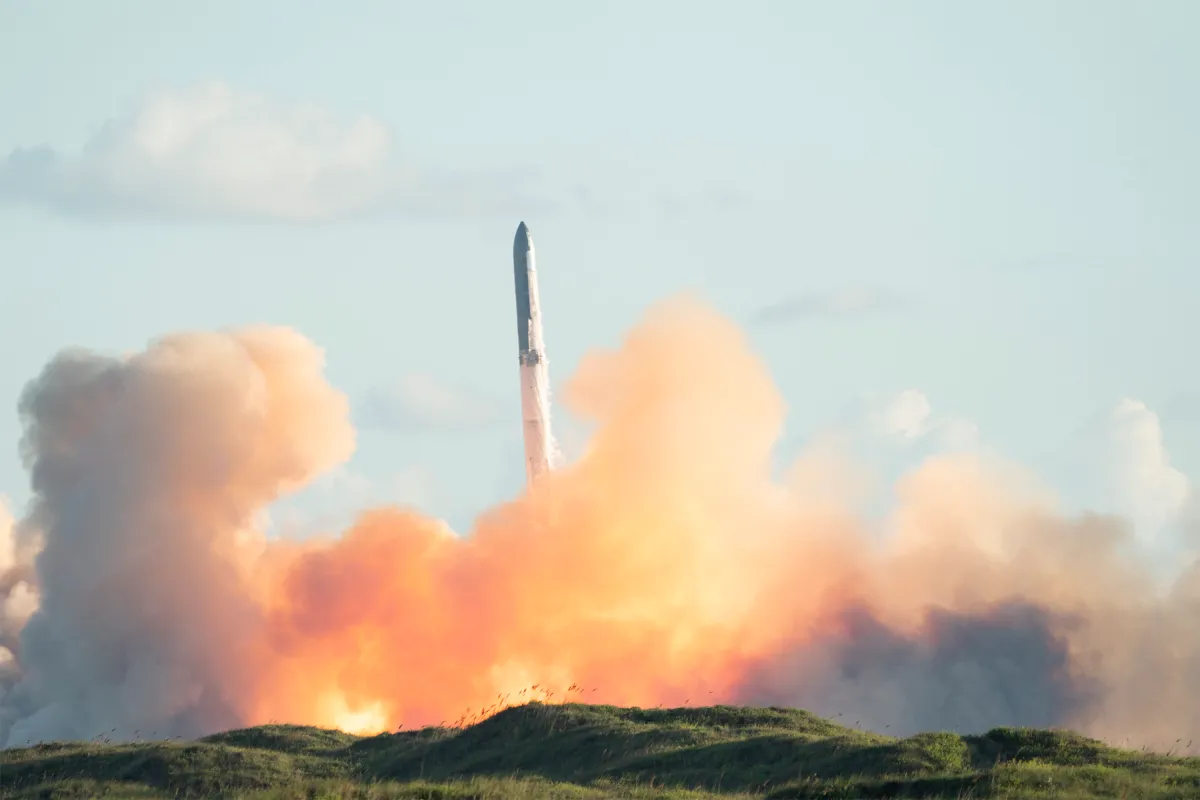
Orbital data centers have moved from science fiction to serious business strategy in a matter of months. SpaceX now sees orbital data centers as central to its growth narrative ahead of what could become the largest IPO in history. The company has filed confidential paperwork with the SEC for a public offering that would target a $1.75 trillion valuation and raise as much as $75 billion, according to multiple reports.
As a result, investors and analysts are paying close attention to what this means for the broader tech infrastructure landscape. In addition, Elon Musk has signaled that orbital data centers will play a defining role in the company’s expansion beyond launch services and Starlink broadband. Consequently, the question is no longer whether space-based compute is feasible. Instead, it is whether the business model behind it can justify a valuation that would place SpaceX among the five most valuable companies on Earth.
Orbital Data Centers and the SpaceX IPO Thesis
SpaceX’s IPO filing arrives at a time when AI-driven compute demand is straining terrestrial infrastructure. Furthermore, land-based data centers face mounting challenges from power availability, water consumption, permitting timelines, and growing community opposition. According to Reuters reporting, the company acquired Musk’s AI startup xAI in February 2026, creating a combined entity that spans social media (X, formerly Twitter), AI chatbot Grok, and now a pathway to orbital data centers.
This vertical integration matters for several reasons. For one, SpaceX generates the majority of its revenue through launch services. Therefore, every satellite deployed for orbital data centers becomes direct revenue for the company. Moreover, as Sean O’Kane noted on TechCrunch’s Equity podcast, Musk benefits whether or not the orbital compute model scales because launches still generate income.
In contrast, competitors like Blue Origin do not control their own launch economics to the same degree. Similarly, no other company combines reusable rocket capability, an existing satellite constellation, and an in-house AI division under one corporate umbrella. As a result, SpaceX holds a structural advantage in this race that very few players can replicate.
Why the Industry Is Eyeing Orbital Data Centers
The appeal of orbital data centers rests on a straightforward energy argument. In space, solar energy is abundant, continuous, and free of permitting constraints. Meanwhile, terrestrial data centers face permitting cycles that can stretch up to five years, alongside rising electricity costs that consume 20 to 30 percent of operating budgets.
However, moving compute infrastructure off-planet introduces a new set of engineering challenges. For instance, cooling processors in the vacuum of space requires massive deployable radiators rather than conventional water or air systems. In addition, radiation exposure, hardware degradation, and latency constraints remain significant hurdles. Industry analyst Roy Chua of AvidThink cautioned that these obstacles could prove more severe in orbit than they did for Microsoft’s abandoned undersea data center, Project Natick.
Nevertheless, these warnings have not slowed investment. Starcloud raised $170 million in a Series A round in late March 2026, reaching a $1.1 billion valuation and becoming the fastest unicorn in Y Combinator history. Benchmark and EQT Ventures co-led the round. Therefore, capital is flowing into orbital data centers from some of the most respected names in venture capital and private equity.
The Competitive Landscape Beyond SpaceX
SpaceX is not the only player chasing orbital data centers. Jeff Bezos and Blue Origin have backed Project Sunrise, a concept designed to add AI computing capacity in orbit using clean solar power. At the same time, Google has explored the idea through its Project Suncatcher initiative, and startups like Aetherflux and Aethero are developing their own space-based computing platforms.
Starcloud stands out among these competitors for its pace of execution. Founded in January 2024, the company launched its first satellite carrying an Nvidia H100 GPU by November 2025. That mission completed the first AI training run conducted entirely in orbit. Consequently, the startup has demonstrated that off-the-shelf processors can operate in space, shifting the conversation from theoretical speculation to engineering refinement.
Additionally, the growing resistance to terrestrial data centers is accelerating interest in alternatives. Communities across the United States have pushed back against new construction, citing noise, water usage, and energy grid strain. In this environment, the social and political obstacles on the ground may eventually rival the engineering challenges in orbit.
Financial Implications for SpaceX’s Valuation
From a capital markets perspective, orbital data centers add a powerful narrative layer to SpaceX’s IPO. The company reportedly booked eight billion dollars in profit last year on revenue between 15 and 16 billion dollars. As a result, the anticipated IPO capital raise would fund growth rather than cover losses, which is a strong signal for institutional investors.
Furthermore, Musk’s plan to deploy up to one million data center satellites creates an enormous pipeline of launch demand. Each Starship flight could carry roughly 50 Starcloud-class satellites, representing about 10 megawatts of computing capacity per mission. Hence, orbital data centers do not simply represent a new revenue stream. They also reinforce the core launch services business.
Of course, skeptics point to Starship’s development timeline as a major risk factor. The vehicle is years behind schedule and has experienced explosive setbacks across its test flight program. MoffettNathanson estimates that meeting Musk’s vision would require approximately 3,000 Starship launches per year, or roughly eight launches every single day. Therefore, the gap between ambition and operational reality remains wide.
Still, the broader trend of AI companies investing in energy infrastructure suggests that the compute supply problem is real and growing. Orbital data centers may represent one piece of a multi-pronged solution rather than a wholesale replacement for ground-based facilities.
How Orbital Data Centers Fit the Broader AI Infrastructure Boom
The push for orbital data centers does not exist in isolation. It sits within a larger wave of infrastructure spending driven by generative AI’s transition from market expansion to disruption. Nvidia CEO Jensen Huang has acknowledged the long-term potential of space-based compute, though he has also urged the industry to prioritize ground-based solutions first since existing infrastructure already offers room for improvement.
In other words, orbital data centers are unlikely to replace terrestrial facilities anytime soon. Rather, analysts expect them to complement ground-based capacity in niche use cases, such as processing data from Earth observation satellites or serving military constellations. Over time, however, declining launch costs and improving satellite hardware could shift that balance.
For SpaceX, the strategic calculus is clear. Whether orbital data centers mature into a trillion-dollar market or remain a smaller segment, the company profits from every satellite launched into orbit. Consequently, the IPO narrative benefits from the concept regardless of near-term feasibility.
Looking ahead, the next 18 months will prove decisive. Starcloud plans to launch its second satellite later in 2026, featuring Nvidia Blackwell chips and commercial workloads for customers including AWS and Google Cloud. SpaceX must also demonstrate that Starship can fly reliably and at scale. Until that milestone arrives, orbital data centers will remain a compelling vision rather than a proven business.
Ultimately, the convergence of AI demand, energy constraints, and space technology is creating a new category of infrastructure investment. Whether orbital data centers justify SpaceX’s lofty valuation depends on execution, timing, and the willingness of customers to place workloads beyond Earth’s atmosphere.
