

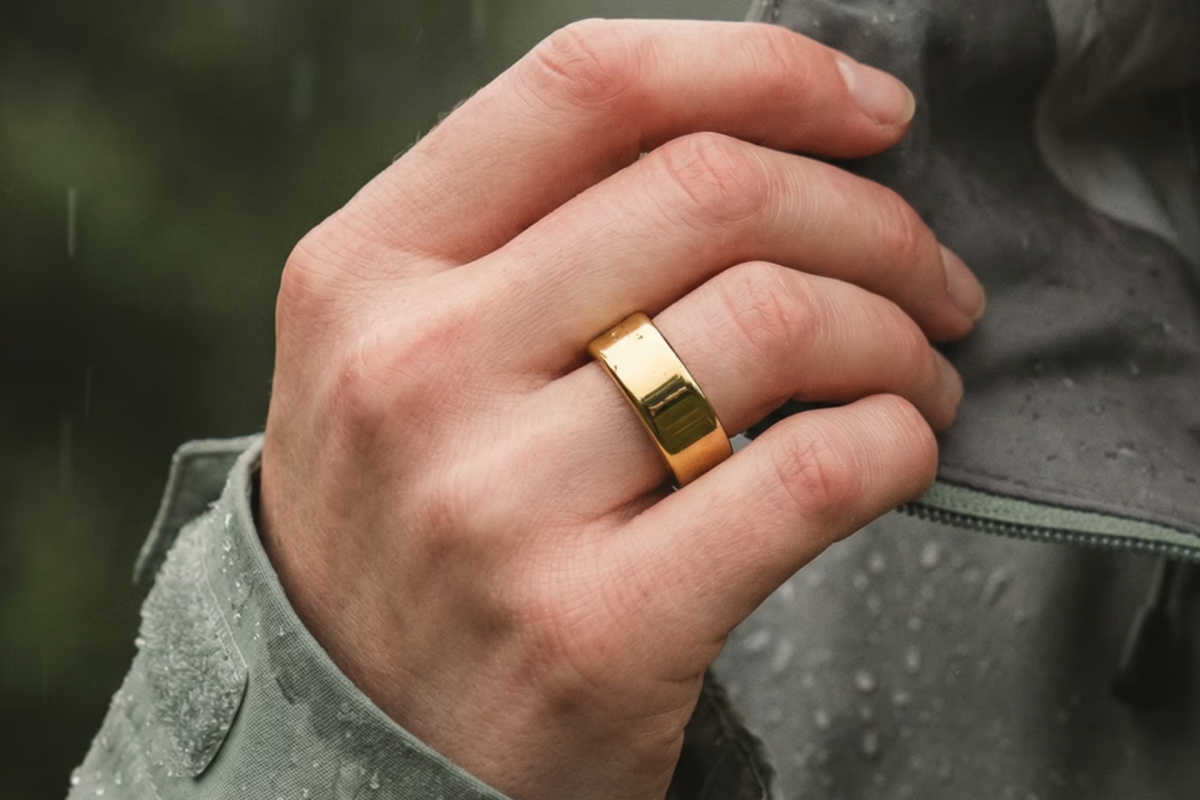
The Ultrahuman Ring Pro is back in the U.S. market. After months of import restrictions and an estimated $50 million in lost sales, the Bengaluru-based health-tech startup has secured customs approval for its flagship Ultrahuman Ring Pro and is preparing a full-scale American relaunch.
Ultrahuman Ring Pro Clears U.S. Customs After Import Ban
U.S. Customs and Border Protection approved the Ultrahuman Ring Pro less than a month after its global debut at the end of February 2026. This approval follows a ruling by the U.S. International Trade Commission in October 2025 that sided with Oura, blocking Ultrahuman from importing its products into the country.
That ITC ruling hit hard. CEO Mohit Kumar said in a recent interview that the company lost roughly $50 million in sales during the period when the Ultrahuman Ring Pro could not enter the U.S. Oura documented the legal victory on its blog, framing the outcome as validation of its patent portfolio. The restriction forced the company to pivot toward European and Asian markets while it worked through the legal and regulatory challenges.
Meanwhile, the redesigned unibody structure of the Ultrahuman Ring Pro played a central role in clearing the regulatory hurdle. This new form factor differed enough from the contested designs to satisfy U.S. customs requirements and open the door for the company’s return.
Smart Ring Market Keeps Growing Without Ultrahuman
While Ultrahuman dealt with its import issues, the U.S. smart ring market kept expanding. The U.S. accounted for approximately 2.6 million units sold in 2025, representing nearly 60% of the global total of 4.4 million units. Year-over-year growth in this segment reached 59%, according to IDC data.
Oura took full advantage of the opening. With the Ultrahuman Ring Pro off shelves, Oura’s U.S. market share surged from 63.3% to an imposing 85%. Ultrahuman’s own share told the opposite story. It climbed from 11.5% in 2024 to 24.6% by Q2 2025, then dropped to single digits by year’s end once the import restrictions took hold.
The Indian startup ecosystem continues to produce ambitious companies with global aspirations, but breaking into and sustaining a U.S. presence remains one of the hardest challenges for any Bengaluru-born brand.
Ultrahuman Ring Pro Features and Pre-Order Details
The new Ultrahuman Ring Pro brings several upgrades that go beyond satisfying import requirements. The unibody design delivers improved battery life and enhanced on-device processing capabilities. These changes position the device as a more capable competitor to Oura’s Ring 4.
Pre-orders for the Ultrahuman Ring Pro have already opened. The device starts at $399, with an early-bird price of $349 available for the first 1,000 customers. Shipping is expected to begin on May 15, 2026.
Kumar downplayed the impact of the absence, framing it as a limited setback. He stated that competitors gained only a three-month advantage during the period when the Ultrahuman Ring Pro was unavailable in the U.S. The company now projects five to six months to reach full-scale U.S. operations as it rebuilds its supply chain and distribution network.
How the U.S. Market Shapes Ultrahuman Ring Pro Strategy
The U.S. has historically been the most important market for Ultrahuman. At its peak, the region contributed up to 50% of total revenue. Even now, roughly 45% of the company’s 700,000 daily active users are based in the U.S., which underscores just how significant the American market is for the Ultrahuman Ring Pro rollout.
That user base also skews notably toward female consumers, a demographic segment Ultrahuman has cultivated through health-tracking features focused on wellness, sleep quality, and recovery metrics. The Ultrahuman Ring Pro tracks heart rate, heart rate variability, skin temperature, sleep stages, movement, and blood oxygen levels.
The company’s revenue mix shifted during the U.S. absence. European and Asian markets picked up some of the slack, but none replaced the volume or revenue density that the U.S. provides. Getting the Ultrahuman Ring Pro back on American shelves is not just a competitive move. It is a financial necessity.
Oura Pushes Into India as Ultrahuman Ring Pro Returns Stateside
The competitive dynamics between Ultrahuman and Oura extend well beyond the U.S. Oura recently launched its Ring 4 in India, stepping directly into what has been Ultrahuman’s home market advantage.
Kumar responded to Oura’s India entry with optimism rather than concern. He argued that increased competition will boost overall market awareness for the smart ring category, which is still developing in India. More consumer attention benefits all players, including the Ultrahuman Ring Pro, in a market where education and awareness remain barriers to adoption.
However, the numbers tell a more complicated story. Smart ring shipments in India declined 30.6% year-over-year in 2025. Despite that decline, Ultrahuman maintained a 30.4% market share, followed by Gabit at 18.3%, according to IDC. The average selling price also dropped 8.7% to $160, reflecting both competitive pressure and maturing price expectations among Indian consumers.
What IDC Predicts for the Ultrahuman Ring Pro and the Broader Market
IDC forecasts double-digit growth for the smart ring market in the U.S. and globally, though India’s trajectory may be slower. Oura’s established international brand presence gives it a structural advantage as it enters new regions, particularly as smaller local competitors fade out and leave room for global players.
The Ultrahuman Ring Pro enters this growth window at a pivotal moment. Recapturing U.S. market share while defending its Indian position will require the company to execute on two fronts simultaneously. The rise of technology-driven commerce models suggests that wearable tech companies like Ultrahuman will also need to adapt their sales and distribution strategies to stay competitive.
Beyond the Ring: Ultrahuman’s Broader Product Ambitions
Ultrahuman is not putting all its bets on the Ultrahuman Ring Pro alone. The company is developing a new wearable focused on a different biomarker, aimed at diversifying its product lineup beyond the current smart ring offering.
This expansion strategy reflects a broader trend in the health-tech wearable space, where companies that rely on a single product face higher risk from competitor moves and regulatory disruptions. By broadening its sensor and tracking capabilities, Ultrahuman can reduce its dependence on the Ultrahuman Ring Pro and build a more resilient business.
The details of the upcoming device remain scarce, but the move signals that Ultrahuman sees itself as more than a smart ring company. Tracking multiple biomarkers across different wearable form factors could position the Ultrahuman Ring Pro as the anchor product in a larger health-monitoring ecosystem rather than a standalone device.
What the Ultrahuman Ring Pro Comeback Means for the Smart Ring Race
The return of the Ultrahuman Ring Pro to the U.S. resets the competitive landscape in the smart ring category. Oura used the absence well and now holds a commanding market share, but market share in a fast-growing segment is less sticky than in mature categories. Consumers switching between brands remains common when new and improved hardware launches. Ultrahuman has publicly committed to its long-term vision despite the legal and regulatory setbacks.
With the Ultrahuman Ring Pro priced competitively at $399 and an early-bird offer at $349, the company is positioning for an aggressive recapture strategy. The combination of a redesigned form factor, improved battery life, better on-device processing, and a motivated user base gives Ultrahuman a credible path back into the U.S. market.
The next six months will determine whether the Ultrahuman Ring Pro can close the gap that the import ban created. For consumers, the renewed competition means better products, sharper pricing, and more choices in a category that continues to grow at impressive rates.
