

Amazon’s $50 Billion Commitment to OpenAI Fuels New AI Chip Development
Shortly after Amazon CEO Andy Jassy announced a landmark investment deal between Amazon Web Services (AWS) and OpenAI worth $50 billion, I was invited to tour the chip development lab central to this partnership, primarily at Amazon’s expense.
Industry analysts are closely monitoring Amazon’s Trainium chip, developed at this facility, as it may significantly lower the cost of AI inference and challenge Nvidia’s current dominance in the market.
Intrigued by the promise of innovation, I accepted the invitation for a tour.
My hosts included the lab’s director, Kristopher King, the director of engineering, Mark Carroll, and Doron Aronson, the public relations representative who coordinated the visit. Their combined expertise gave me unique insight into AWS’s strategic initiatives.
AWS has served as Anthropic’s primary cloud platform since the AI lab’s inception. This relationship has endured even after Anthropic forged a partnership with Microsoft, further deepening Amazon’s ties with OpenAI. The recent OpenAI agreement makes AWS the exclusive provider for its new AI agent builder, Frontier. Should agents gain traction as anticipated in Silicon Valley, this deal could significantly bolster OpenAI’s business effectiveness.
The exclusivity of this deal might face scrutiny. Reports from the Financial Times suggest that Microsoft may perceive Amazon’s partnership with OpenAI as a violation of its own existing agreement with OpenAI, which grants Microsoft access to OpenAI’s complete range of models and technologies.
Why OpenAI Chose AWS for Its AI Solutions
One of the reasons OpenAI gravitated toward AWS is the substantial commitment from Amazon, which has agreed to provide OpenAI with 2 gigawatts of Trainium computing capacity. This substantial backing is noteworthy given the rapid consumption of Trainium chips by both Anthropic and Amazon’s own Bedrock service, which supports enterprise AI applications.
Currently, 1.4 million Trainium chips are deployed across all three generations of the technology. Anthropic utilizes more than 1 million Trainium2 chips for its Claude AI model, emphasizing the demand for AWS’s chip innovations.
Originally designed primarily for faster and cheaper model training, Trainium has been re-engineered to handle inference, the critical process of deploying AI models to generate responses. As inference remains the primary performance bottleneck in the AI industry, Trainium’s capabilities are becoming increasingly relevant.
Notably, Trainium2 processes the majority of inference traffic on Amazon’s Bedrock service, which enables businesses to build sophisticated AI applications while integrating multiple models. According to King, the customer base is expanding rapidly as Amazon increases its production to meet demand, indicating that Bedrock could potentially rival the prominence of AWS’s EC2 service in the future.
Competing Against Nvidia in the AI Space
Amazon’s Trainium chips present a viable alternative to Nvidia’s GPUs, which are often backlogged and hard to acquire. AWS claims the new chips operating on Trn3 UltraServers can deliver comparable performance at up to 50% lower operational costs than traditional cloud servers.
In addition to Trainium3, which was launched in December, the AWS team has developed new Neuron switches that facilitate communication between chips in a mesh configuration—this significantly reduces latency and enhances performance metrics such as price per power.
As applications are increasingly complex, these advancements become crucial. The AWS chip team received recognition from Apple in 2024, marking a significant acknowledgment of their innovative capabilities, especially with earlier chips like Graviton and Inferentia.
The challenge with transitioning to new chips often lies in developers needing to re-architect their applications originally designed for Nvidia’s chips. However, AWS has made strides in simplifying this transition, noting that Trainium now supports the popular open-source framework PyTorch. According to Carroll, migrating to Trainium requires only a minor code adjustment, facilitating Amazon’s ambition to displace Nvidia’s market hold.
This month, AWS also announced a partnership with Cerebras Systems to integrate its inference chip with Trainium servers, promising enhanced performance with lower latency for AI applications.
The State-of-the-Art Chip Lab in Austin
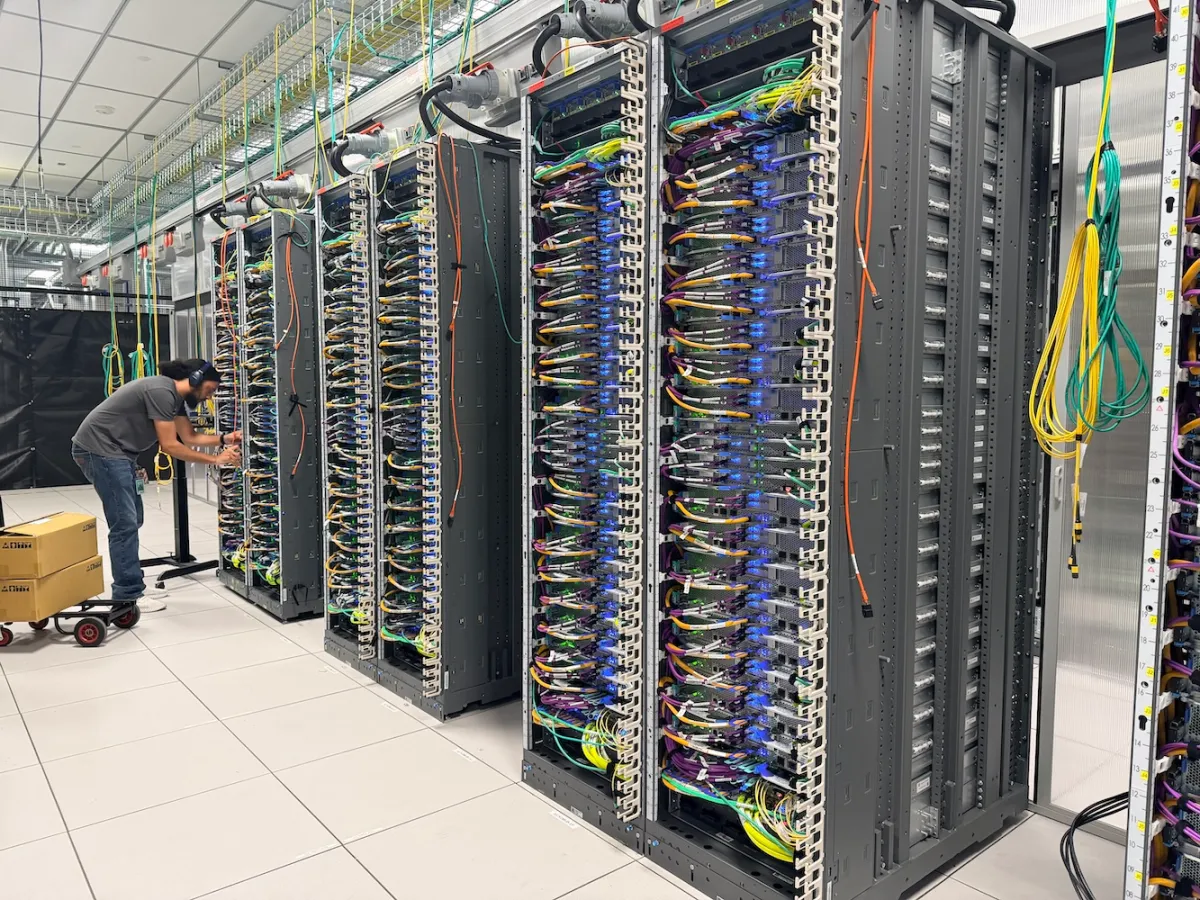
Amazon’s chip design team was established following the acquisition of Israeli chip designer Annapurna Labs in early 2015, giving them nearly a decade of experience developing AWS chips. Nestled in an upscale district of Austin, the lab reflects a typical tech corporate environment with open desks and collaboration spaces that eventually lead to a more industrial lab on a high floor, where prototype development occurs amidst the sounds of fan systems.
The lab’s equipment creates a unique atmosphere reminiscent of a cross between a high school shop class and a Hollywood film set, but one where engineers are dressed casually rather than in lab coats.
This facility is not where chips are manufactured; that occurs elsewhere under stringent quality controls. However, it serves as the critical site for the “bring-up” process, where the chips are activated for the first time after extensive design work, marking a momentous milestone for the team.
King likens the activation of a chip after 18 months of design work to a celebratory event, but warns that challenges are inherent in the process. With the Trainium3 chip, for instance, initial designs for air cooling failed due to dimensional inaccuracies, necessitating on-the-spot modifications by the team to meet activation deadlines.
Innovative Designs and Techniques in AWS’s Chip Development
The lab houses advanced tools for testing and troubleshooting chips, showcasing the work of engineers like Arvind Srinivasan, who meticulously analyzes each chip’s components. Among the highlights of the lab are the specially designed trays, known as “sleds,” that accommodate Trainium AI chips and facilitate their deployment in systems central to projects like Anthropic’s Claude AI.
The sleds are fundamental to the functions of Amazon’s newest custom chips, showcasing the depths of innovation within the lab. Each generation of sleds has been instrumental in grounding the technology at the heart of AWS’s AI capabilities and facilitating the impressive results noted in the industry.
While my guides chose to be modest during the tour concerning the OpenAI partnership, the underlying pride in their work was palpable. Most of their current projects revolve around Anthropic and AWS’s growing requirements rather than directly engaging with OpenAI’s initiatives yet.
Currently, a substantial portion of Trainium2 chips is dedicated to Project Rainier, one of the largest AI compute clusters globally, which went live in late 2025 using 500,000 chips with Anthropic. While there was a visible display highlighting OpenAI’s upcoming use of Trainium, the engineers are currently focused on ensuring their existing projects thrive.
This well-equipped lab also features a secure and monitored environment, emphasizing operational protocols that guarantee a smooth workflow while producing computing innovations vital for AWS’s ambitions in the AI sector.
The meticulous design, rigorous testing, and innovative approaches employed within this facility position AWS as a formidable contender against established players in the chip development and AI landscape.
