

U.S. and Europe Confront Nickel Supply Chain Challenges
The U.S. and Europe are facing a significant challenge in securing access to nickel, a vital mineral used in a wide range of applications from batteries and electronics to missiles and steel production. Despite the increasing demand for nickel, both regions have struggled with mining and refining due to complicated permitting processes and concerns around waste management.
China and Indonesia Dominate Nickel Refining
Currently, Indonesia and China are the leading players in nickel refining. A closer examination reveals that Chinese companies control approximately 75% of the refining capacity in Indonesia, thereby holding sway over more than half of the global nickel supply.
Shift in Supply Chain Strategy Amidst Tensions with China
As geopolitical relations with China have deteriorated, many companies are reassessing their sourcing strategies. Megan O’Connor, co-founder and CEO of Nth Cycle, highlighted that businesses are increasingly exploring domestic refining options in the U.S.
Nth Cycle’s Innovative Approach to Nickel Refining
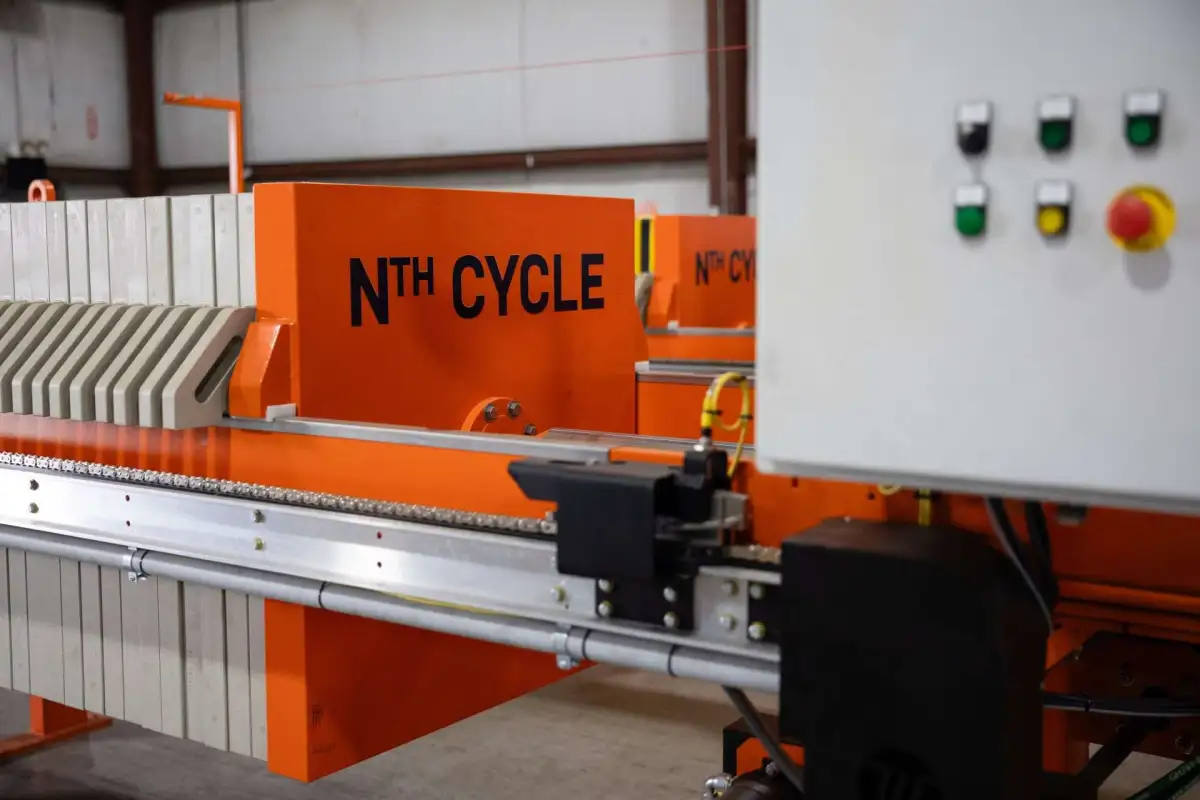
Nth Cycle has developed an advanced electrochemical system aimed at refining nickel and other critical minerals, including cobalt and copper. The startup began production at its Ohio facility, which has the capability to process up to 3,100 metric tons of scrap per year. Recently, Nth Cycle secured a $1.1 billion agreement with commodity trader Trafigura to significantly enhance its production capacity.
The Recycling Landscape is Evolving
In addition to refining, recycling also predominantly occurs overseas. As batteries near the end of their lifecycle, they are often shipped for processing abroad. O’Connor pointed out the economic inefficiency of this practice, where valuable materials are exported only to be repurchased later, resulting in lost value.
Westwin Elements Drives Domestic Refining Efforts
O’Connor is not alone in this venture; Westwin Elements, another emerging company, operates a small nickel refinery in Oklahoma and is seeking to expand its operations with a new facility in Georgia, although it has faced local opposition.
Efficiency Through Modular Design
Nth Cycle believes its modular, electric refining system presents a viable solution to the challenges posed by traditional methods. O’Connor noted that the conventional, large-scale refining operations prevalent in Asia are too capital-intensive to replicate in the U.S. Instead, Nth Cycle’s system, which is five to ten times smaller than traditional refineries, is designed to minimize capital expenditures and expedite profitability.
Adapting to Future Battery Demands
While the anticipated influx of electric vehicle (EV) batteries that require recycling has yet to arrive, O’Connor remains confident that there are sufficient raw materials available in the U.S. and Europe to support the two new facilities being built in South Carolina and the Netherlands, which together aim to process 18,000 metric tons of scrap. Nth Cycle’s process is adaptable, enabling it to adjust based on evolving material compositions.
Strategic Growth as Market Demands Emerge
O’Connor warns that alternative strategies that overly depend on economies of scale could leave companies vulnerable until broader waste volumes become available. Nth Cycle’s adaptable approach allows for incremental scaling of operations as battery waste increases. “That’s how you build refining capacity in the U.S.—by matching the volumes,” she emphasized.
