

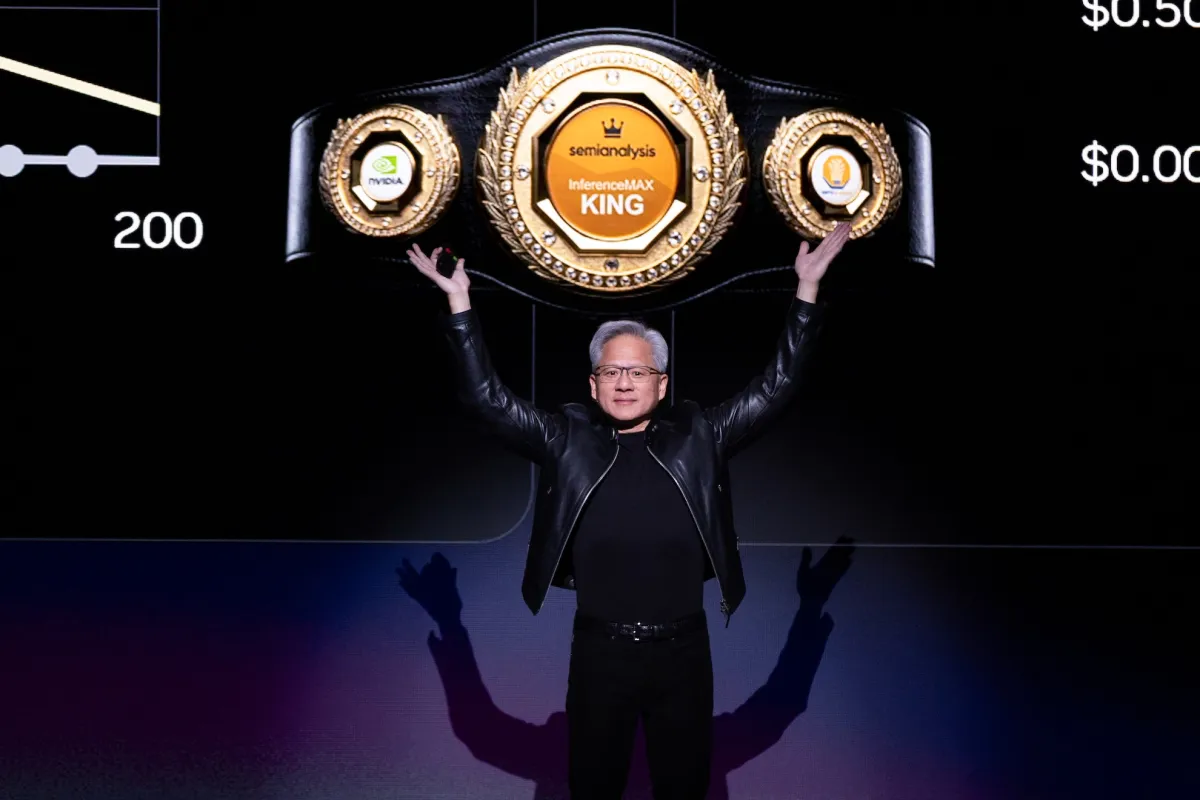
Nvidia CEO Unveils Impressive Financial Projections at GTC Conference
Nvidia CEO Jensen Huang delivered a compelling keynote to kick off the company’s annual GTC Conference in San Jose, California, highlighting significant advancements in technology and ambitious financial forecasts. Among the noteworthy figures he presented, one captured the attention of investors: Huang projected $1 trillion in orders for Nvidia’s Blackwell and Vera Rubin chips, reflecting the explosive growth in the artificial intelligence sector.
Demand Surges to Unprecedented Levels
During his keynote, Huang emphasized that Nvidia experienced around $500 billion in demand for its Blackwell and upcoming Rubin chips in the previous year, with projections extending through 2026. He remarked on the magnitude of this figure, stating, “$500 billion is an enormous amount of revenue,” before confidently dubbing the current momentum as indicative of future success. With an optimistic outlook, he announced the expected demand to reach at least $1 trillion by 2027.
Introducing the Next Generation of AI Hardware
The Rubin computing chip architecture, unveiled in 2024, was highlighted as a groundbreaking advancement in AI technology, surpassing the capabilities of its Blackwell predecessor. Nvidia disclosed that the Rubin architecture will operate 3.5 times faster on model-training tasks and five times faster on inference tasks, achieving a remarkable performance of up to 50 petaflops. This impressive increase underscores Nvidia’s commitment to leading the advancements in AI hardware.
Plans for Increased Production in 2026
Nvidia is gearing up for a significant production boost, with plans to ramp up manufacturing in the latter half of the year. This strategic move aims to meet the growing demand for AI-focused technology, particularly as industries increasingly rely on advanced computing power to drive innovation and efficiency.
The Growing Appeal of AI Technology
The projected financial figures and technical advancements shared by Huang reflect a broader trend in the technology sector, where AI applications are becoming central to various business models. As companies leverage AI technologies to enhance their operations, the demand for high-performance computing solutions will only continue to rise, positioning Nvidia at the forefront of this $1 trillion opportunity.
Investor Confidence in Nvidia’s Vision
Huang’s bold projections are likely to bolster investor confidence, solidifying Nvidia’s standing within the competitive landscape of tech firms. As the company continues to innovate and expand its product offerings, stakeholders are keen to see how successful Nvidia will be in capturing the anticipated demand and translating it into revenue growth.
Conclusion
As Nvidia sets its sights on a transformative future in AI, the announcements made at the GTC Conference serve as a testament to the company’s potential for unprecedented growth in the coming years. With state-of-the-art hardware and strategic production plans, Nvidia is poised to lead the charge in an increasingly AI-driven world.
