

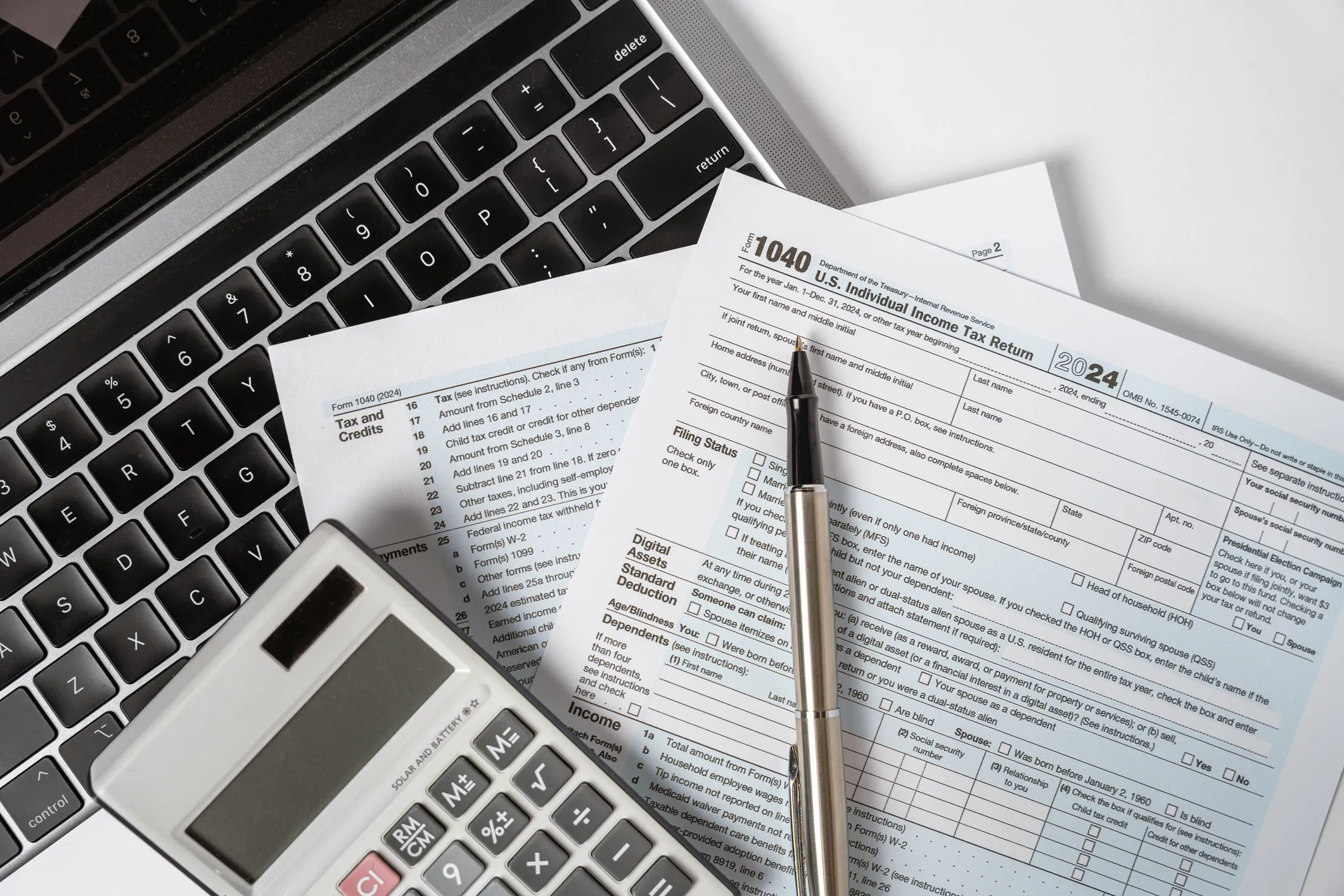
The federal government is diligent in collecting owed taxes, and when debts escalate into thousands of dollars, it can become increasingly challenging for taxpayers to manage the compounded penalties and interest associated with these amounts.
As tax liabilities grow, understanding the implications is crucial. Here’s what taxpayers should consider.
Accumulation of Penalties and Interest
Taxpayers who fail to pay their tax dues will incur late fees. The penalty for non-payment stands at 0.5% of the owed amount for each month or part of a month, with a maximum cap of 25% of the total unpaid debt.
Additionally, interest will accrue on the outstanding balance at a rate equivalent to the federal short-term rate plus 3%. This rate is recalibrated quarterly and compounds daily, causing significant increases in the owed sum over time.
Understanding Liens and Levies
Should payments remain outstanding, the Internal Revenue Service (IRS) has the authority to impose a federal tax lien on taxpayer assets, signifying a claim on property. This action is more likely to occur with larger balances, according to H&R Block.
A federal tax lien can hinder access to credit and complicate loan acquisition or property sales. Furthermore, the IRS can execute a levy, which may lead to the seizure of assets such as wages, bank funds, vehicles, real estate, and other personal property.
The IRS may also withhold up to 15% of Social Security benefits as part of its collection efforts.
Monitoring Communication from the IRS
Taxpayers receiving a CP14 notice will be informed of any outstanding balance following the filing of their taxes. It is advisable to settle this amount promptly if possible.
Failure to pay will result in further reminders; a CP501 notice serves as an initial reminder, followed by a CP503 notice as a second reminder. A CP504 notice indicates the IRS’s intention to impose a levy, while a LT11 notice or 1058 letter is the final notification regarding the impending levy.
The Ten-Year Statute of Limitations
The IRS generally adheres to a ten-year deadline, known as the Collection Statute Expiration Date (CSED), to recover taxes, penalties, and interest after the tax is assessed. Various circumstances can pause this timeline, including bankruptcy filings or the submission of compromise offers or installment agreements.
However, waiting out the ten-year period is not advisable, as the IRS employs rigorous collection measures alongside the accumulation of additional interest and penalties.