

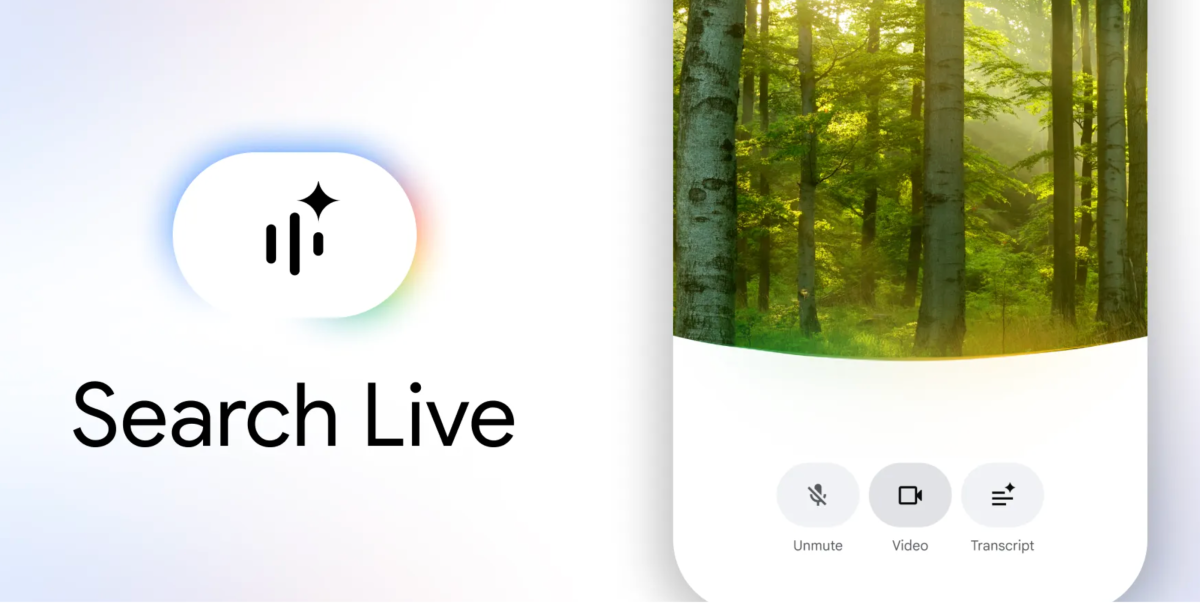
Google Search Live just went global. The AI-powered conversational search feature now works in over 200 countries and territories, making it one of the biggest search updates Google has shipped in years. Previously limited to users in the United States and India, this expansion puts real-time voice and camera search in the hands of billions of people worldwide.
The timing matters for anyone working in tech, marketing, or fintech. Google Search Live changes how people find information by letting them talk to Search and show it what they are looking at through their phone camera. That shift has major implications for how businesses build their online presence. Here is what you need to know about the rollout and why it matters.
Google Search Live Runs on Gemini 3.1 Flash Live
The global rollout hinges on a brand new AI model. Gemini 3.1 Flash Live is what Google calls its highest-quality audio and voice model to date. It powers every search interaction, handling voice input, visual context from the camera, and spoken responses in real time.
What makes this model different from its predecessors? Speed and tonal understanding top the list. The model processes speech faster and picks up on acoustic details like pitch, pace, and tone. When a user sounds frustrated or confused, Gemini 3.1 Flash Live adjusts its response style to match the situation. That kind of dynamic behaviour was not possible with earlier versions.
The model also scores 90.8% on ComplexFuncBench Audio, a benchmark that measures multi-step function calling. On Scale AI’s Audio MultiChallenge, it leads with 36.1% using its thinking mode. Those numbers matter for developers building voice-first applications, but everyday users will notice the difference as smoother and more natural conversations.
How to Access Google Search Live on Your Phone
Getting started with Google Search Live is straightforward. Open the Google app on any Android or iOS device and tap the Live icon below the search bar. From there, you can ask questions out loud and receive spoken answers. Follow-up questions work naturally without restarting the conversation.
The camera feature adds another dimension. If you need help with something physical, like assembling furniture or identifying a plant, just enable your camera. The tool can see what the camera sees and tailor its suggestions accordingly. It also provides web links so you can dig deeper into any topic it covers.
For users who already rely on Google Lens, there is good news. You can access the feature directly from within Lens by tapping the Live option at the bottom of the screen. That integration means visual search and conversational AI work together in a single experience rather than as separate tools.
Why This Matters for Businesses and Marketers
Voice and visual search are not new concepts. However, Google Search Live packages them into something that works well enough for mainstream adoption across 200+ countries. That scale changes the equation for anyone who depends on search visibility.
Traditional SEO focused almost entirely on typed queries. Voice queries tend to be longer, more conversational, and often location-specific. When someone asks Google Search Live a question out loud, the phrasing is closer to natural speech than to the keyword strings marketers have optimised for over the past two decades. Businesses that adapt their content to match conversational patterns will have an advantage.
The visual search component matters too. When a user points their camera at a product, a storefront, or a document, they expect instant context. That creates new opportunities for brands to surface in search results through image optimisation, structured data, and visual content strategies. AI-driven SEO and AEO engines are already emerging to help businesses prepare for this shift, and the global rollout accelerates the urgency.
Multilingual From Day One
One of the standout technical details is that Gemini 3.1 Flash Live is inherently multilingual. Google did not build separate models for each language. Instead, the architecture handles over 90 languages natively, which is what made the Google Search Live global expansion possible without a phased country-by-country rollout.
That multilingual capability means Google Search Live works in a user’s preferred language regardless of where they are. A Japanese-speaking tourist in Paris or a Spanish-speaking business owner in Sydney can use the feature without switching language settings. The system detects the language automatically and responds accordingly.
For fintech companies and global platforms, this has practical implications. Customer support, product discovery, and onboarding experiences that rely on search now operate in a genuinely multilingual environment. Balancing AI automation with human expertise becomes even more relevant when your customers interact with AI search in dozens of languages before they ever reach your website.
SynthID Watermarking Addresses Safety Concerns
Every piece of audio generated by Gemini 3.1 Flash Live carries a SynthID watermark. This is an imperceptible marker woven directly into the audio output that allows for reliable detection of AI-generated content. Google introduced the measure to help prevent the spread of misinformation through synthetic speech.
The watermarking runs automatically on all Search Live audio responses. Users do not need to enable it or take any action. It operates in the background as part of the model’s output pipeline. For businesses and regulators concerned about AI-generated content flooding public channels, this is a meaningful safety feature.
It also signals where the broader industry is heading. As AI-generated voice content becomes more common, the ability to verify whether audio came from a human or a machine will matter for compliance, trust, and brand integrity. Google building this into the model layer rather than bolting it on afterward sets a precedent other companies will likely follow.
Google Translate Gets a Parallel Upgrade
Alongside Google Search Live, Google also expanded its Live Translate feature to iOS users in additional countries. The functionality lets users hear real-time translations through any pair of headphones, powered by the same Gemini models driving the search expansion.
New countries gaining access include Germany, Spain, France, Nigeria, Italy, the United Kingdom, Japan, Bangladesh, and Thailand. The feature supports over 70 languages and works with both Bluetooth and wired headphones. Google originally launched the headphone translation beta on Android in late 2025, and this iOS expansion brings it to a much wider audience.
Combined with Google Search Live, these updates paint a clear picture. Google is making real-time AI interaction the default across its product ecosystem, from search to translation to visual recognition. For agentic AI in business environments, that shift toward always-on, multimodal AI creates new operational possibilities and competitive pressures at the same time.
Enterprise Adoption Is Already Underway
Google Search Live and Gemini 3.1 Flash Live are not limited to consumer search. Companies including Verizon, LiveKit, and The Home Depot have already provided positive feedback on the model’s performance in their workflows. Home Depot has integrated it into their contact centre experience, while Verizon is using it for customer-facing voice interactions.
For developers, the model is available in preview through the Gemini Live API in Google AI Studio. Enterprise customers can access it via Gemini Enterprise for Customer Experience. That dual availability means Google is pushing both consumer adoption and enterprise integration simultaneously, which tends to accelerate ecosystem-wide shifts in how people interact with technology.
Google Search Live is no longer an experimental feature tucked away in a few markets. It is a global product backed by a model that handles voice, vision, and multilingual conversation in real time. Whether you are a consumer, a developer, or a business owner, how you engage with search just changed.
