

Rimac’s Vision for Urban Electric Robotaxis Takes Shape
Mate Rimac, the founder of the Croatian electric vehicle manufacturer Rimac Group, embarked on the journey to develop electric robotaxis seven years ago. His vision is now becoming a reality, thanks to a strategic partnership formed between Uber, the Chinese autonomous vehicle company Pony.ai, and Rimac’s own robotaxi startup, Verne.
Launch Plans for Robotaxi Service in Europe
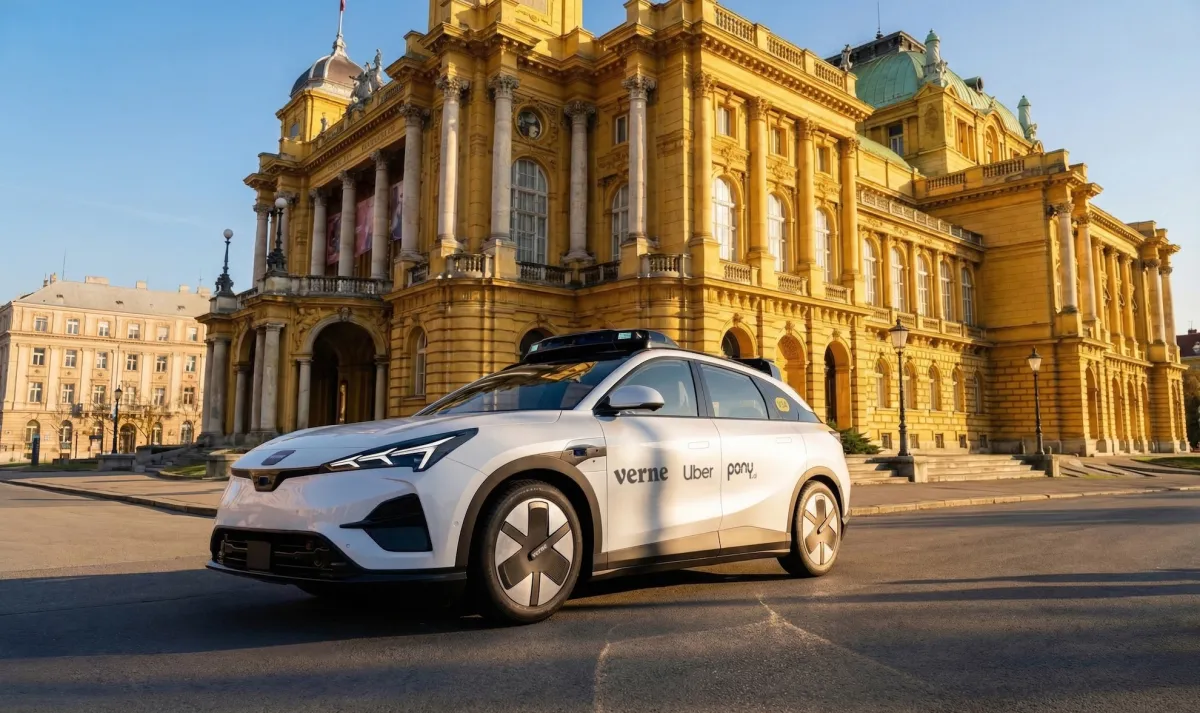
On Thursday, the three firms unveiled their plans to introduce a commercial robotaxi service in Europe, beginning in Zagreb, Croatia. Pony.ai will provide its autonomous driving technology along with the Arcfox Alpha T5 robotaxi, which was developed in collaboration with Chinese automaker BAIC. In this venture, Verne will manage and operate the fleet, while Uber will leverage its extensive ride-hailing network to facilitate the service.
Investment from Uber and Future Expansion
Uber has expressed its intention to invest an undisclosed sum into Verne, aiming to bolster its strategic partnership and support future growth opportunities.
Testing Underway as Companies Prepare for Launch
While the companies have not disclosed a precise launch date for the commercial service, they have confirmed that on-road testing is already taking place in Zagreb, the home city of Rimac Group.
Growing Ambitions of Verne Despite Limited Recognition
Although Verne lacks the widespread recognition of industry giants like Waymo or Tesla—especially in the United States—it shares similar ambitious goals. Established in 2019 as Project 3 Mobility within Rimac Group, Verne is part of a growing ecosystem that includes Rimac Bugatti, Rimac Energy, and Rimac Technology, with Mate Rimac holding a 23% stake in the enterprise.
Funding and Insights into Future Plans
Occasional updates about Verne’s progress were shared over the years, but it wasn’t until July 2024 that the company officially launched with €100 million in funding, providing a clearer picture of its objectives.
Purpose-Built Robotaxis for Urban Environments
Rimac has always envisioned Verne operating an urban robotaxi service consisting of purpose-built two-seater electric vehicles. Despite the contrast to his other venture, the Nevera—a high-end electric hypercar priced around $2.2 million—Rimac clarified that his focus is on creating automated vehicles rather than high-volume consumer EVs, based on his belief that autonomous technology will render traditional driving obsolete.
Focusing on Backend Infrastructure
While Verne is not developing its own self-driving technology, the company is concentrating on crafting the urban electric vehicle, the ride-hailing app, and the necessary backend systems to manage the fleet, including cleaning and maintenance protocols.
Plans for Manufacturing and Initial Service Offerings
Verne aims to manufacture its robotaxi electric vehicles at a new factory in Lučko, Croatia, which is expected to commence operations later this year. Although the company has yet to launch its own two-seater vehicles, it indicated in November that it had produced and tested 60 verification prototypes.
Small-Scale Launch with Ambitious Expansion Plans
Initially, the Verne robotaxi service will utilize the Pony.ai-BAIC Arcfox Alpha T5 vehicle. Users will be able to request rides through Uber and Verne’s own app. While the commercial launch will begin on a modest scale, Verne has ambitious plans to expand its fleet to thousands of robotaxis in the coming years. CEO Marko Pejkovic emphasized the need for autonomous mobility solutions in Europe, underscoring the goal of transitioning from testing phases to a fully operational service beginning in Zagreb and eventually reaching new markets.
