

Blue Origin Proposes Launch of Extensive Orbital Satellite Network
Blue Origin, the aerospace company founded by Amazon chairman Jeff Bezos, has sought approval from the U.S. government to deploy a network of over 50,000 satellites designed to function as a data center in orbit.
Details of Project Sunrise Unveiled
In a document submitted to the Federal Communications Commission (FCC) on March 19, Blue Origin’s legal representatives outlined “Project Sunrise.” This initiative aims to establish a network of spacecraft capable of performing advanced computations in space, with the goal of “alleviating mounting pressures on U.S. communities and natural resources by relocating energy and water-intensive computing from terrestrial data centers to orbit.”
Computing Power Ambiguities
While the filing includes little detail about the satellite network’s computing capabilities, it highlights a partnership with another proposed constellation, TeraWave. This high-throughput communications network will support the data satellites, facilitating their operations in space.
Attraction of Orbital Computing
The concept of relocating significant computing tasks to space is appealing due to the abundance of solar energy and the reduced regulatory restrictions once satellites are in orbit. Innovators envision a scenario in which artificial intelligence (AI) tools are ubiquitous, with much of the computational inference being managed from these orbital facilities.
Competitive Landscape in Space Data Centers
Blue Origin is not alone in exploring this ambitious frontier. SpaceX has sought permission to launch up to one million satellites for its distributed data center project, while the startup Starcloud has proposed a network of 60,000 spacecraft. Google is also developing a project named Suncatcher, which aims to deploy two demo satellites next year in collaboration with partner Planet Labs.
Economic Challenges Faced by Space Initiatives
Despite the excitement surrounding space data centers, the financial viability of these projects remains uncertain. Effective cooling solutions for processors, as well as efficient communication technologies utilizing powerful lasers, must be developed at minimal costs. Moreover, researchers are still investigating how advanced chips perform under the high radiation conditions present in space.
Launch Cost Considerations
The expense of launching these computing systems is another critical consideration. Many in the industry are banking on reduced costs resulting from SpaceX’s Starship rocket, which is currently underway in development and expected to have its maiden launch in 2026.
Blue Origin’s Potential Advantages
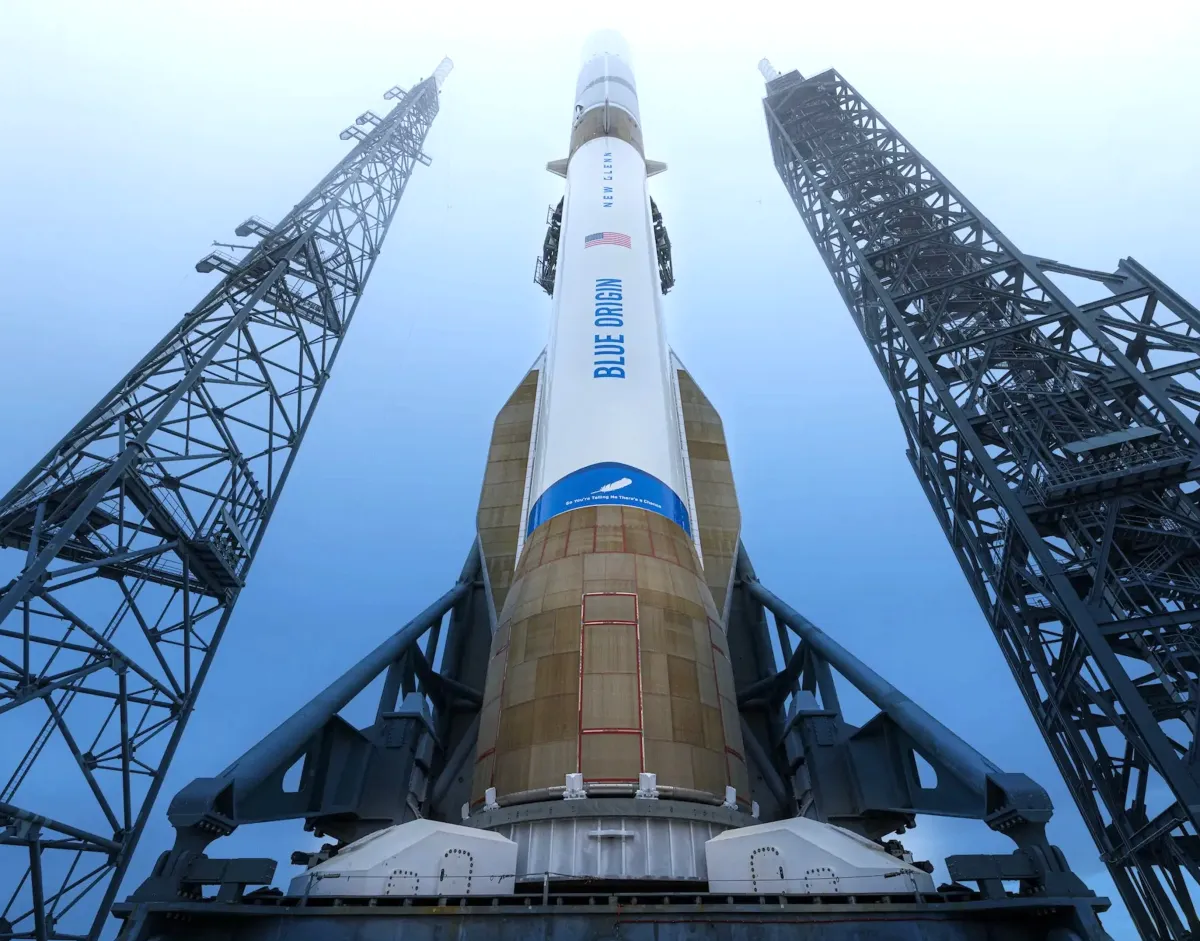
Blue Origin, traditionally seen as a secondary player in the launch market, may find itself at an advantage thanks to its New Glenn rocket. This powerful launch vehicle has the potential to enhance the frequency and regularity of satellite deployments. By streamlining operations, Blue Origin could replicate the vertical integration model that has successfully positioned SpaceX as a leader in satellite communications with its Starlink network.
Challenges in Orbital Management
Beyond technological and economic hurdles, the increasingly congested nature of orbital space poses significant risks. The deployment of tens of thousands of new satellites raises concerns about potential collisions. Additionally, standard industry practices for decommissioning obsolete satellites could have adverse effects on the upper atmosphere’s chemistry, prompting worries about damage to the ozone layer.
Timeline for Project Execution
The FCC filing did not specify a timeline for the deployment of the satellite network, but experts suggest to TechCrunch that the realization of such ambitious projects is unlikely before the 2030s.
