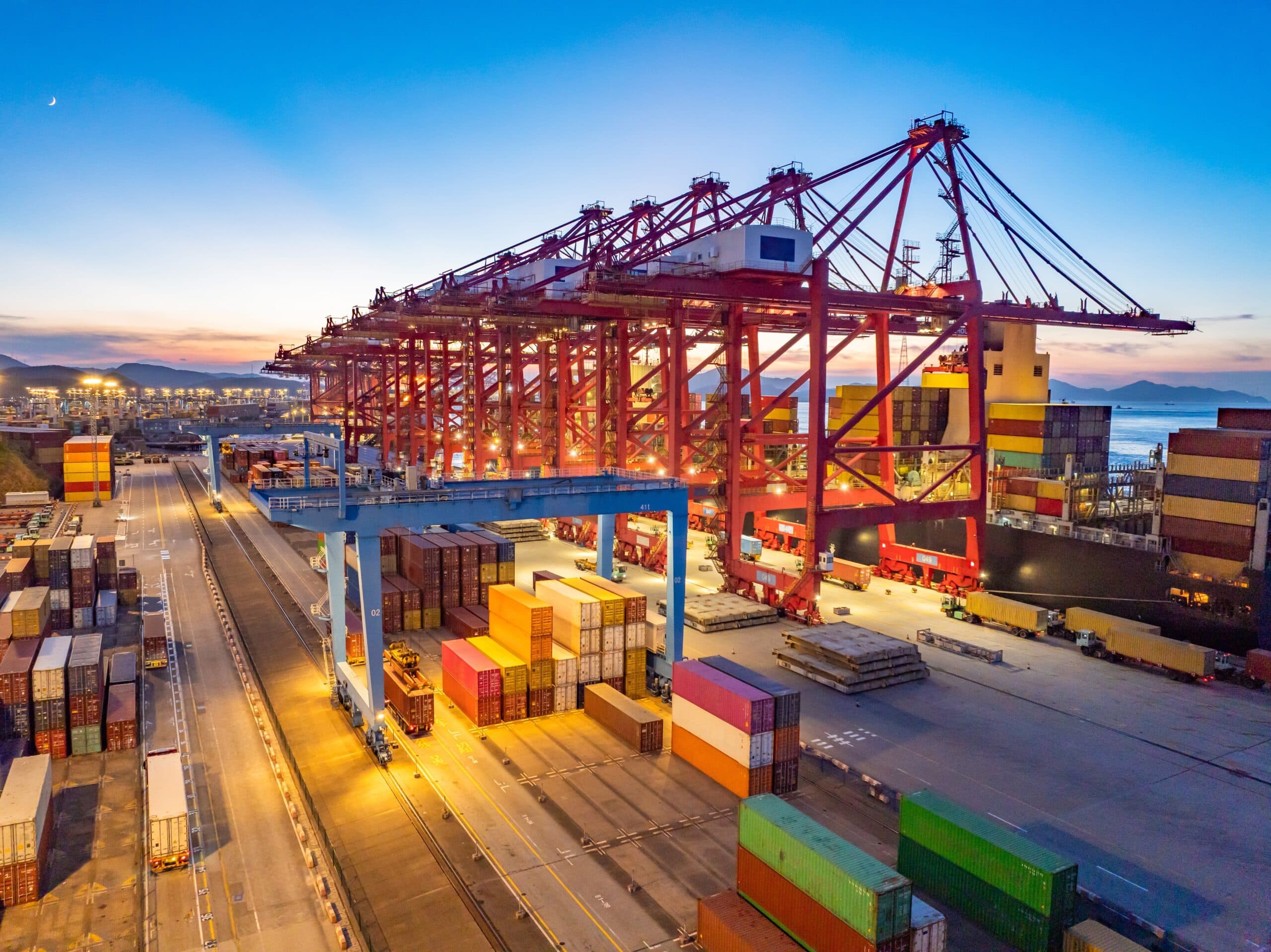
China ASEAN trade corridor volumes are rewriting the map of regional commerce. The New International Land-Sea Trade Corridor, anchored in Chongqing and linked southward through Guangxi’s Beibu Gulf ports, processed 1.425 million twenty-foot equivalent units (TEUs) in 2025, up 47.6% year on year and crossing one million tons for the first time. Trade value between January and October hit 1.35 trillion yuan ($196 billion), a 17.9% rise on the prior period.
The scale matters because the flow is still early. Most of the volume growth so far has come from just a handful of corridor-linked provinces. As policy support, physical infrastructure, and digital payments rails all lock in together for the China ASEAN trade corridor, 2026 looks set to accelerate the trend rather than plateau it.
Inside the China ASEAN Trade Corridor Numbers
Lynn Song, Chief Economist for Greater China at ING in Hong Kong, points out that bilateral trade has intensified since the corridor’s 2017 launch. ASEAN’s share of Chinese exports rose from 12.4% in 2017 to 17.6% in 2025, with local initiatives still expanding logistics channels. Shipments from China to Southeast Asia jumped 29.4% in dollar terms during January and February 2026, far outpacing the 7.1% growth forecast in a December Reuters economists’ poll.
Overall Chinese exports grew 21.8% in the same two-month window. Imports climbed 19.8%, producing a record $213.6 billion monthly trade surplus, up 25.3% year-on-year. That followed a full-year 2025 surplus of $1.2 trillion. The China ASEAN trade corridor sits inside those numbers as one of the most active lanes.
Professor Christoph Nedopil-Wang from the University of Queensland Business School notes that China’s exports to ASEAN have climbed steadily from roughly 5.5% of total exports in 2000 to over 15% by 2024. Imports from ASEAN, meanwhile, have plateaued near 15% of China’s import mix for five years running.
Why Inland China Needed a Southern Gateway
Chongqing currently handles about 251,800 TEUs. That number looks small next to Shanghai’s 55 million, and that gap is precisely the business case. Western China’s goods historically had to cross the country to reach the east coast before they could ship abroad. The China ASEAN trade corridor cuts that detour.
According to analysis from China Briefing in February 2026, foreign companies are now using the corridor as a route-diversification tool for shipping resilience on China-ASEAN lanes. The most gains show up on SKU and lane pairs where rail-sea routing delivers measurable improvements in transit time, reliability, or total landed cost after switching and handling.
The corridor covers 157 nodes across 73 cities in 18 provinces, and reaches 583 ports in 127 countries. As the Global Times reported, western China recorded 611.5 billion yuan in imports and exports via the corridor in the first three quarters of 2025 alone, a 19.3% year-on-year lift, which pushed overall western foreign trade growth up by 3.4 percentage points.
The Pinglu Canal Unlock Changes Economics
The Guangxi Pinglu Canal is the next structural upgrade. Designed for 5,000-ton vessels, the waterway links Nanning to the Beibu Gulf and is scheduled to enter service by the end of 2026. Annual capacity tops 89 million tons.
Nedopil-Wang argues that activating the canal will significantly improve connectivity between China’s southwestern provinces and ASEAN economies, cutting transport times from weeks to days. In turn, rail-sea handoffs that still rely on longer routings should compress further. The China ASEAN trade corridor will start behaving less like a pilot program and more like a primary shipping lane.
Global logistics teams are already rerouting. Loop’s $95 million AI platform for predicting supply chain disruptions shows how data-driven logistics firms are restructuring exposure, and the corridor is one of the clearest recent cases where physical infrastructure and digital forecasting converge.
Digital Renminbi and the Financing Layer
Physical infrastructure is only half the story. In late December 2025, the People’s Bank of China and seven other departments jointly issued 21 financial support measures for the corridor. The measures cover infrastructure connectivity, cross-border investment, trade settlement, and broader use of the digital renminbi (e-CNY).
The South China Morning Post reported that the package explicitly pushes e-CNY pilots between mainland China and Singapore, with planned expansion into Thailand, Hong Kong, the UAE, and Saudi Arabia. Yao Li, who heads the PBOC’s Chongqing Municipal Branch, said the program will build on Project mBridge and the China-Singapore bilateral digital renminbi pilot to enable near-instant cross-border settlement for enterprises.
The parallel is hard to miss. Just as stablecoins are reshaping payroll in western markets, the digital renminbi is reshaping corridor trade finance. Both solve the same underlying problem: settlement friction slows real economic activity, and reducing that friction compounds.
What ASEAN Gets From the China ASEAN Trade Corridor
Singapore and Malaysia are already aligning. The Singapore-Chongqing Connectivity Project, established in 2015, pre-dates the corridor itself but feeds directly into it. In December 2025, Singapore’s Infocomm Media Development Authority and China’s National Data Administration signed an MOU on a Digital New ILSTC, covering AI, blockchain, data analytics, and broader digital economy cooperation.
Nedopil-Wang notes, however, that benefits for ASEAN exporters will depend on their ability to offer competitive industrial or consumer goods that appeal to southwestern China. The China ASEAN trade corridor is not symmetrical by default. Chinese exporters get the biggest immediate upside. ASEAN producers have to compete for the southbound share of that traffic.
The e-CNY layer partially closes that gap. Cheaper, faster settlement lowers the commercial cost for smaller ASEAN exporters who previously found corridor participation operationally out of reach.
The Bigger Trade Map
Context matters. The China ASEAN trade corridor is unfolding while Germany, Japan, and other established exporters watch Chinese manufacturing expand market share. The German economic miracle pattern of export-led growth now faces precisely the kind of competition that this corridor is designed to accelerate.
Recommendations from the fourth plenary session of the 20th Central Committee of the Communist Party of China, which shaped the 15th Five-Year Plan (2026-30), call for accelerating corridor construction as part of high-quality Belt and Road cooperation. In practice, that means more financing, more policy tailwinds, and more lane-level investment between 2026 and 2030.
What the China ASEAN Trade Corridor Means for Business
For logistics, procurement, and trade finance teams outside China, the takeaway is concrete. The China ASEAN trade corridor now offers a genuine route-diversification option for firms moving goods between western China and Southeast Asia. SKU and lane combinations where rail-sea routing improves total landed cost or reduces inventory days are the obvious first candidates for pilot shipments.
Treasury teams should watch the e-CNY rollout closely. If the corridor-linked settlement pilots scale as planned, cross-border payment costs on China-ASEAN lanes could drop materially before 2027. That shift would widen the commercial case for shifting volume onto the corridor. Meanwhile, every quarter of volume growth compounds policy commitment, which in turn pulls more firms into the trade flow. The China ASEAN trade corridor is moving from infrastructure project to regional trade spine, and 2026 is the inflection year.