

Author: Kriszta Grenyo, Chief Operating Officer, Suff Digital
Supply chain fintech has become one of the most important categories of tools for small and mid-sized businesses battling persistent cash flow problems. If you deal with suppliers, purchase orders, and physical goods, you know the pattern well. Healthy revenue, a full order book, and profitable margins do not prevent the scramble to cover payroll when three invoices sit unpaid for weeks.
This is not a new problem. However, what has changed is the range of supply chain fintech solutions now available to address it. Purpose-built platforms for B2B operations have quietly transformed how SMEs manage the gap between when they spend money and when they get paid.
Here is where the cash tends to disappear, and what is now available to fix it.
The Cash Flow Gap That Keeps Growing
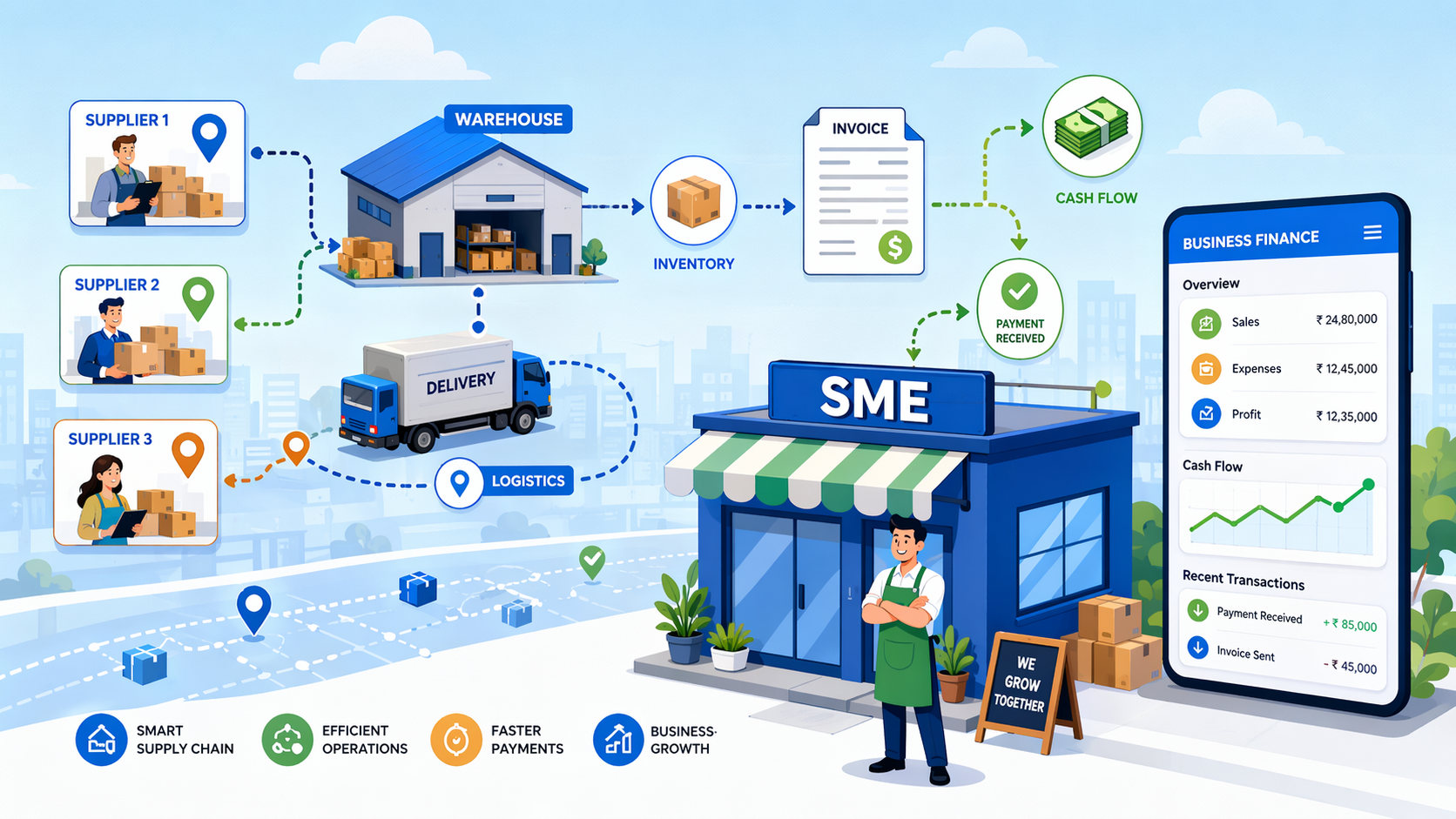
In a typical SME operation, money leaves your business the moment you place a purchase order or pay a supplier. Yet it does not come back until your customer pays the invoice, which might be 30, 60, or even 90 days later. During that window, your business still needs to cover wages, overheads, and the next round of orders.
That gap is where cash bleeds out. Moreover, the bigger your business grows, the wider that gap tends to get. Larger operations demand larger orders and longer payment cycles.
According to the Asian Development Bank’s 2026 Global Trade Finance Gap Survey, the global trade finance gap remains at $2.5 trillion, and SME rejection rates for trade financing sit at 41 percent. In other words, nearly half of all small businesses that apply for traditional trade finance get turned down. This is precisely the space where supply chain fintech fills a void that conventional banking cannot.
How Supply Chain Fintech Closes the Gap
A new generation of supply chain fintech platforms addresses cash flow problems at multiple points along the order-to-payment cycle.
First, supply chain financing solutions allow suppliers to get paid early, often within 24 to 48 hours of issuing an invoice. Meanwhile, the buyer settles on their normal payment terms. The financing cost is typically low because risk is assessed based on the buyer’s creditworthiness, not the supplier’s.
Second, invoice financing and accounts receivable platforms let businesses unlock cash tied up in unpaid invoices. Rather than waiting 60 days, you can access 80 to 90 percent of the invoice value immediately. The remainder gets paid when the customer settles. For more on how late payments affect financial leadership at the C-suite level, this remains one of the most common pressure points CFOs face today.
Third, dynamic discounting tools give buyers a way to offer early payment to suppliers in exchange for a small discount. This uses the buyer’s own cash reserves rather than outside financing. As a result, the buyer earns a return on idle cash, and the supplier gets paid sooner. Research into whether early payment discount financing delivers measurable results suggests both parties benefit when terms are structured clearly.
In February 2026, Visa launched its “Visa & Main” platform alongside a $100 million working capital facility with community lender Lendistry. The initiative is designed to give small business owners expanded access to flexible financing, and it signals how seriously major payment networks now take supply chain fintech as an infrastructure priority.
What This Means for Day-to-Day Operations
The practical impact of deploying supply chain fintech tools is significant for daily cash management. Businesses that previously relied on overdraft facilities or short-term loans can now replace expensive debt with purpose-built financing. Consequently, the result is lower cost of capital, more predictable cash flow, and less time spent chasing payments or negotiating extended terms.
For SMEs that are growing quickly, this shift is particularly valuable. Growth consumes cash faster than most business owners expect. Having access to working capital that scales with your order volume removes one of the biggest operational bottlenecks. Instead of submitting a new loan application every few months, you work with supply chain fintech platforms that adjust financing limits based on your transaction history.
The global supply chain finance market reflects this momentum. Research and Markets reports the sector reached $14.55 billion in 2026 and is projected to hit $20.36 billion by 2030 at an 8.8 percent compound annual growth rate. Meanwhile, the B2B payments market continues to evolve as SMEs demand faster and more flexible payment infrastructure.
Getting Started with Supply Chain Fintech
The most important first step is mapping your cash flow cycle in detail. When does money leave your business? When does it come back? Where is the gap largest? Once you have that picture, you can match the right supply chain fintech tool to the specific problem.
Most modern platforms integrate directly with accounting software and ERP systems, so setup time is shorter than it used to be. Many also offer a pilot or limited rollout option so you can test the impact before committing fully.
Citi’s 2026 Supply Chain Financing report notes that AI is already shifting the cost curve for SME underwriting, making it possible to automate analysis that previously required weeks of manual review. As a result, even businesses with limited credit histories can now access supply chain fintech solutions that would have been out of reach five years ago.
The businesses growing fastest right now are not necessarily the ones with the best products. Instead, they are the ones that have figured out how to keep cash flowing while everything else scales. Supply chain fintech has made that significantly more achievable for SMEs willing to look beyond traditional banking.
Kriszta Grenyo is the Chief Operating Officer at Suff Digital, a performance-driven digital marketing agency. She oversees operations, delivery, and growth across the organization.