

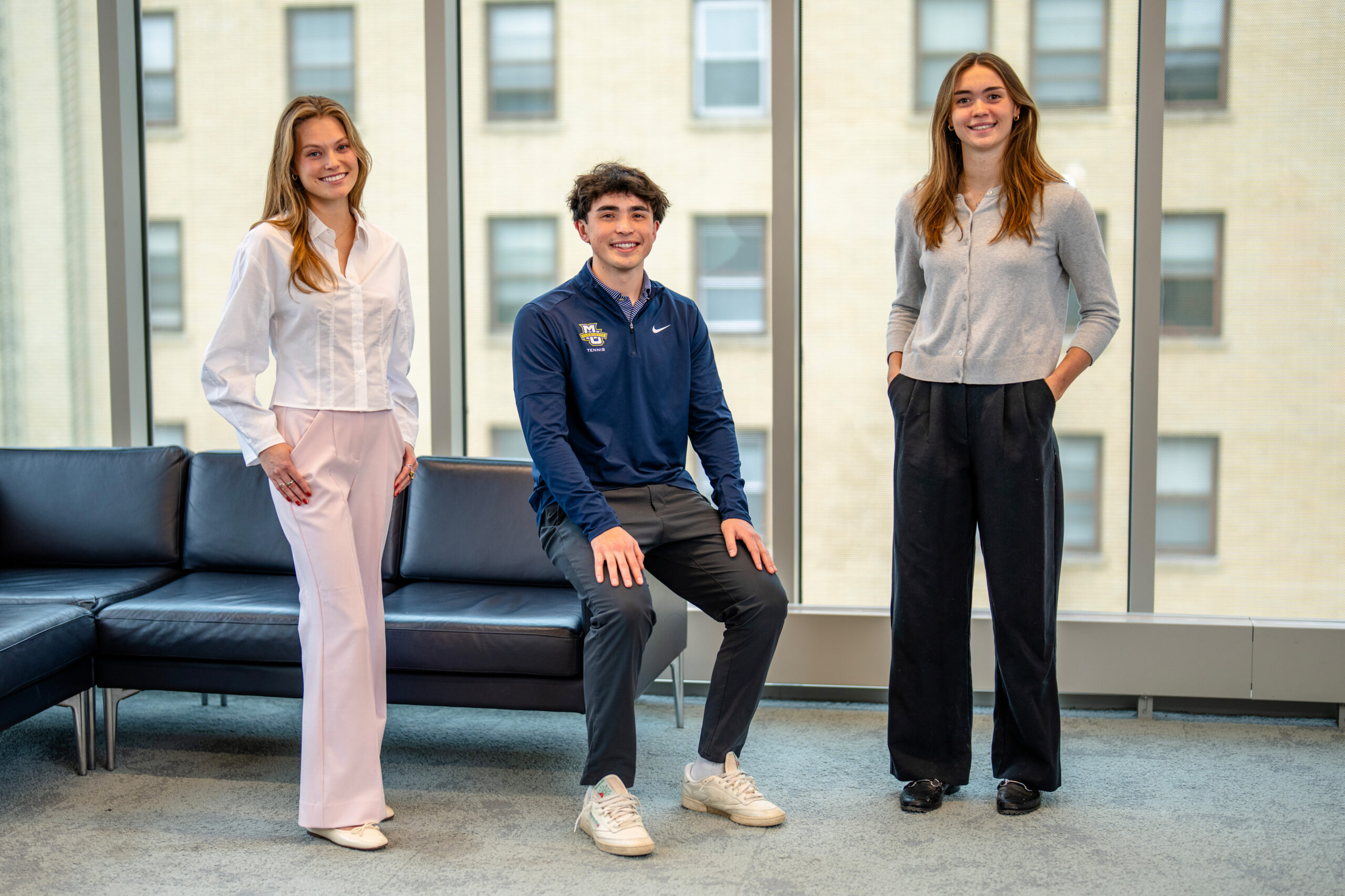
Fintech internships give student-athletes a direct route from competitive sport into financial technology careers. Three Marquette University Golden Eagles proved this during their summer placements at Fiserv, a global payments leader headquartered in Milwaukee. Sayla Lotysz, Josie Bieda, and Teddy Wong each turned their athletic discipline and academic training into standout contributions. All three have since accepted full-time roles in Fiserv’s analyst rotation program after their spring 2026 graduation.
The pathway from college athletics to fintech internships is less unusual than it might appear. Student-athletes build the exact traits that financial technology firms want: time management under pressure, team coordination, and rapid decision-making. Harvard’s Mignone Center for Career Success recently explored how athletes translate on-field skills into workplace effectiveness. At the same time, Fiserv’s campus recruitment page confirms that the company converts strong interns into full-time hires through structured development programs.
Fintech Internships Turned Classroom Theory Into Real Results
Lotysz, a senior majoring in finance, marketing, and accelerating ingenuity in markets (AIM), targeted Fiserv early in her studies. She wanted hands-on exposure to a leading payments company rather than a generic corporate placement. In the summer of 2024, she secured a finance internship and returned for a second round in 2025. During her first stint, she conducted billing audits and identified $330,000 in unbilled revenue. That discovery led to a direct conversation with her manager and showcased the tangible impact fintech internships can produce when students arrive prepared.
Her AIM specialisation also prepared her to build pricing curves and perform statistical analyses without a steep learning curve. On top of her coursework, Lotysz tutored fellow student-athletes in business statistics and finance. In her words, tutoring through the athletic department set her up for success at Fiserv. This combination of classroom training, peer teaching, and professional immersion shows how fintech internships reward students who invest across multiple fronts.
Athletic Discipline Transfers Directly to Fintech Workplaces
Josie Bieda studied finance, information systems, and AIM before joining Fiserv for a 2025 summer placement. She brought a working knowledge of SQL and Python, which allowed her to contribute from her first week. Her prior coursework made the transition to a production coding environment far more manageable, according to Bieda.
However, balancing 40-hour work weeks with football preseason training pushed her to the limit. Early morning workouts left little room for rest, yet she maintained both commitments without dropping performance in either area. Student-athletes who pursue fintech internships must handle overlapping demands that would overwhelm many of their peers. Bieda’s experience supports the argument that mental toughness from sport converts directly into professional output. A career guide from FinTekCafe identifies this kind of resilience as a genuine competitive advantage for non-traditional fintech candidates entering the industry in 2026.
Mental Resilience From Sport Strengthens Career Performance
Teddy Wong, a finance and AIM major on Marquette’s men’s tennis team, joined Fiserv’s corporate accounting team during the same period. He noted that staying mentally strong and focused throughout the workday drew on the same resilience he built through competitive tennis. Sports teach athletes to recover quickly from setbacks and maintain concentration over long stretches, and those habits map neatly onto demanding fintech internships.
Wong’s experience reflects a broader trend across university career services. Institutions from USC to Sam Houston State now run dedicated career fairs and transition programs for student-athletes because employers actively value their transferable skills. The leading job opportunities in fintech increasingly overlap with the strengths athletes bring, from data analysis and rapid problem-solving to team leadership in high-pressure environments.
From Summer Interns to Full-Time Analysts
All three students accepted positions in Fiserv’s two-year analyst rotation program. This programme exposes graduates to multiple business functions, including financial planning, accounting, and business unit finance. For Lotysz, Bieda, and Wong, their fintech internships served as the direct pipeline to these full-time offers.
The rotation model benefits both sides. Fiserv gains professionals who already understand the business, while graduates get broad exposure that accelerates their development. The fractional CFO approach in fintech operates on a similar principle: broad financial experience produces more versatile professionals over time. Companies that invest in structured early-career programmes tend to retain top talent longer because graduates feel their growth is being prioritised.
Practical Advice for Student-Athletes Targeting Fintech Internships
Bieda’s advice for peers considering fintech internships is straightforward. Start researching companies early, stay open to different types of roles, and communicate your athletic schedule clearly from the outset. Both of her internship placements accommodated her soccer commitments because she was transparent about her training calendar before she started.
Proper planning and honest communication make the balancing act entirely feasible. Student-athletes who approach fintech internships with the same structure and discipline they bring to their sport will find that employers respect their work ethic. The demand for early-career talent in financial technology continues to grow, and companies like Fiserv are building programmes specifically designed to convert summer interns into long-term contributors.