Nvidia’s GTC Conference Showcases Ambitious Innovations
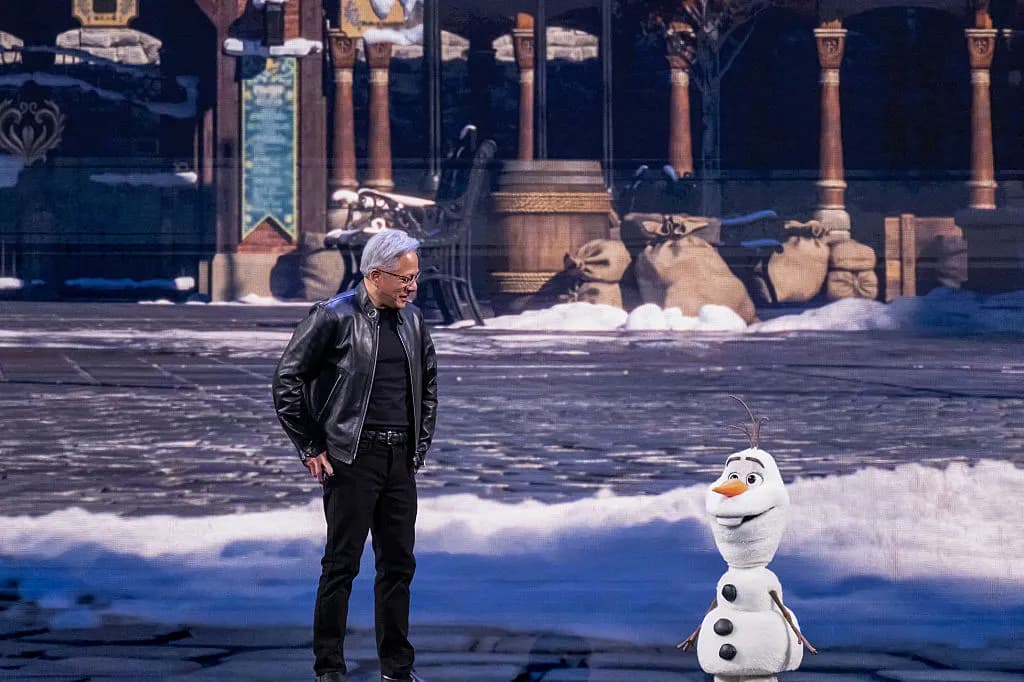
Nvidia’s recent GTC conference featured groundbreaking announcements, including trillion-dollar sales projections, advanced graphics technology designed to enhance realism in video games, and a call for every organization to adopt an OpenClaw strategy. The event even introduced a robotic version of Disney’s beloved snowman Olaf from “Frozen,” leaving attendees both impressed and amused.
During the latest episode of TechCrunch’s Equity podcast, hosts Kirsten Korosec, Sean O’Kane, and Anthony discussed CEO Jensen Huang’s keynote and its implications for Nvidia’s trajectory. Central to their conversation was Olaf, whose microphone was muted mid-presentation after a lengthy, unintended monologue.
The Complexity Behind Engineering Marvels
Despite the enthusiasm surrounding the demonstrations, Sean expressed concerns about the oversimplification of engineering challenges, noting that presentations often overlook the more complicated social implications. “What happens when a child accidentally knocks over Olaf?” he questioned. “Does it ruin the experience for others and tarnish the brand?”
Anthony highlighted Huang’s assertion that every enterprise must develop an OpenClaw strategy. He viewed this as a bold, attention-grabbing statement amidst OpenClaw’s evolution, especially following the departure of its creator to OpenAI. This transition presents opportunities for growth or stagnation, depending on companies like Nvidia’s engagement with the project.
Nvidia’s Strategic Imperative
Kirsten remarked that launching NemoClaw, an open-source initiative co-developed with the creator of OpenClaw, carries minimal risk for Nvidia. However, failing to participate could have significant consequences. “Essentially, Nvidia is signaling the need for a strategy that integrates enterprises into its ecosystem,” she explained. “Not acting poses a greater threat than embarking on a project that might not yield immediate results.”
The Robot Olaf: A Lighthearted Yet Serious Undertaking
They also discussed the Olaf robot, a demonstration tool that Jensen has a history of using. While the effectiveness of the robot’s interaction remains debatable—whether it was truly responsive or merely scripted—it served as a showcase for Nvidia’s advancements in robotics. The comedic moment of Olaf’s mic cutoff, as it continued to address the crowd, added an element of humor to the presentation.
Sean pointed out that while entertaining, the demonstration underscores the challenges of robotics, framed as a future enhancement for Disney parks. With Olaf positioned as a character guests can converse with and photograph, the potential was clearly significant. Yet, concerns linger regarding the practical implications of integrating such technology into family-friendly environments.
The Real-World Considerations of Robotic Integration
Sean highlighted the social considerations that often get sidelined, suggesting that while the engineering feats are commendable, the discussion should include potential mishaps, particularly in high-stakes public settings. “What happens when kids kick Olaf? The repercussions could affect not just those involved but the broader brand experience,” he emphasized.
While the technicalities of robotics are fascinating, the integration of such technologies into family settings poses social challenges that merit thoughtful consideration. Kirsten countered this by emphasizing the potential for job creation in this evolving tech landscape, arguing that the addition of a human overseer for Olaf could lead to new employment opportunities.