

Author: Girish Songirkar, Delivery Manager, Enterprise Software Engineering, Arionerp
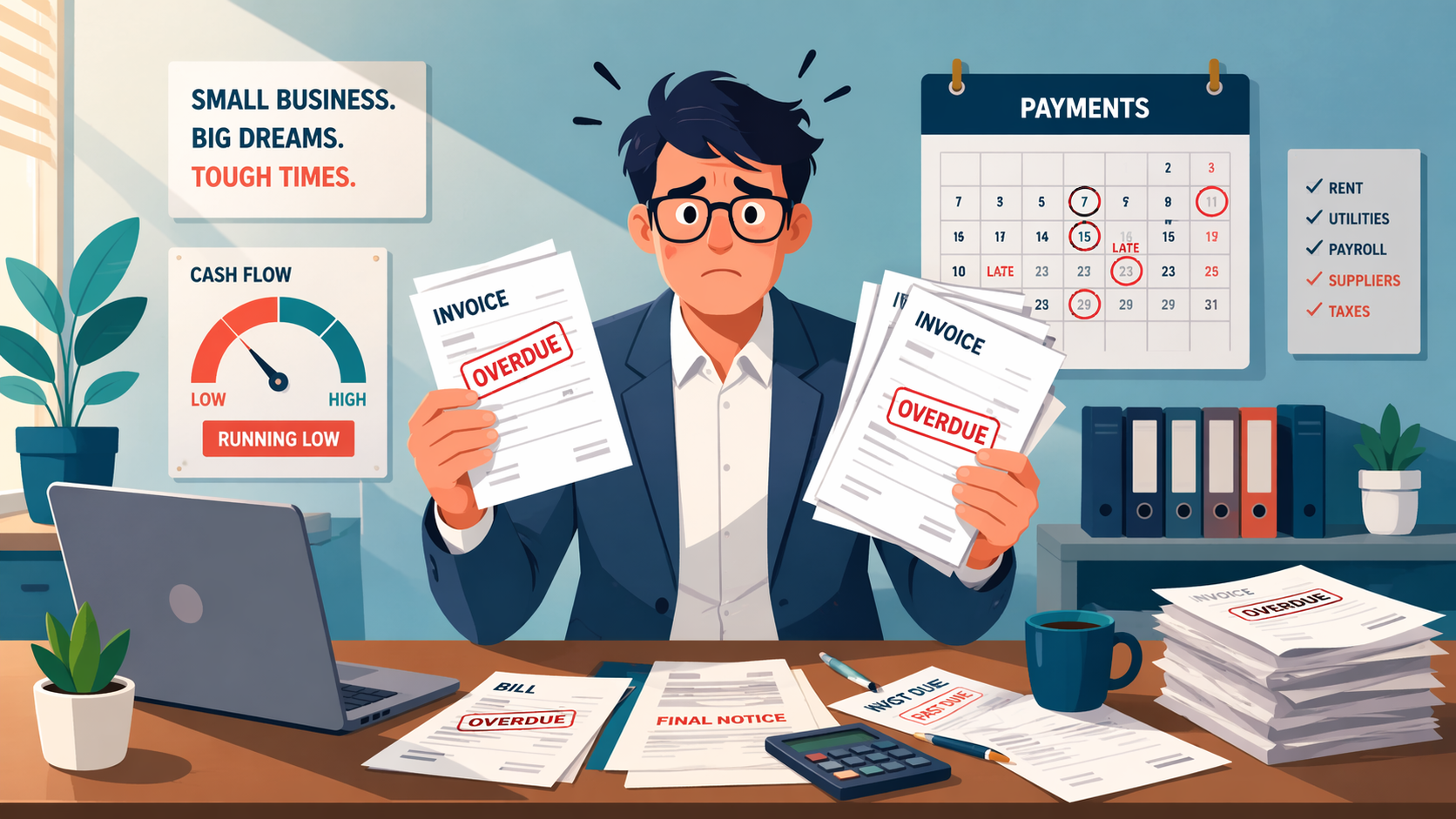
Late invoice cash flow disruption is far more than a bookkeeping headache. It creates a cascading financial crisis that cripples small and medium-sized businesses from the inside out. For a CFO, managing these delayed payments is a constant battle against time. The ripple effects hit hard and fast: strained cash reserves, uncertain payroll, fraying supplier partnerships, and deteriorating inventory control. However, understanding these impacts is only half the fight. This article explores the operational breakdown and outlines practical strategies, from forecasting and customer outreach to fintech tools and integrated ERP systems, that can help restore control.
Late Invoice Cash Flow Strain Hits Immediately
The most direct consequence of delayed invoices is a shortage of available cash. Funds that should circulate through your business sit trapped in accounts receivable instead. According to Bluevine’s February 2026 survey, nearly 3 in 10 SMB owners delayed paying themselves because customers paid late. Meanwhile, 17% of small businesses reported missing or nearly missing payroll due to these same gaps.
Money has velocity, and delayed payments slow that velocity to a crawl. Consequently, businesses cannot cover daily expenses such as salaries, rent, or utilities. Without incoming cash, purchasing halts. Marketing campaigns get paused. Essential services stall. This negative feedback loop compounds the original late invoice cash flow shortage and pushes operations toward paralysis.
Payroll uncertainty is especially damaging. Employees expect timely compensation, and unreliable payments erode the trust that keeps teams intact. In turn, attrition rises and recruitment costs spiral. On top of that, failure to meet payroll obligations carries legal consequences, including fines and lawsuits that layer yet another financial burden onto an already strained business.
Supplier Relationships Crumble Under Payment Delays
Suppliers provide essential goods and services, and they expect prompt payment in return. When late invoice cash flow problems cascade into your payables, these vital partnerships deteriorate quickly. Many suppliers extend credit terms as a courtesy. Yet delayed payments jeopardize those terms. As a result, credit limits shrink or suppliers demand upfront payment instead.
Losing favorable terms means higher costs and reduced purchasing power, which further restricts flexibility. The PO-to-payment chasm that many CEOs overlook only deepens this problem. If key suppliers halt deliveries due to non-payment, supply chains fracture entirely. Moreover, sourcing replacement vendors takes time and diverts attention from core operations. The vetting and negotiation process for new suppliers consumes resources that a business experiencing late invoice cash flow pressure simply cannot spare.
Inventory Management Falls Apart
Inventory represents a significant capital investment. Managing it effectively depends on predictable cash flow, and late invoice cash flow instability destroys that predictability entirely. Cash-strapped businesses make poor inventory decisions as a direct result. They cannot reorder popular items, which leads to stockouts and lost sales. Conversely, they might overcommit to slow-moving products out of uncertainty.
Stockouts send customers to competitors, damaging both revenue and brand reputation in the process. Overstocking creates the opposite problem. Capital sits locked in excess or obsolete goods that require storage space and may eventually need to be written off. On top of that, lenders assess cash flow velocity when evaluating inventory financing applications. Therefore, businesses suffering from late invoice cash flow constraints face difficulty securing the financing they need to manage stock properly.
Building Contingency Plans That Work
Facing these challenges requires proactive strategies rather than reactive panic. Robust contingency planning mitigates the damage before late invoice cash flow problems spiral out of control. Dynamic cash flow forecasting is the first line of defense. This means modeling various payment scenarios in advance. What happens if 20% of invoices arrive 30 days late? How does that affect payroll in two weeks? By preparing these scenarios ahead of time, CFOs can pivot quickly when conditions shift.
Tiered customer outreach protocols also make a significant difference. A structured approach starts with automated reminders sent a week before due dates. As the due date passes, personalized follow-ups from finance team members carry more weight. For significantly overdue invoices, clear escalation steps that include early payment discount incentives, late fees, or collections action prevent indecision and keep receivables moving forward.
Fintech Solutions Bridge the Gap
Fintech platforms offer powerful tools for managing the late invoice cash flow gap. Invoice financing and factoring services, for instance, allow businesses to sell outstanding receivables to a third party for immediate cash. This unlocked working capital bridges the shortfall caused by slow-paying customers and keeps operations running without interruption.
In addition, many fintech platforms automate payment reminders and integrate directly with accounting systems, ensuring no invoice slips through the cracks. Open banking is quietly transforming B2B payments by making transactions faster and more transparent. Offering multiple payment methods also reduces friction. Credit cards, digital wallets, and direct debits give customers convenient options that encourage faster payment cycles. As a result, AR teams spend less time chasing payments and more time on strategic analysis and planning.
Integrated ERP Systems Close the Loop
The most effective long-term solution to late invoice cash flow disruption lies in system integration. Enterprise Resource Planning systems connect sales, finance, and operations into one platform, providing unified financial visibility. With an integrated ERP, CFOs see exactly which invoices are outstanding and how long each has been aging.
Automated invoice processing within ERP environments can reduce processing costs by as much as 80% while cutting cycle times dramatically. These gains directly counter the late invoice cash flow drag that slows SMB operations. When sales orders generate invoices automatically, manual errors shrink and the billing cycle accelerates. Furthermore, ERP systems trigger automated collections workflows based on invoice aging. Specific follow-up tasks get assigned systematically, so no account falls through the cracks.
Enhanced reporting and analytics reveal patterns, such as customers who consistently pay late, enabling proactive risk assessment. Better historical data also improves forecasting accuracy, which feeds back into stronger contingency planning. The 60-day invoice black hole is a severe and often silent threat to SMB agility. By understanding its cascading impacts and investing in integrated financial systems, businesses can protect their operations and reclaim late invoice cash flow stability for good.
“The true cost of delayed payments is not just the money itself, but the operational paralysis it induces. Investing in integrated financial systems is not an expense, it is an investment in survival and growth.”
– Girish Songirkar, ArionERP