Close Menu
Fintechbits
  • News
  • AI
  • Acquisitions
  • Trends
  • Insights
  • Rumors
  • Startups
  • finjobsly

Subscribe to Updates

Get the latest news from Fintechbits.

Trending Now

Exploring DB Pension Endgame Strategies: Alternatives to Buy-Outs

March 16, 2026

Netflix’s Frankenstein Achieves Three Academy Awards, KPop Demon Hunters Secures Two

March 16, 2026

US Maintains Status as Premier Global WealthTech Hub Despite 47% Decline in Deal Activity in 2025

March 16, 2026

Green Fintech: 5 Proven Reasons It Goes Beyond a Compliance Checkbox

March 16, 2026
Facebook X (Twitter) Instagram
Trending
  • Exploring DB Pension Endgame Strategies: Alternatives to Buy-Outs
  • Netflix’s Frankenstein Achieves Three Academy Awards, KPop Demon Hunters Secures Two
  • US Maintains Status as Premier Global WealthTech Hub Despite 47% Decline in Deal Activity in 2025
  • Green Fintech: 5 Proven Reasons It Goes Beyond a Compliance Checkbox
  • PawaPay and Deriv Collaborate to Expand Mobile Money Deposit Solutions Across Africa
  • Strategies for Asset Managers to Scale SMAs Effectively
  • Billionaires Reassess Their Commitments as Some Seek to Withdraw
  • European FinTech Investments Decline 11% Year-Over-Year Due to Market Uncertainties in 2025
Facebook X (Twitter) Instagram Pinterest Vimeo
Fintechbits
  • News

    Exploring DB Pension Endgame Strategies: Alternatives to Buy-Outs

    March 16, 2026

    Strategies for Asset Managers to Scale SMAs Effectively

    March 16, 2026

    The Impact of Model Governance on AI Advancement in Financial Crime Prevention

    March 16, 2026

    The Impact of Agentic Automation on Operational Efficiency

    March 15, 2026

    Addressing the Privacy Compliance Crisis Through RegTech Innovations

    March 15, 2026
  • AI

    Exploring the Concept of Bloxx in The Fintech Times

    March 15, 2026

    Mastercard Launches Unified Global Commerce Suite to Enhance Cross-Border SME Payments in APAC

    March 15, 2026

    Bybit Connects Traditional Banking and Digital Assets Through Direct AED Trading Pairs

    March 15, 2026

    Bybit Connects Traditional Banking and Digital Assets Through Direct AED Trading Pairs

    March 15, 2026

    Your Next Customer Might Not Be Human. Is Your Business Ready?

    March 3, 2026
  • Acquisitions

    Latin American FinTech Investments Decline by 50% Year-over-Year in Q4 2025 Amid Increased Investor Caution

    March 15, 2026

    What Makes a Fintech an Attractive Acquisition Target Versus One Headed for a Distressed Sale?

    February 20, 2026

    MrBeast’s Company Acquires Fintech App Targeting Gen Z

    February 10, 2026

    Capital One’s $5 billion purchase of fintech Brex may prove to be another brilliant move by billionaire Richard Fairbank.

    January 24, 2026

    Fintech Partnership Enhances UST’s Digital Banking Goals

    January 20, 2026
  • Trends

    Green Fintech: 5 Proven Reasons It Goes Beyond a Compliance Checkbox

    March 16, 2026

    Claude overtakes ChatGPT as AI trust debate intensifies

    March 16, 2026

    Eleven companies, eighty-three days: the race for a federal crypto-banking license

    March 15, 2026

    The banks are winning a battle. Here’s what it means to each other.

    March 15, 2026

    The rules were not written for us. Some women rewrite them.

    March 15, 2026
  • Insights

    US Maintains Status as Premier Global WealthTech Hub Despite 47% Decline in Deal Activity in 2025

    March 16, 2026

    Green Fintech: 5 Proven Reasons It Goes Beyond a Compliance Checkbox

    March 16, 2026

    European FinTech Investments Decline 11% Year-Over-Year Due to Market Uncertainties in 2025

    March 16, 2026

    Nevada Emerges as a Leading US WealthTech Hub in Q4 2025 with 27% Year-Over-Year Growth in Deal Activity

    March 16, 2026

    Asian FinTech Funding Reaches Five-Quarter High at End of 2025 Fueled by 4.5x Year-over-Year Increase in Large Transactions

    March 15, 2026
  • Rumors

    Gilead Snaps Up Arcellx in $7.8B Most cancers Drug Deal

    March 14, 2026

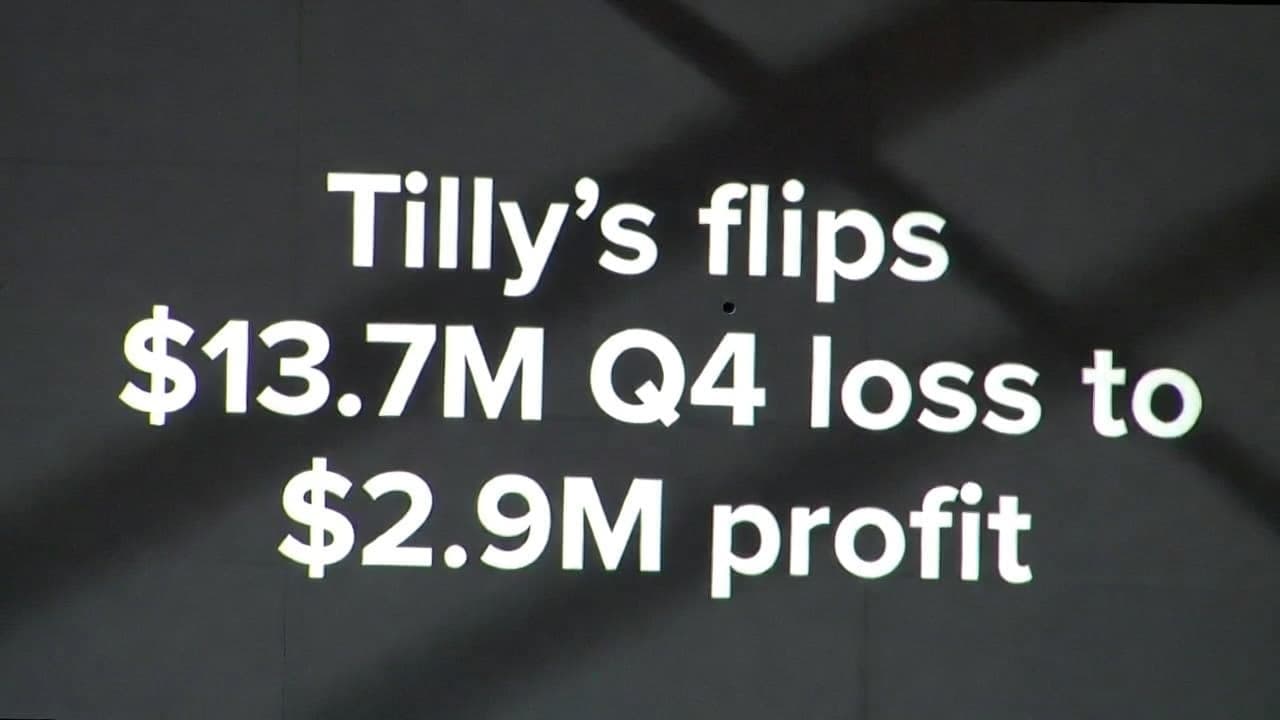
    Tilly’s Inventory Pops After This autumn Earnings Shock

    March 14, 2026

    Elliott and Jana Take Recent Actions Alongside Other Speculations

    February 22, 2026

    Hank Payments (TSX) Rises to CAD 0.26 on February 18, 2026: Catalyst Analysis

    February 19, 2026

    Abivax CEO refers to Eli Lilly acquisition speculation as a diversion.

    February 8, 2026
  • Startups

    Netflix’s Frankenstein Achieves Three Academy Awards, KPop Demon Hunters Secures Two

    March 16, 2026

    Billionaires Reassess Their Commitments as Some Seek to Withdraw

    March 16, 2026

    Google and Accel India’s Accelerator Selects Five Startups, None Utilizing AI Wrappers

    March 16, 2026

    ByteDance Temporarily Halts Global Launch of Seedance 2.0 Video Generator

    March 15, 2026

    Lawyer Advocating for AI Psychosis Cases Raises Concerns Over Potential Mass Casualty Risks

    March 15, 2026
  • finjobsly
Fintechbits
Home » Green Fintech: 5 Proven Reasons It Goes Beyond a Compliance Checkbox
Industry Trends

Green Fintech: 5 Proven Reasons It Goes Beyond a Compliance Checkbox

9 Mins Read
Facebook Twitter Pinterest Telegram LinkedIn Tumblr Email Reddit
Green fintech ESG data dashboard showing sustainability metrics for lending decisions
Sustainability-driven financial technology is moving from PR exercise to core lending infrastructure
Share
Facebook Twitter LinkedIn Pinterest Email Copy Link

Author: Charitarth Sindhu, Fractional Business & AI Workflow Consultant

Green fintech has outgrown its reputation as a corporate PR exercise. The global ESG investing market hit $35.5 trillion in 2025, and sustainability-driven technology solutions are growing at 22.4% CAGR. So we asked industry leaders a direct question: is green fintech a genuine market opportunity, or just a compliance checkbox?

Notably, their answers paint a consistent picture across four very different industries. The conclusion holds whether you look through the lens of enterprise architecture, digital marketing, energy infrastructure, or cross-border payments. This sector is accelerating faster than most legacy institutions can keep up with.

In recent years, many organizations have shifted from thinking about “green fintech” as just an opportunity for public relations (PR) purposes and have instead started viewing it as the major opportunity that it is; Institutional capital now requires verifiable sustainability data before it will provide liquidity. For firms that see the consideration of ESG (environmental, social, governance) data from a data integrity perspective versus a marketing one, it is a true market opportunity and should be considered a core component of enterprise lending. ESG metrics are being directly incorporated into risk scoring engines, creating a major shift in opinion, as businesses’ cost of capital is increasingly linked to their carbon footprints.

The data layer is where the true potential lies. The majority of legacy systems will struggle with two-year-old ‘gigo’ (garbage in, garbage out) for non-financial metrics. In fact, the fintechs who are currently winning in the space are those who are creating sustainability by design; using automation to create real-time, transaction based transparency versus relying on static, annual reports. Our internal observations are consistent with broader market trends where higher ESG ratings can provide lower costs of capital by up to 10% giving businesses a direct lever in financial performance.

Ultimately, implementing ESG is a trust-building exercise. As lending becomes increasingly more automated, being able to prove ethical alignment through verifiable data will be the key differentiator for fintechs impacting on all regulated industries and markets. Businesses will have to begin seeing long-term company resiliency as a financial asset that can be measured.

  • Sudhanshu Dubey, Delivery Manager & Enterprise Solutions Architect, Errna

Green Fintech Is Reshaping How Lenders Make Decisions

Institutional capital now demands verifiable sustainability data before providing liquidity. As a result, the European Banking Authority published final guidelines in January 2025. These guidelines require banks to integrate ESG risks into creditworthiness assessments. Similarly, platforms like Finastra’s ESG Service dynamically adjust loan pricing based on sustainability targets for over 70 consortium banks. Both developments reinforce why green fintech is becoming essential infrastructure for modern lenders.

Moreover, MSCI’s 2024 study found a striking gap in financing costs. Companies with top ESG ratings paid 6.8% while the lowest-rated firms paid 7.9%. That 110-basis-point difference translates to roughly 14% in relative savings. Consequently, ESG integration in lending has become a pricing mechanism with measurable financial impact.

Still, the data quality problem remains significant. Research from MIT shows that the average correlation between six major ESG rating agencies sits at just 0.61. Traditional credit ratings from Moody’s and S&P correlate at 0.99. Therefore, green fintech companies solving this measurement gap hold the strongest competitive position in the market today.

Green fintech stops being a checkbox the moment you treat ESG data the same way you treat SEO data: as a performance signal, not a press release. Most businesses still approach sustainability metrics like they approached keyword stuffing in 2012. They game the inputs, inflate the outputs, and wonder why nobody trusts the results. The parallel is striking because both problems come down to data integrity.

What we’re seeing with GiaAI and the broader AI tooling landscape is that automation can strip away the performative layer. When you can verify ESG claims against real transaction data in near real time, the gap between marketing narrative and operational reality shrinks fast. That transparency is where the market opportunity lives. Fintechs that help lenders distinguish genuine sustainability performance from greenwashed noise will own a massive competitive moat.

However, the opportunity only materialises if the data infrastructure is honest. Right now, ESG ratings from different providers barely correlate with each other. Until fintechs solve that measurement problem, we’re building a market on shaky foundations. The winners will be the companies treating ESG like a data engineering challenge rather than a branding exercise.

  • Callum Gracie, Founder, GiaAI

Real Infrastructure Financing Proves the Opportunity Is Genuine

Beyond lending algorithms, the strongest evidence comes from on-the-ground infrastructure financing. For instance, GoodLeap has channelled over $63 billion in financing for sustainable home upgrades since 2018. In addition, Tech Mahindra’s i.GreenFinance platform uses generative AI to automate the entire lending lifecycle from feasibility through audit-ready reporting.

These numbers are backed by broader market momentum. Sustainability-linked loans reached EUR 907 billion globally in 2024, up 17% year-over-year. Furthermore, a Harvard Business School working paper found these loans carried up to 20% lower interest rates. That discount compared to conventional syndicated lending shows that green fintech is creating real pricing advantages. Clearly, these are not theoretical projections but rather billions flowing through sustainable finance frameworks that reward verified outcomes.

From where I sit, green fintech is not theoretical. It is reshaping how Australian families finance their energy transition right now. Through the ACT Sustainable Household Scheme alone, we’ve helped thousands of Canberra households access interest-free loans for solar, batteries, EV chargers, and heat pumps. That program exists because government and financial institutions recognised that sustainability-linked lending creates measurable returns for both borrowers and the grid.

After completing over 6,000 solar installations, one pattern stands out consistently. When financing is tied to verified green outcomes, project quality goes up, default rates stay low, and customer satisfaction follows. Lenders who integrate ESG metrics into their decisions are not doing charity. They are backing assets with strong, predictable performance profiles. A well-installed solar system generates returns for 25 years. That is a fundamentally different risk proposition than an unsecured personal loan.

The compliance checkbox framing misses the point entirely. For trades and energy businesses, ESG-linked finance is the mechanism that turns a $15,000 household investment into a bankable asset class. Carbon offsetting at checkout gets the headlines, but the real money flows through infrastructure financing. Fintechs that connect clean energy installers, households, and lenders through verified performance data will dominate this space in Australia and beyond.

  • Brady Souden, Director, Econ Energy

A Regulatory Tug-of-War Creates Even More Demand

The opportunity exists within a regulatory landscape pulling in two directions at once. In Europe, the SFDR 2.0 proposal introduces three mandatory product categories alongside tighter marketing rules. Additionally, the EU extended CSRD reporting timelines to 2027, though the framework itself keeps expanding. For green fintech providers, both moves create new compliance tooling demand.

On the other side of the Atlantic, however, the story looks completely different. The SEC withdrew its defence of climate disclosure rules in March 2025. Since 2021, 482 anti-ESG bills have been introduced across 42 U.S. states. Ironically, this fragmentation increases demand for technology that navigates multiple frameworks simultaneously.

What makes this even more compelling is that the anti-ESG backlash carries documented financial costs. Texas’s anti-ESG laws generated an estimated $300 to $500 million in additional interest costs on municipal bonds alone. Consequently, even states opposing sustainability mandates pay a premium for doing so. That irony only strengthens the business case for green fintech infrastructure built around transparent, verifiable data.

Cross-border payments infrastructure and green fintech share the same core problem: fragmented compliance across dozens of jurisdictions with no universal standard. At Remotify, we process payments for over 10,000 freelancers across multiple countries while navigating DAC7 reporting, multi-jurisdiction tax compliance, and constantly shifting regulatory frameworks. The ESG data challenge looks remarkably similar.

Fintechs treating ESG as a compliance checkbox will burn through capital chasing regulations that change every quarter. Meanwhile, fintechs building ESG into their operational DNA from day one will find it compounds into a genuine competitive advantage. We saw this firsthand when we pivoted Remotify from full-service to payments-only in 2023. Simplifying the product made compliance scalable rather than painful. Green fintechs need to learn the same lesson: sustainability features bolted onto legacy architecture create cost centres, not market opportunities.

The bootstrapped perspective matters here too. VC-funded green fintechs face enormous pressure to show ESG impact metrics that justify their valuations, which incentivises exactly the kind of greenwashing now triggering regulatory crackdowns. Bootstrapped fintechs can afford to build slower and measure honestly. When institutional capital demands verifiable sustainability data before deploying liquidity, the fintechs with clean, auditable data pipelines will have a structural advantage over those who optimised for optics first and accuracy second.

  • Hasan Can Soygok, Founder, Remotify

The Data Layer Determines Who Wins

Ultimately, the winners in this space will be those solving the data infrastructure problem at scale. Clarity AI leads the way, serving clients managing approximately $70 trillion in assets. Its July 2025 acquisition of ecolytiq signals a shift toward continuous, transaction-level sustainability measurement. Persefoni handles enterprise carbon accounting for Mastercard, CVS Health, and JetBlue. Meanwhile, Sweep raised $73 million to serve L’Oreal, HP, and Burberry.

At the consumer end, carbon offsetting at checkout also gains traction through CarbonClick and Stripe Climate’s Frontier initiative. However, these represent just a fraction of the broader green fintech opportunity reshaping financial services globally.

In the end, green fintech is not a fad and it is certainly not a checkbox. It is the infrastructure layer that will determine how capital flows through every regulated industry for the next decade. The only question remaining is whether your organisation will build on that infrastructure or compete against those who already have.

FinancialTechnology Fintech fintech growth
Share. Facebook Twitter Pinterest LinkedIn Tumblr Email

Related Posts

US Maintains Status as Premier Global WealthTech Hub Despite 47% Decline in Deal Activity in 2025

March 16, 2026

European FinTech Investments Decline 11% Year-Over-Year Due to Market Uncertainties in 2025

March 16, 2026

Nevada Emerges as a Leading US WealthTech Hub in Q4 2025 with 27% Year-Over-Year Growth in Deal Activity

March 16, 2026
Leave A Reply Cancel Reply

Latest news

Exploring DB Pension Endgame Strategies: Alternatives to Buy-Outs

March 16, 2026

Netflix’s Frankenstein Achieves Three Academy Awards, KPop Demon Hunters Secures Two

March 16, 2026

US Maintains Status as Premier Global WealthTech Hub Despite 47% Decline in Deal Activity in 2025

March 16, 2026
News
  • AI in Finance (2,161)
  • Breaking News (202)
  • Corporate Acquisitions (82)
  • Industry Trends (278)
  • Jobs Market News (338)
  • Market Insights (301)
  • Market Rumors (308)
  • Regulatory Updates (213)
  • Startup News (1,350)
  • Technology Innovations (226)
  • uncategorized (9)
  • X Feed (1)
About US
About US

FintechBits is a blog delivering the latest news and insights in fintech, finance, and technology. We cover breaking news, market trends, innovations, and expert opinions to keep you informed about the future of finance

Facebook X (Twitter) Instagram Pinterest Reddit TikTok
News
  • AI in Finance (2,161)
  • Breaking News (202)
  • Corporate Acquisitions (82)
  • Industry Trends (278)
  • Jobs Market News (338)
  • Market Insights (301)
  • Market Rumors (308)
  • Regulatory Updates (213)
  • Startup News (1,350)
  • Technology Innovations (226)
  • uncategorized (9)
  • X Feed (1)
Happening Now

November 28, 2024

“ Intentionally collaborative ”: how the Rotman school of U of T leads Innovation Fintech

February 6, 2025

‘1957 Ventures’ to Drive FinTech Innovation in Saudi Arabia

September 10, 2024
  • About FintechBits
  • Advertise With us
  • Contact us
  • Disclaimer
  • Privacy Policy
  • Terms and services
  • BUY OUR EBOOK GUIDE
© 2026 Designed by Fintechbits

Type above and press Enter to search. Press Esc to cancel.