

Fintech Sector Transitions to a Profitable Future Post-ZIRP
Following the conclusion of the Zero Interest Rate Policy (ZIRP), the U.S. fintech landscape has entered a more prudent phase marked by heightened investor emphasis on profitability and operational efficiency. This transition comes on the heels of a significant shift in funding dynamics, as reported in the latest October 2025 edition from Silicon Valley Bank (SVB).
Funding Trends: A Move Towards Sustainable Growth
During the ZIRP era (2020 to mid-2022), inexpensive capital fueled capital-intensive lending models. This era has now shifted, aligning with a more disciplined approach that prioritizes sustainable growth. Notably, fintech investments represented over 20% of U.S. venture capital funding at their peak in 2022, a stark contrast to the current figure of less than 10%.

The Shift in Funding Strategies
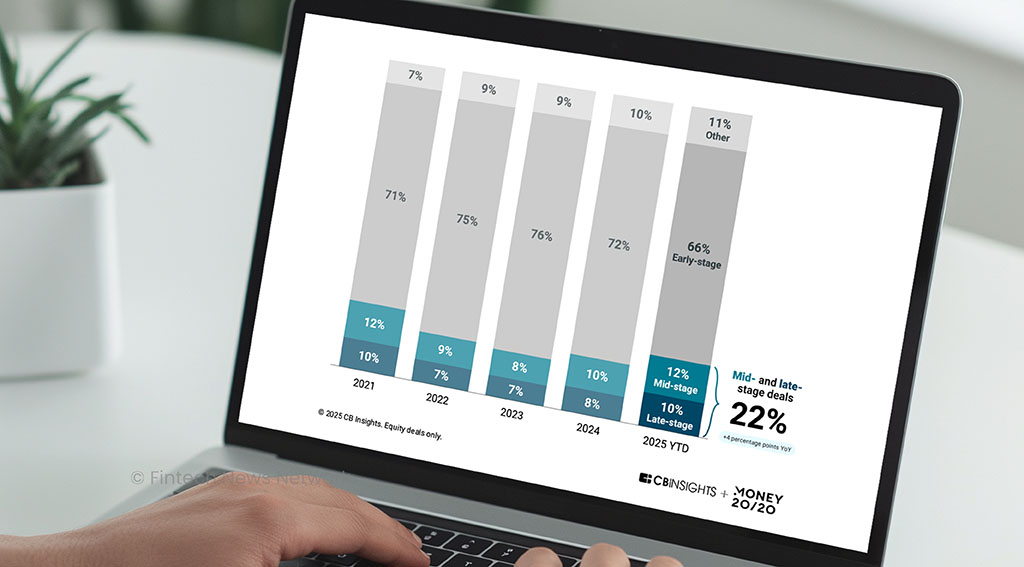
As reported by CB Insights, there has been a global pivot from seed funding towards larger funding rounds targeted at established companies demonstrating strong financial performance. Mid- and late-stage fintech deals reached a four-year high in 2025, comprising 22% of all fintech deals in the first three quarters. This contrasts remarkably with early-stage deals, which accounted for only 66%, marking a five-year low.
Embedding Finance into Software Solutions
In the current fintech environment, embedded finance has emerged as a significant driver of growth. Integrated payment solutions and digital assets are now being seamlessly incorporated into Software as a Service (SaaS) applications. By 2025, over half of relevant Independent Software Vendors (ISVs) in North America are expected to offer in-app payments, as noted by the Boston Consulting Group (BCG).
Understanding the Total Addressable Market
In terms of business potential, the total addressable market for embedded finance in North America and Europe is approximately $185 billion. This market encompasses four key areas: payments, capital solutions, accounts, and card issuance. Currently, market penetration stands at around $32 billion, highlighting substantial growth opportunities.

The Rise of Digital Assets
Digital assets are also a crucial component of the evolving fintech landscape. Companies focusing on cryptocurrencies have surged to prominence, with their median initial valuations now surpassing more traditional financial sectors. Crypto-focused funds dominate the scene, comprising two-thirds of all fintech funds and achieving remarkable internal rates of return.
Balancing Revenue Growth with Investor Expectations
Despite the burgeoning opportunities, fintech companies face the challenge of slower revenue growth while investor expectations continue to rise. Revenue growth rates for fintech firms dropped significantly between 2021 and 2023, with only half of companies generating revenues above $25 million achieving a growth rate of 25% per year.
As we advance into this new era of fintech, companies will need to adapt to changing investment climates and showcase strong financial performances to meet rising investor demands successfully.

Image Source: Edited by Fintech News Switzerland, based on artwork from user5604845 via Freepik