Author: Charitarth Sindhu, Fractional Business & AI Workflow Consultant
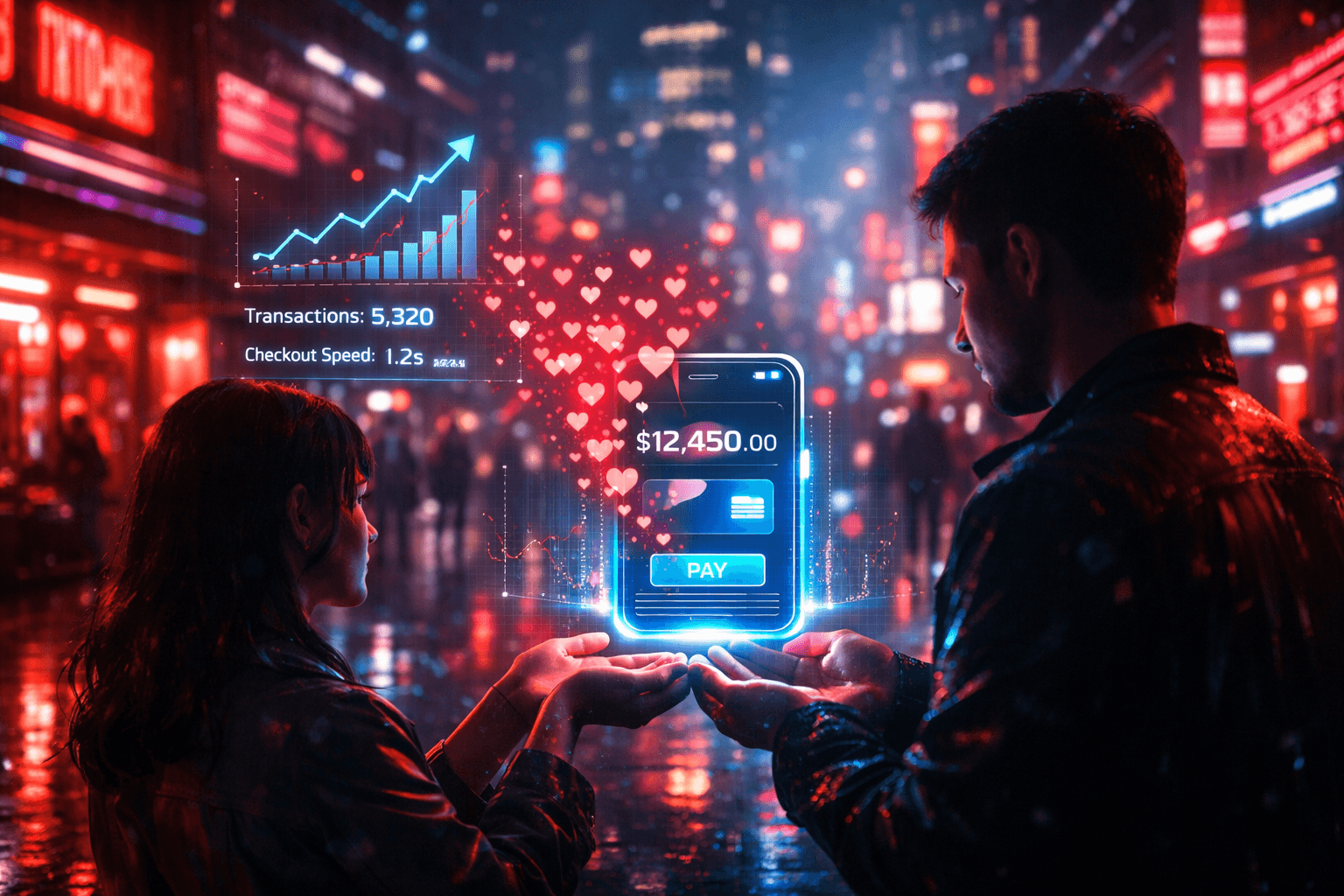
Valentine’s Day looks like a romance holiday on the surface, but in finance terms it is a predictable, short, high-pressure surge in consumer demand. People buy because the date is fixed. They buy because they do not want to miss the moment. That creates a burst of transactions that is unusually sensitive to checkout friction.
In the United States, the scale is now record-setting. National Retail Federation expects Valentine’s Day spending to reach $29.1 billion, beating the prior record of $27.5 billion in 2025. They also report a record average budget of $199.78 per person. When a holiday hits that kind of volume, small changes in payment behaviour and small points of friction can move real money.
Valentine’s has a specific shopping style. It is deadline commerce. A lot of people decide late. Many buy on phones. Many shop in short sessions between work, commutes, and other tasks. In that context, “how you pay” becomes part of whether you buy at all. A customer who is already in a rushed, emotional state is less willing to troubleshoot. If the payment experience feels slow or confusing, they abandon.
That is why the long-term shift toward digital payments matters more for Valentine’s than for an ordinary week. Over the last decade, digital payment types have gained a much larger share of both online and in-person commerce. Digital wallets are the headline, but the wider set includes account-to-account options, buy now pay later, and other digital-first flows. The direction is clear: online shopping has moved strongly toward digital payment types, and in-person payments have moved the same way as tap-to-pay becomes normal.
The UK gives a clean snapshot of how mainstream this has become. UK Finance reports that 57% of UK adults use mobile wallets. It also reports buy now pay later usage jumped from 14% to 25% of UK adults in a single year. The important point is not which country leads. The point is the size of the behaviour. When more than half of adults use mobile wallets, a wallet option is not a “premium feature”. It is a normal expectation for a large part of the market.
Valentine’s puts extra weight on that expectation because of the timing pressure. People are not only buying gifts. Many are trying to coordinate experiences. Travel and short getaways can spike in some markets. In India, Cleartrip reported hotel bookings surged by up to 175% year-on-year ahead of Valentine’s Day, framed as couples spending more on getaways. Experience purchases are usually fully digital, often mobile, and often completed quickly. That means the payment rails and the checkout design are part of the product.
So what is the finance and fintech story here?
It is that Valentine’s is a stress test for payment infrastructure and conversion design. If you are a merchant, a platform, a bank, or a fintech provider, you are dealing with a burst of high-intent traffic where people are willing to spend, but unwilling to wait. That combination is rare. It is also valuable.
In those moments, payment choice is conversion. A buyer who wants to use a wallet might not switch to manual card entry. A buyer who prefers a saved method might not dig for their card. A buyer on mobile might not tolerate steps that feel fine on desktop. The holiday magnifies those gaps because the urgency is higher than usual.
The holiday also magnifies risk. More transactions in a shorter window means more attempts by bad actors, more mistakes by rushed buyers, and more customer service pressure. Even if the average transaction looks similar, the operating environment changes. When everyone buys at once, the edges show.
There is also a product lesson. People do not think about “payments trends” while buying a gift. They think about the moment, the message, and the person. The winning payment experience is the one that feels invisible. That is why digital wallets matter. They reduce the sense that you are “doing admin”. They let people stay in the emotional state that made them want to buy in the first place.
Buy now pay later fits the same idea from a different direction. It can reduce the pain of committing to a higher-priced item in the moment, especially during a holiday where the purchase is tied to meaning and signalling. If a buyer is trying to show effort or care, price sensitivity can shift. Flexible payment options can shape what feels possible under a deadline.
None of this requires a grand theory. It is simple operational reality.
Valentine’s spending in the US is reaching record levels, and the average budget is also at a record. Digital payment methods have grown sharply over the last decade. In at least one major market, mobile wallets and buy now pay later are already mainstream. Experience spending can spike around the holiday, and those purchases are digital by default. Put together, you get a clear conclusion.
Valentine’s Day might be emotional, but the payment outcome is decided by speed, fit, and trust. If the payment method people want is there, and it is fast, the surge converts. If it is missing or clunky, the surge leaks.