Russian Authorities Block Access to Paywall Bypass Site Archive.today
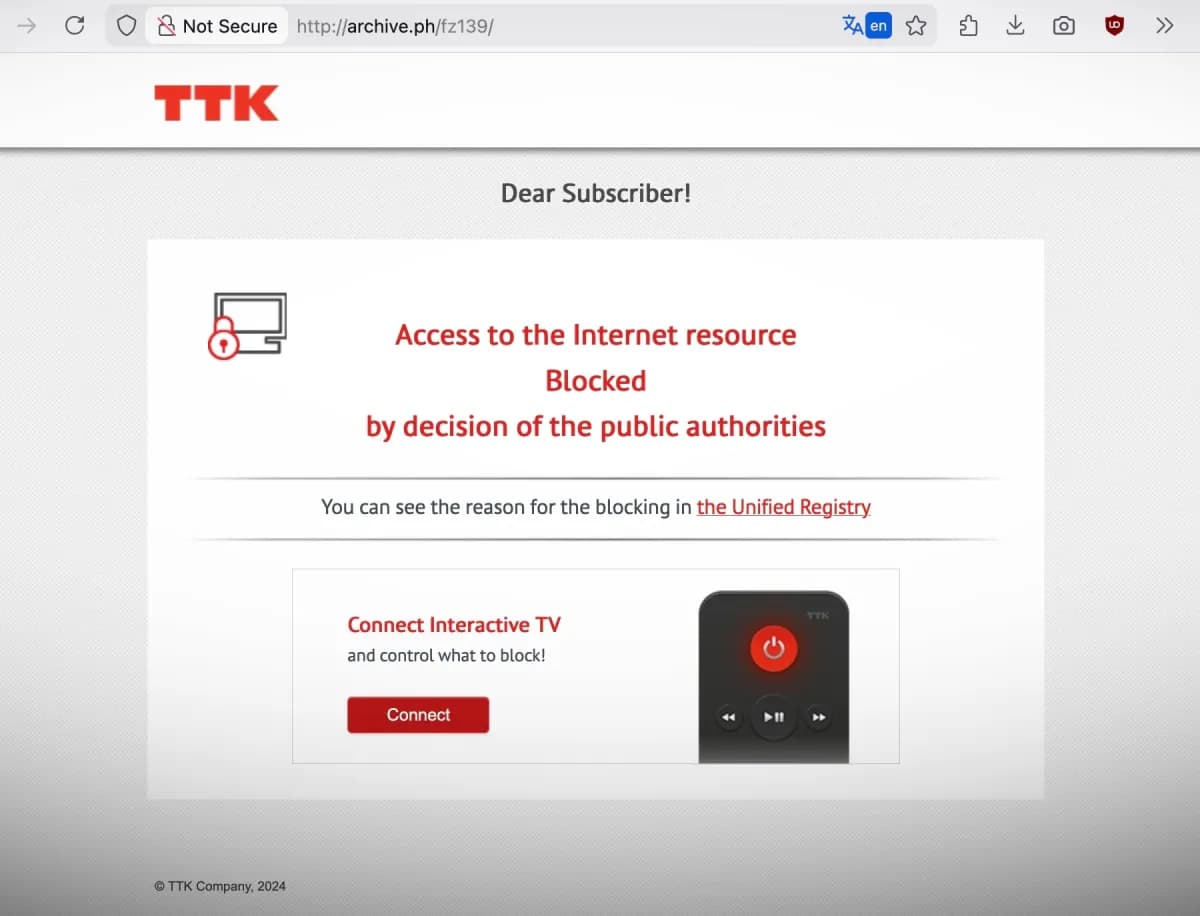
Archive.today, a well-known paywall bypass website, along with several associated domains such as .is and .ph, has been blocked by Russian authorities. Visitors attempting to access the site encountered error pages as of Monday, as confirmed by TechCrunch’s tests from the U.S. East Coast.
Russian users reported a message stating, “Access to the Internet resource is blocked by decision of the public authorities,” referencing Roskomnadzor, the agency responsible for internet censorship in Russia. This indicates a formal governmental decision to restrict access to the platform.
While Roskomnadzor’s official statement listed Archive.is as restricted, it left the reason for this limitation unspecified when TechCrunch checked. Notably, at that time, Archive.today itself did not appear on the agency’s list of blocked sites.
A representative from Roskomnadzor did not provide an immediate response to inquiries from TechCrunch outside of Moscow’s working hours. Despite the stated block, access to Archive.today was still possible from various other devices and networks, suggesting that its reach may not be comprehensive.
Archive.today serves as a crucial tool for users looking to store copies of web pages, particularly those containing paywalled content. Recently, Wikipedia editors made headlines by removing hundreds of thousands of links to Archive.today, following allegations that the site’s code secretly utilized visitors’ browsers to overwhelm critical blogger sites with excessive traffic.
The operators of Archive.today have yet to respond to requests for comment regarding the recent developments. This ongoing situation raises questions about internet freedom and the implications of content censorship in Russia, especially as the importance of accessible information remains paramount in today’s digital landscape.
As the scenario evolves, it will be critical to monitor not only the operational status of Archive.today but also the broader ramifications for similar sites and the consumers who rely on them for unrestrained access to information.