Author: Girish Songirkar, Delivery Manager, Enterprise Software Engineering, Arionerp
Growth dominates every boardroom conversation. Marketing teams hustle to fill the pipeline, sales teams push to close, and revenue targets climb higher each quarter. Yet beneath that forward momentum, a quieter problem is bleeding capital from the business.
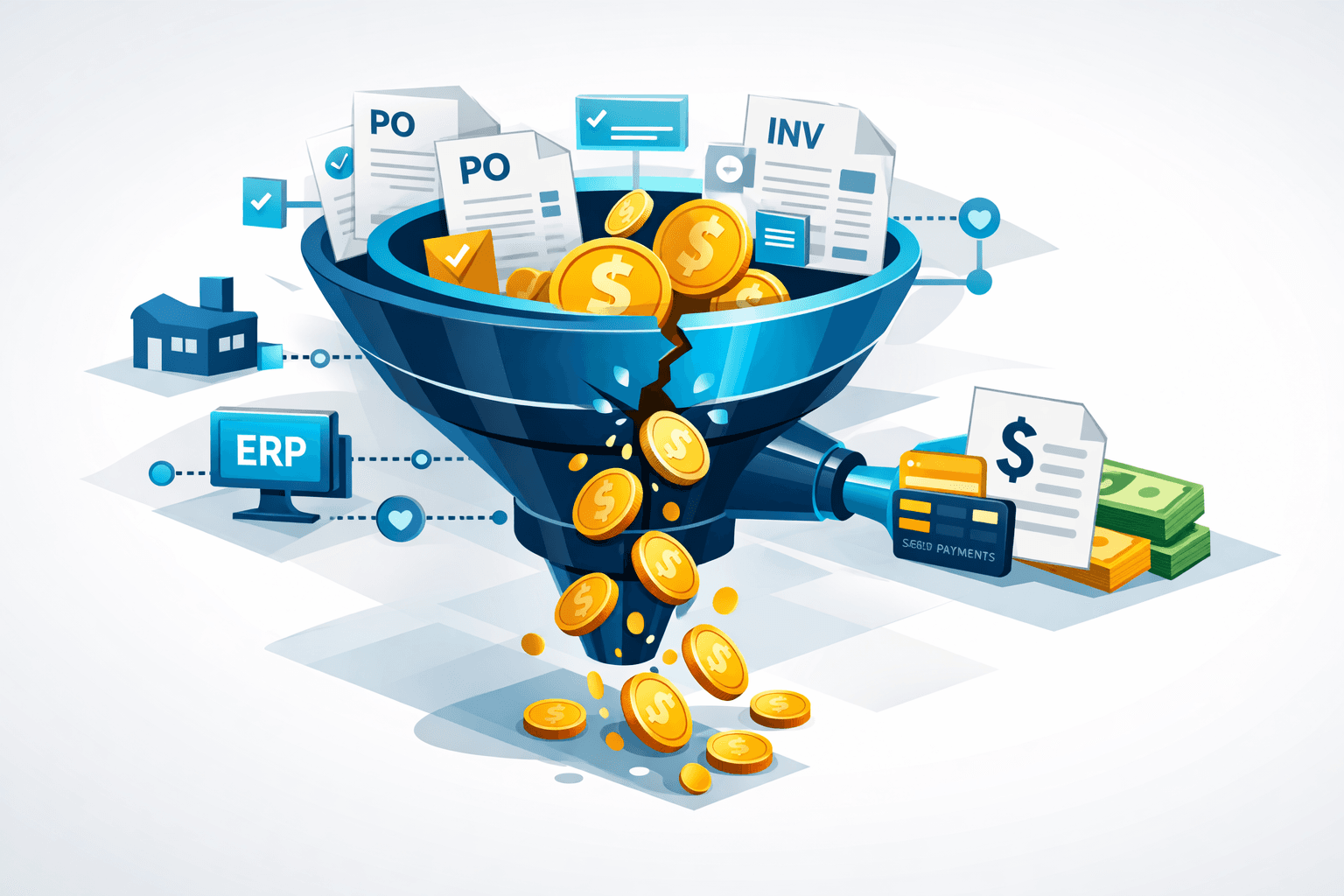
The gap between issuing a purchase order and completing the final payment is where that bleed happens. This PO-to-payment cash leakage can strip as much as 23% of working capital from a mid-sized company before anyone on the leadership team notices. Meanwhile, CMOs keep pouring budget into customer acquisition, unaware that the operational plumbing behind them is leaking cash at every joint.
Understanding where the money goes is the first step toward getting it back. So let’s walk through the hidden drains, quantify the damage, and map out the technology-driven solutions that are closing this gap for businesses right now.
Why Manual PO-to-Payment Workflows Haemorrhage Cash
Every purchase order contains specific details: item descriptions, quantities, agreed pricing and delivery dates. Invoices arrive carrying similar information. Consequently, the matching process should be straightforward. In practice, however, manual reconciliation turns this simple comparison into a resource-intensive headache.
Staff must cross-check line items by hand. Discrepancies crop up constantly, from pricing mismatches to duplicate entries to missing reference numbers. Each inconsistency triggers a chain of back-and-forth emails with vendors or internal departments. As a result, processing time balloons and errors multiply.
Consider the sheer volume involved. A mid-sized distributor handling 5,000 invoices per year faces thousands of individual data points to verify. According to PLANERGY’s 2025 AP benchmarking data, manual setups cost roughly $13.11 per invoice to process, compared to just $2.75 for automated systems. That difference alone represents tens of thousands of dollars in annual overhead for businesses still relying on spreadsheets and email chains.
Beyond the direct cost per invoice, manual workflows create a cascading effect that accelerates PO-to-payment cash leakage at every stage. Misfiled paperwork delays approvals. Delayed approvals push payments past discount windows. And missed discount windows hand free money back to vendors that could have stayed on the balance sheet.
The Invoice Processing Bottleneck and Its Ripple Effects
Accounts payable teams operating without automation face a persistent bottleneck. Invoices arrive in mixed formats: some by email, others by post, and a growing number through vendor portals. Without a unified intake system, each format requires separate handling, and the resulting delays are a root cause of PO-to-payment cash leakage.
Timeliness is the crux of the issue here. Most vendors offer early payment discounts in the range of 1% to 2% for settlement within 10 days. That window sounds generous until you learn that manual AP departments average 19.5 days to move an invoice through the approval cycle. By the time the payment is authorised, the discount has already expired.
Those missed discounts add up fast and represent one of the largest single contributors to PO-to-payment cash leakage. On $10 million in annual payables, failing to capture even half the available 2% discounts costs $100,000 per year, as NetSuite’s 2025 business case analysis illustrates. Businesses exploring whether early payment discount financing delivers real results consistently find that automation is the deciding factor. On top of that, late payment penalties compound the damage. Every overdue invoice carries a fee that chips away at already thin margins.
This bottleneck also strains the people doing the work. AP staff spend their days on repetitive data entry instead of strategic analysis or vendor negotiations. The result is higher turnover, more training costs, and an ever-growing backlog of unprocessed invoices that only makes the PO-to-payment cash leakage worse.
Visibility Gaps That Blind Executive Decision-Making
Many businesses run procurement, accounts payable and finance on separate systems. These fragmented platforms prevent leadership from seeing the full picture. When a purchase order is issued, it represents a financial commitment, yet that commitment often sits invisible until the invoice lands weeks later.
This lack of real-time visibility cripples cash flow forecasting and amplifies PO-to-payment cash leakage across the entire organisation. Without knowing outstanding commitments at any given moment, finance teams cannot predict outflows accurately. The challenge is compounded for businesses still dealing with persistent B2B invoicing frustrations that fragment data across disconnected tools. They overspend in one area while leaving another underfunded, and the CEO only learns about the shortfall after the fact.
Recent research from BILL’s 2025 State of B2B Payments report found that half of all SMBs experienced cash flow concerns in the past year, with more than a third saying those concerns persisted for three months or longer. Notably, only 38% of SMB leaders reported having real-time visibility into their cash position, according to a Fintech Takes analysis of the same data. Everyone else waits hours, days, or even weeks for an accurate snapshot.
Reactive financial management is the inevitable consequence. Decisions get made on outdated numbers, and by the time the real figures surface, the opportunity to act has already passed. Addressing PO-to-payment cash leakage, therefore, is not just an operational improvement. It is a strategic imperative that restores clarity to executive decision-making.
How PO-to-Payment Cash Leakage Damages Vendor Relationships
The downstream effects of slow and inaccurate payments extend beyond the balance sheet. Vendors notice when payments consistently arrive late. Over time, that pattern erodes trust and shifts the power dynamic in the relationship.
Suppliers who lose confidence in a buyer’s reliability start imposing stricter terms. They may require upfront payment, shorten credit lines, or deprioritise the buyer’s orders during high-demand periods. Each of these responses increases costs and introduces supply chain risk, turning PO-to-payment cash leakage into a procurement problem as well as a finance one.
Strong vendor relationships, on the other hand, unlock better pricing, priority fulfilment and flexible terms during tough quarters. Timely and accurate payments are the foundation of those relationships. They signal professionalism and financial health, two qualities that every supplier values when deciding how to allocate limited stock or production capacity.
For SMBs operating in competitive markets, this relational capital is just as important as the cash itself. Plugging PO-to-payment cash leakage protects the partnerships that keep the business running smoothly, especially when external conditions get volatile.
Quantifying the 23% Drain on Working Capital
Putting hard numbers on PO-to-payment cash leakage reveals the true scale of the problem. The 23% figure encompasses several compounding inefficiencies that, individually, might seem tolerable but collectively gut profitability.
Processing costs per invoice account for a significant chunk. As noted, manual handling runs roughly $13 per invoice versus under $3 with automation. Then there are duplicate payments, which HighRadius estimates affect 0.1% to 0.5% of total annual AP spend. On a $5 million payables book, that is between $5,000 and $25,000 walking out the door in overpayments alone.
Missed early payment discounts add another layer. Automated AP teams capture discounts at rates of 80% to 90%, while manual teams hover around 30% to 40%, according to Artsyl’s invoice automation research. The gap between those two rates, applied across thousands of invoices per year, translates into six-figure savings left on the table.
Late payment penalties, error-correction labour, audit preparation overhead, and the opportunity cost of capital tied up in inefficient processes round out the picture. Regulatory pressure is mounting too; the EU Late Payment Regulation is reshaping supply chain finance obligations for SMEs across Europe, adding compliance risk to the cost of slow payments. When you stack these factors together, the 23% PO-to-payment cash leakage figure is not an exaggeration. For many SMBs, it is a conservative estimate of the value trapped inside broken procure-to-pay workflows.
ERP Integration as the Foundation for Closing the Gap
Addressing PO-to-payment cash leakage at scale requires more than patching individual process steps. It demands a unified platform that connects procurement, accounts payable and finance into a single source of truth. That platform is an enterprise resource planning (ERP) system.
An ERP centralises purchase order creation, invoice receipt, three-way matching and payment execution. When a PO is generated, it immediately appears as a committed liability in the finance module. When the corresponding invoice arrives, the system matches it automatically against the PO and goods receipt. Discrepancies are flagged in real time rather than discovered days later during a manual audit.
This integration eliminates the data silos that cause most visibility problems and represent the structural root of PO-to-payment cash leakage. Finance leaders can see outstanding commitments, upcoming payment deadlines and available discount windows on a single dashboard. Cash flow forecasting shifts from guesswork to genuine prediction.
Importantly, ERP implementation has become far more accessible for mid-market businesses. Cloud-based platforms from providers like NetSuite, SAP Business One and Acumatica offer modular deployments that scale with the business. The days of multi-year, seven-figure ERP projects as the only option are firmly behind us.
Fintech Tools That Supercharge the Procure-to-Pay Cycle
While ERP provides the structural backbone, specialised fintech solutions add a layer of intelligence and speed that further reduces PO-to-payment cash leakage. These tools target specific friction points with purpose-built capabilities.
Automated invoice capture platforms use intelligent character recognition and machine learning to extract data from invoices regardless of format. They process emailed PDFs, scanned documents and portal submissions with equal accuracy, feeding clean data directly into the ERP for matching. According to Amazon Business’s 2026 AP automation guide, these tools sync with over 300 ERP and procurement systems to eliminate duplicate entries and data mismatches.
Dynamic discounting platforms take a different approach. Rather than relying on static 2/10 net 30 terms, they allow buyers to offer flexible early payment in exchange for sliding-scale discounts. The system calculates the optimal payment date based on real-time cash availability, ensuring the business captures savings without straining liquidity.
Supply chain finance solutions extend this concept further by enabling vendors to receive early payment from a third-party funder while the buyer settles on standard terms. Neither party sacrifices cash flow, and the relationship strengthens through improved payment predictability. The rise of open banking in B2B payments is accelerating these models by giving platforms direct access to transaction data and faster settlement rails.
Together, these fintech innovations attack PO-to-payment cash leakage from multiple angles, transforming the procure-to-pay cycle from a manual, error-prone process into a streamlined operation that generates value for the business.
Real-World Impact: From 23% Leakage to Reinvested Capital
Consider a mid-sized distributor sourcing products from dozens of suppliers. Their PO-to-payment process ran entirely on spreadsheets, email approvals and manual data entry. Pricing mismatches were routine. Invoices were occasionally paid twice. The AP team spent days tracking down approvals, and early payment discounts slipped through the cracks month after month.
After implementing an integrated ERP with automated invoice processing, the transformation was measurable within six months. Invoice processing time dropped by 70%. Data entry errors fell by 95%. The business captured over 98% of available early payment discounts, and vendor satisfaction rose sharply thanks to consistent, on-time settlement.
The capital previously lost to PO-to-payment cash leakage was redirected into growth initiatives. Marketing received a larger budget backed by genuine financial headroom rather than optimistic projections. Product development accelerated. The operational efficiency gains created a virtuous cycle where better back-end processes fuelled stronger front-end results.
This pattern is not unique to one business or one industry. Wherever SMBs replace manual procure-to-pay workflows with integrated, automated systems, PO-to-payment cash leakage drops and reinvestment capacity rises.
Building a Proactive Cash Flow Strategy
The shift from reactive to proactive financial management is the real prize. Plugging PO-to-payment cash leakage is not just about recovering lost dollars. It is about building the infrastructure for confident, data-driven decision-making across the entire business.
With real-time visibility into commitments and cash position, CFOs can negotiate from strength. They can time payments strategically, capture every available discount, and maintain the vendor relationships that ensure supply chain stability. Innovations in open banking and supplier payment cycles are making this level of control accessible to businesses of every size, not just enterprises with dedicated treasury teams. As PO-to-payment cash leakage shrinks, CEOs gain the operational transparency needed to align growth investments with genuine financial capacity.
B2B payment modernisation is accelerating rapidly. Payments Dive reported that agentic commerce, real-time payment settlement and AI-powered fraud detection are reshaping how businesses move money in 2026. The emergence of AI-driven agentic commerce in SME payments points toward a future where purchase-to-pay cycles run with minimal human intervention. The PYMNTS-Mastercard SMB payments study also found that nearly half of SMBs want to reduce their reliance on cash and cheques. The direction of travel is clear, and businesses that eliminate PO-to-payment cash leakage now will compound their advantage over those that wait.
Addressing PO-to-payment cash leakage is not a secondary operational concern. It is a primary driver of sustainable profitability and strategic agility, the kind of foundational investment that separates businesses that scale from those that stall.
“The most effective growth strategies are built on a foundation of operational excellence. Plugging cash leaks in the procure-to-pay cycle is not a secondary concern; it is a primary driver of sustainable profitability and strategic agility.”
— Girish Songirkar, ArionERP