Nvidia’s Strategic Vision Transforms Networking Business
Nvidia CEO Jensen Huang recognized the potential of AI-specific chips well ahead of the curve, initiating the development of such technology in 2010, long before AI entered mainstream conversation. His foresight continued in 2020 with a pivotal acquisition aimed at enhancing data center networking, ultimately leading to one of Nvidia’s fastest-growing and most lucrative divisions, albeit without the spotlight typically associated with such success.
Explosive Growth in Networking Revenue
In just a few short years, Nvidia’s networking business, which focuses on connecting data centers, has become the company’s second-largest source of revenue, trailing only its compute segment. The latest quarterly report revealed a staggering $11 billion in revenue, reflecting a year-over-year increase of 267%. For the full fiscal year, the division generated over $31 billion, showcasing remarkable growth, as detailed in Nvidia’s recent financial disclosures.
Innovations Driving AI Processing
The rapid expansion of this division is heavily influenced by the surge in AI processing demand. It encompasses advanced technologies such as NVLink, designed to facilitate communication between GPUs within a data center rack; Nvidia InfiniBand Switches, which serve as an in-network computing platform; and Spectrum-X, an Ethernet platform tailored for AI networking, along with co-packaged optics switches, among other innovations.
The AI Factory Concept
Collectively, Nvidia’s networking technology is essential for constructing what the company terms an “AI factory,” which is crucial for training AI models. While the networking business has garnered significant revenues, it has yet to receive the same level of attention as Nvidia’s more dominant chip business or its original gaming segment, which is notably smaller.
The Origin and Future of Nvidia’s Networking Business
The foundation of Nvidia’s networking capabilities was laid with its 2020 acquisition of Mellanox, a networking company that emerged from Israel in 1999. Since this strategic move, industry experts have recognized this segment as one of Nvidia’s most impressive developments. Kevin Cook, a senior equity strategist at Zacks Investment Research, noted that Nvidia’s recent quarterly networking revenue surpasses that of Cisco’s entire business in a year, thereby underlining the division’s significant impact.
Forces Behind Nvidia’s Networking Success
Kevin Deierling, a senior vice president at Nvidia who joined the company through the Mellanox acquisition, acknowledges that the lack of awareness regarding Nvidia’s networking capabilities may stem from inadequate marketing efforts. He asserts, however, that networking today transcends basic connectivity needs; it is integral to modern computing architecture. Huang long recognized that the data center represents the new frontier of computing, and networking is a foundational element of this reality.
Innovative Full-Stack Solutions
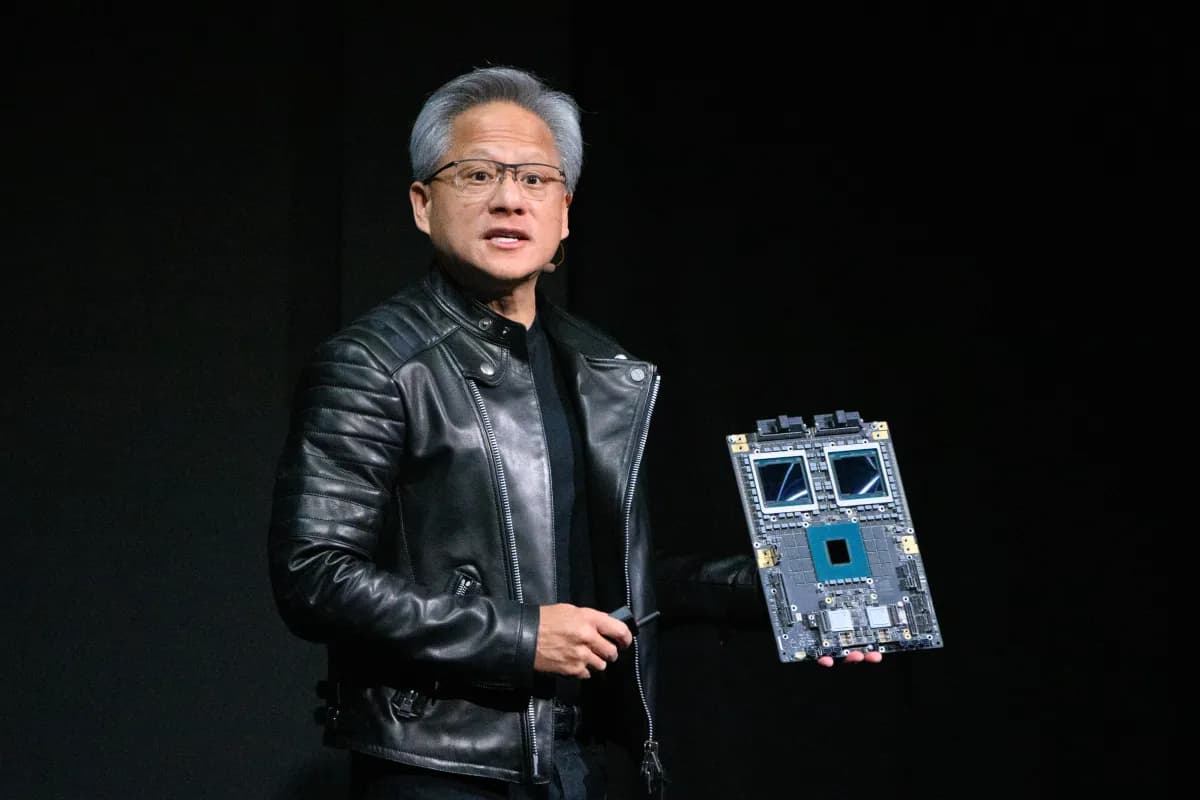
Deierling emphasizes that Nvidia distinguishes itself by offering full-stack solutions rather than fragmented components, providing a comprehensive approach to networking technologies. Additionally, Nvidia markets its innovations through strategic partnerships rather than directly selling individual technologies. Fresh announcements from a recent keynote at the Nvidia GTC technology conference, including the launch of the Nvidia Rubin platform and new chips designed for an “AI supercomputer,” exemplify the company’s commitment to staying at the forefront of technology. Deierling articulated the evolving viewpoint of networking, stressing its foundational role in modern AI infrastructure, akin to the importance of internal computer backplanes in prior eras.