(Bloomberg) — Nvidia Corp. has assured investors that its new product line will continue to fuel artificial intelligence-led growth, while also signaling that the rush to release chips is proving more costly than expected.

Most read on Bloomberg

Listen to the Bloomberg Daybreak Europe podcast on Apple, Spotify or wherever you listen.

Speaking after releasing quarterly results, CEO Jensen Huang said Nvidia’s highly anticipated Blackwell products would ship this quarter amid “very strong” demand. But chip production and engineering costs will weigh on profit margins, and Nvidia’s sales forecast for the current period doesn’t match some of Wall Street’s most optimistic projections.

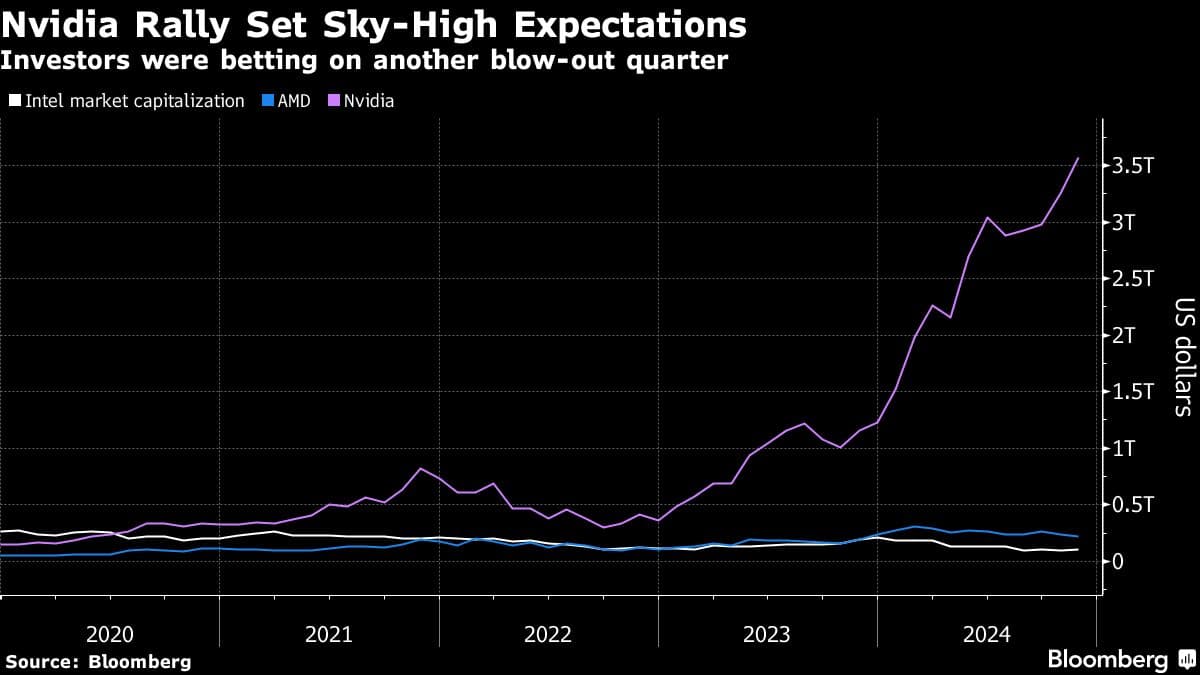
That sparked a lukewarm reaction from investors, who had bid up Nvidia’s shares nearly 200% this year before the earnings report was released. After this dizzying rebound, which made the microchip maker the most valuable company in the world, anything but an explosive quarter was bound to be a disappointment.

Shares fell as much as 3.6% on Thursday before rebounding in the afternoon. They closed up 0.5% at $146.67.

Nvidia forecast fourth-quarter revenue of around $37.5 billion. While the average analyst estimate was $37.1 billion, projections ranged as high as $41 billion.

“Forecasts seem to show weaker growth, but that could be because Nvidia is conservative,” said Alvin Nguyen, an analyst at Forrester Research Inc. “In the short term, there is no concern about demand for AI. Nvidia is doing everything it should be doing.

The company’s biggest source of revenue is its accelerator chip, which helps develop artificial intelligence models by bombarding them with data. Since the launch of OpenAI’s ChatGPT chatbot in 2022, a frenzy of AI services has created insatiable demand for the product.

All About Nvidia Chips, AI Hype, and What’s Next: QuickTake

Wall Street is closely watching the launch of Blackwell, the latest in this category, which is faster and has an improved ability to interface with other semiconductors. Manufacturing issues have slowed the rollout, and Nvidia warned again Wednesday of supply constraints. Demand for these products is expected to exceed supply for several quarters.