Mastodon is implementing a series of changes aimed at enhancing its social networking service, striving to attract mainstream users seeking alternatives to platforms like X and Threads.
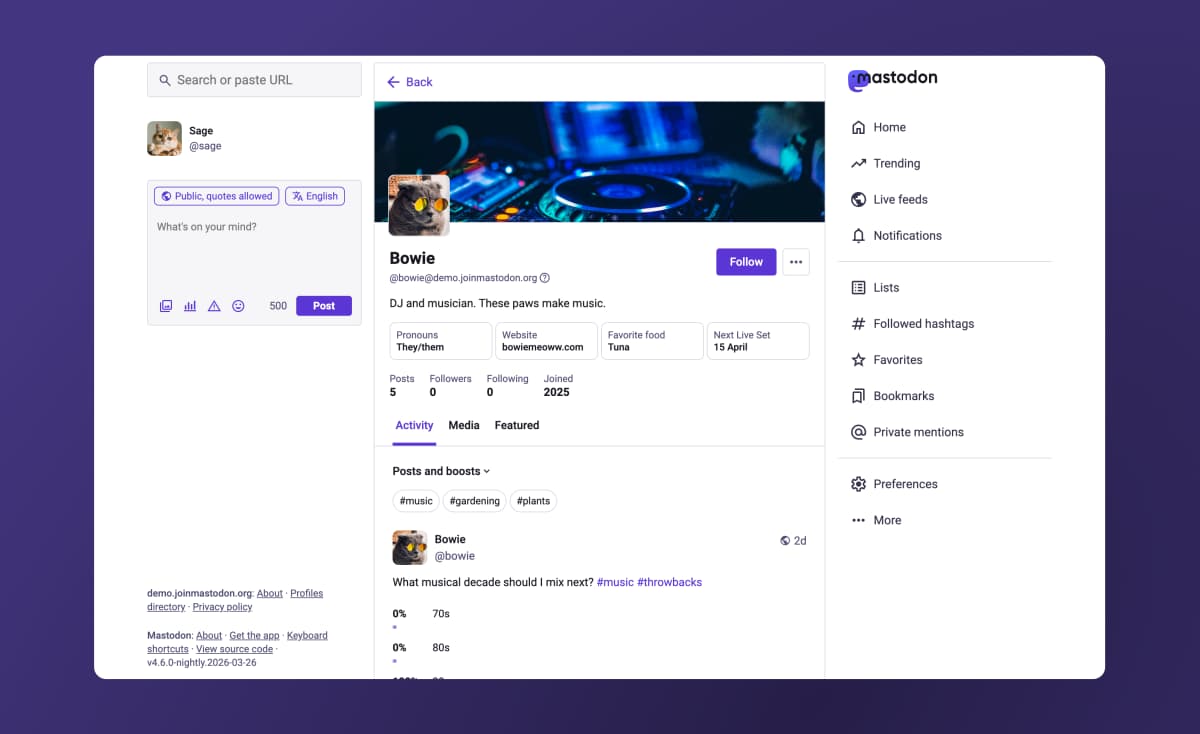
On Thursday, the decentralized social networking software company announced a redesign of its platform, focusing on user profiles to better cater to both individuals and organizations.
Built on the ActivityPub protocol, Mastodon gained popularity following Elon Musk’s acquisition of Twitter, which prompted many users to explore alternatives. The platform is appreciated for its decentralized nature, as it avoids centralized control over algorithms, allowing users to migrate their accounts if they are dissatisfied with a particular server’s governance or community moderation.
Despite its advantages, Mastodon presents a steeper learning curve compared to traditional social networks such as X. Users must select a server to join and navigate different timeline options (local and federated), which can bewilder newcomers. Additionally, the procedure for interacting with other users can appear cumbersome.
As a result, Mastodon has faced challenges in expanding its user base, currently standing at approximately 800,000 monthly active users, a decline from a peak of 1 million during the height of the Twitter upheaval.
In response to areas that may deter prospective users, Mastodon has been rolling out several enhancements. Earlier this year, it simplified the onboarding process and introduced requested features like Quote Posts and “starter packs” known as Collections.
What’s changing
The recent update to user profiles presents several modifications, primarily of a visual nature. Rather than offering two viewing options for posts (such as “posts” or “posts and replies” akin to X), profiles now feature a single “Activity” tab with a dropdown menu that allows users to customize their view by toggling replies and boosts (similar to reposts) on or off.
Hashtags are now prominently displayed at the top of the Activity tab, enabling users to filter an account’s posts by selecting specific tags.
The redesigned profile also eliminates the previously criticized pinned posts carousel, which aimed to balance the interests of users wishing to highlight multiple posts versus those seeking quick access to recent content. Instead, users can now feature one pinned post, with additional posts accessible via a new “View all pinned posts” button.
To assist newcomers in navigating the platform, an informative pop-up has been added to explain Mastodon’s unique handle structure. Unlike X or Threads, which use a straightforward @username format, Mastodon handles include two @ symbols — one for the account name and the other for the server name.

Users will find enhanced flexibility in managing their profiles, with options to conceal the “Media” or “Featured” tabs. They can also opt to hide replies within the “Media” section, focusing on showcasing their work.
Custom fields for profile features, such as links and pronouns, are now displayed side by side, providing increased vertical space. Users can modify these fields from both iOS and Android devices, in addition to the web interface.

The updates also contribute to a cleaner design, reducing clutter by removing the “following you” badge and relocating the optional “personal note” to an overflow menu. Users can now manage all profile edits from a unified spot within account settings, which includes tasks such as selecting featured hashtags, links, and other profile elements.

Additionally, Mastodon’s link verification feature—designed to establish user credibility without resorting to centralized authority or subscription fees—has been made more accessible, no longer hidden within settings. Users can also crop and add alt text to their profile images and cover photos.
These enhancements will first be available on the mastodon.social server and other servers opting to run the nightly build, with broader rollout expected alongside the forthcoming Mastodon 4.6 software update in the coming weeks.