

The Transformation of India’s Payments Landscape
India’s payments ecosystem has experienced significant changes in recent years, driven by government initiatives for infrastructure advancement and a surge in digital payments, alongside the rapid growth of the fintech industry.
Insights from the PwC and Global Fintech Fest Report
A comprehensive report from PwC and Global Fintech Fest highlights the dual emergence of digital payment systems, notably the Unified Payments Interface (UPI), and the ongoing prevalence of cash transactions. This report focuses on evolving business models and identifies lucrative growth areas such as credit cards, artificial intelligence (AI) applications, and new use cases for UPI.
Continued Popularity of Cash Transactions
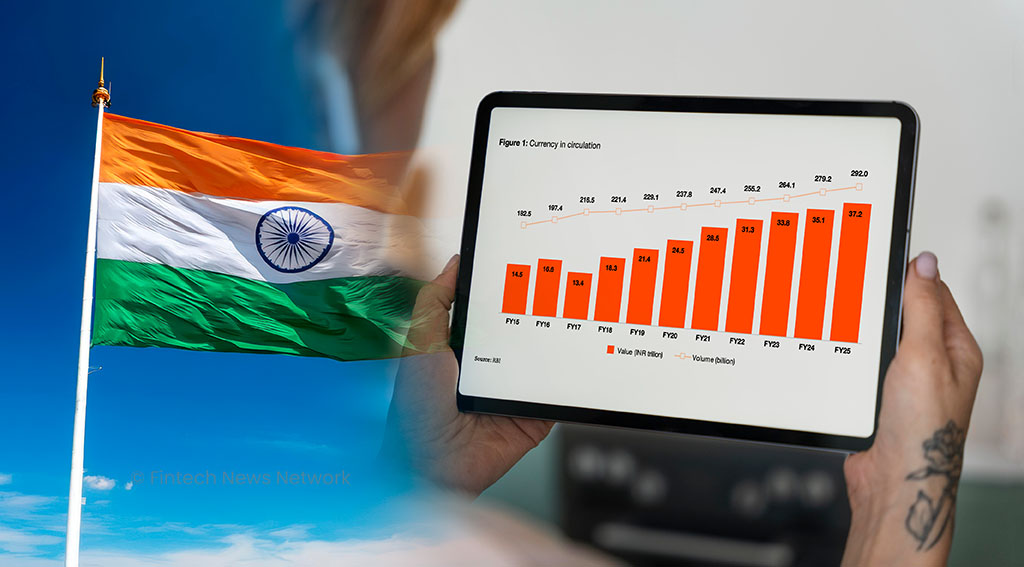
Despite the advancement of digital payments, cash remains a prominent payment method in India, with cash in circulation amounting to INR 37.2 trillion (around $420 billion) in 2025. This figure reflects a 19% year-on-year increase in value, demonstrating a persistent demand that persists across various demographic segments, particularly in states like Uttar Pradesh and Bihar.
Trust and Cost Considerations in the Formal Economy
In urban areas, cash remains favored among merchants, primarily due to trust and cost avoidance related to digital payment processing fees, known as Merchant Discount Rates (MDR), which typically range from 1% to 3%. Additionally, cash transactions are significant in sectors such as jewelry, where cash remains the norm despite regulatory measures requiring identification for high-value purchases.
Future Trends: Digital Payments and UPI’s Growth
The report indicates that UPI transactions have grown considerably, accounting for 85% of digital transactions in India. Innovations like biometric authentication and cross-border remittances have positioned UPI as a cornerstone of the payments ecosystem, with forecasts suggesting it may handle 1 billion transactions daily by 2028.
The Rise of AI in Payment Solutions
With the booming use of UPI and rising digital payments, investments in AI technologies, particularly in fraud detection, are becoming imperative. The report underscores that AI-driven solutions will unlock new growth potential, catering to India’s increasingly mature payments market. Fintech funding in the payments sector has been robust, with approximately 35% of fintech investment directed towards it in the first half of 2025.
Cross-Sector Innovations and Strategic Tools
India’s payments sector is no longer the realm of banks and tech companies alone; participation from telecom, retail, and e-commerce is growing. Payment capabilities are increasingly perceived as strategic assets essential for attracting customers and enhancing loyalty. Telecom operators are venturing into payment services, while e-commerce platforms are integrating features like digital wallets and BNPL to streamline transactions.
Emerging Use Cases for UPI and Credit Services
According to insights gathered from industry professionals, credit cards are poised to catalyze the next phase of growth in India’s payment landscape. Additionally, the potential for new UPI applications like cross-border transactions and microcredit services are key areas for development. Regulatory support, such as the introduction of UPI-linked credit card payments, enhances these growth prospects.
Navigating Fraud Risks in the Digital Age
The expansion of digital transactions has led to a worrying rise in fraud cases, with incidents increasing by 20% from 2024 to 2025. Several initiatives are underway to tackle these challenges, including the Reserve Bank of India’s (RBI) implementation of enhanced verification systems and the launch of an AI-backed Digital Payments Intelligence Platform to better detect fraudulent activities.
The ongoing transformation of India’s payments landscape promises a dynamic future, characterized by an integrated ecosystem where cash and digital methods not only coexist but also enhance overall transaction efficiency.