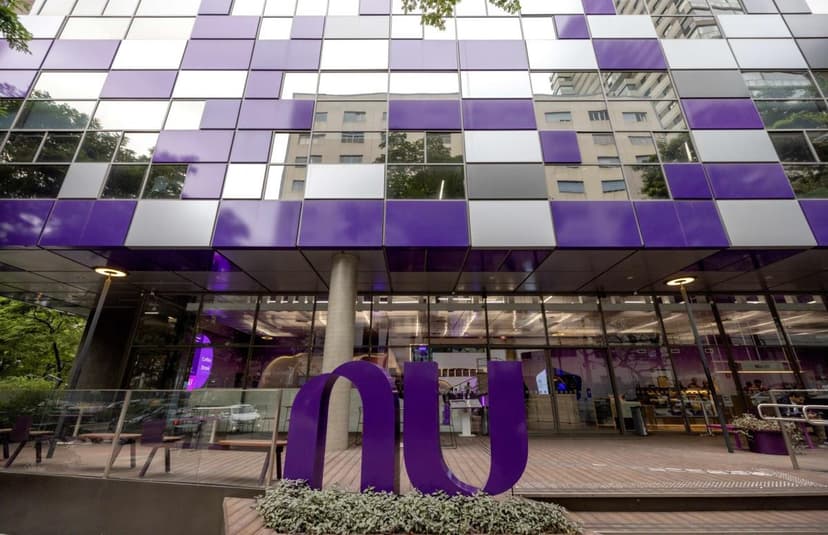
We recently compiled a list of 13 Most Promising Fintech Stocks to Buy.In this article we will take a look at where Nu Holdings Ltd. (NYSE:NU) stacks up against other promising fintech stocks.
According to a report by Expert Market Research, the global fintech market was valued at $226.71 billion in 2023 and is expected to reach $917.17 billion by 2032, growing at a compound annual growth rate of 16. 8% between 2024 and 2032. CNBC unveiled a full report. fintech industry breakdown by category. Payments accounts for 20%, alternative finance 16%, neo-banking 14%, wealth management technology 12%, business process solutions 10%, financial planning 8%, banking solutions 10% and assets digital 6% of the sector.
The fintech market has seen strong growth over the past decade and continues to demonstrate resilience and strength. In a study conducted by the World Economic Forum, 51% of fintech companies cited strong consumer demand for their services as the main driver of their growth. This trend remained consistent across all regions. The digital innovation carried out by these fintech companies operating in developing economies has simply helped people escape the traditional banking system.
While the booming fintech sector is supposed to offer the best of both worlds, namely innovative banking services and cutting-edge technology as well as security, customers have recently encountered safety and security issues. It is estimated that 100,000 American customers of fintech applications do not have access to their bank accounts at the beginning of May. This was after banking-fintech intermediary Synapse Financial Technologies filed for bankruptcy in April, leading to the freezing of customer accounts at its partner banks. Although the fintech applications in this scenario are relatively small compared to the dominant players, Hugh Son questioned the security of the fintech model in which fintechs partner with banks, also followed by Chime and PayPal, during an interview with CNBC.
In this regard, there has been a positive development for those using fintech applications whose funds may remain blocked in the event of an incident. Recently, the US banking regulator, Federal Deposit Insurance Corp, proposed strengthened rules for banks working with financial technology companies. Under these rules, these banks would have to identify the beneficial owners of each account and its balance. Therefore, the proposal would ensure that third parties like Synapse would be allowed to keep the records as long as the bank maintains unrestricted access to that data, even if an intermediary goes bankrupt.
Our methodology:
To come up with a list of the 13 most promising fintech stocks to buy, we first combed through ETFs and online rankings to put together a preliminary list of 30 such stocks. We then selected the 13 stocks with the highest upside potential. The 13 most promising fintech stocks to buy are listed in ascending order of their average upside potential, as of September 30. We also completed our ranking with the number of hedge funds held by each stock, as of the second quarter of 2024.
At Insider Monkey, we’re obsessed with the stocks hedge funds are piling into. The reason is simple: our research has shown that we can outperform the market by imitating the stocks selected by the best hedge funds. Our quarterly newsletter strategy selects 14 small- and large-cap stocks each quarter and has returned 275% since May 2014, beating its benchmark by 150 percentage points. (see more details here).
Wide angle shot of a team of bankers and financial advisors evaluating an investment portfolio on a touchscreen.
Average upside potential:8.17%
Number of hedge funds:59
Nu Holdings Ltd. (NYSE: NU) is a Brazilian fintech company serving more than 105 million customers in Brazil, Mexico and Colombia. The company is one of the world’s largest digital financial services platforms. It addresses the client’s entire financial journey and promotes financial access.
Nu enjoys a strong regional footprint by being the primary bank account for 60% of monthly active customers in Brazil, increasing deposit yields in Mexico and crossing the million customer mark in Colombia. In terms of number of customers, Nu is the fourth largest financial institution in Latin America. Last May, the fintech company surpassed 100 million customers and was the first digital banking platform to reach this milestone outside of Asia.
For the fiscal second quarter, Nu added 5.2 million new customers, or 20.8 million year-over-year, while the activity rate reached a new record of 83.4%. The company has successfully become the institution with the largest number of active clients in credit operations. Simultaneously, revenue increased 65% year over year to a record $2.8 billion.
With the position of one of the best capitalized players in the region, growing revenue and a robust growth trajectory, Nu Holdings Ltd. (NYSE:NU) ranks among the 13 most promising fintech stocks to buy. In the second quarter, the stock was held by 59 hedge funds.
Overall NU ranks 8th on our list of the most promising fintech stocks to buy. While we recognize NU’s potential as an investment, our conviction lies in the belief that some deeply undervalued AI stocks hold more promise in terms of higher returns in a shorter time frame. If you’re looking for a deeply undervalued AI stock that’s more promising than NU but trading at less than 5x earnings, check out our report on cheapest AI stock.
Marvin Evans is a finance and fintech professional with 20 years of industry experience, including more than a decade working across the fintech sector. He is the founder of Fintech Bits and Finjobsly, and writes about fintech markets, financial technology, industry trends, innovation and the evolving fintech workforce. His analysis combines hands-on industry experience with data-led research to provide practical insight into the companies, technologies and trends shaping financial services.
 5 mins read