

Hermeus Secures $350 Million Funding to Advance Unmanned Aircraft Technology
Defense startup Hermeus has successfully raised $350 million to propel its development of what it claims to be the fastest unmanned aircraft. This latest funding round has elevated the company’s valuation to an impressive $1 billion.
Equity Financing and Strategic Partnerships Drive Investment
The Los Angeles-based startup announced on Tuesday that it has secured $200 million in equity financing, primarily led by Khosla Ventures. The funding round also saw participation from existing investors such as Canaan Partners, Founders Fund, In-Q-Tel, and RTX Ventures. Notable new contributors include the venture fund of media conglomerate Cox Enterprises and the closed-end management investment firm Destiny Tech100, among others.
Debt Financing Enhances Control for Hermeus
The remaining $150 million of the total financing comes in the form of debt. Hermeus co-founder and CEO AJ Piplica emphasized that this financial structure allows the startup to maintain greater control over its capital table. “We are expanding our manufacturing capabilities, and financing a significant portion of our spending in a non-dilutive manner is our preferred approach,” Piplica explained in an interview.
Increasing Investment in Defense Tech
This funding influx arrives amidst a broader trend where venture capital and corporate investors are increasingly channeling funds into defense startups. According to PitchBook, global VC investment in defense technology exceeded $9 billion across 265 rounds last year, with corporate backing contributing $2 billion in 28 rounds.
Technical Strategy Enhancements Fuel Fundraising Success
However, for Hermeus, the timing of this funding isn’t purely coincidental. Piplica credits part of their fundraising triumph to a significant technical pivot the company made a few years ago. Initially focused on developing its own engine, Hermeus pivoted after engaging with RTX Ventures, the investment arm of RTX Corporation, formerly known as Raytheon.
Strong Partnerships Propel Development Speed
Instead of continuing to develop its engine, Piplica and his team opted to collaborate with RTX subsidiary Pratt & Whitney to adapt their F100 engine for use in Hermeus’s hypersonic aircraft. This strategic move promises to expedite development by providing a proven engine, facilitating quicker testing and iteration while simultaneously securing contracts with the U.S. government. According to president Zach Shore, the focus has shifted from a singular goal of achieving Mach 5 to diversifying Hermeus’s offerings.
Rapid Prototyping in Aviation: A Unique Approach
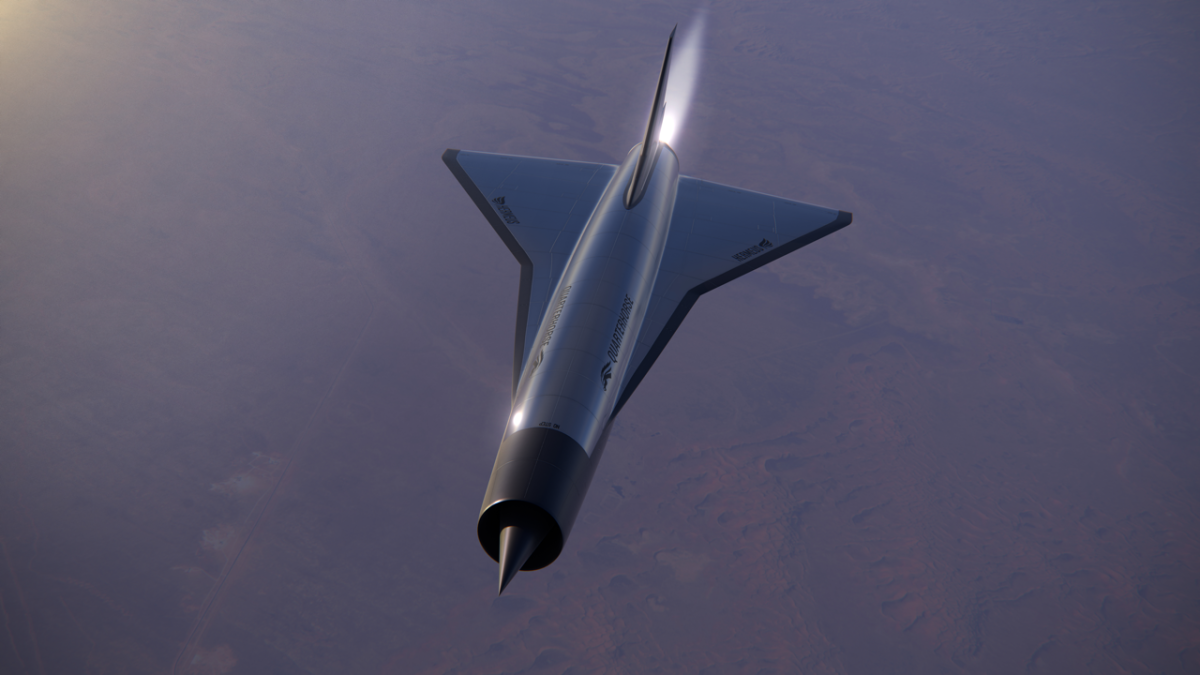
Last month, Hermeus successfully flew a demonstrator version of its technology equivalent in size to an F-16 fighter jet, setting ambitious targets for the next iteration to achieve supersonic speeds. Piplica noted that such rapid prototyping is rare in the aviation sector, drawing parallels with SpaceX’s iterative build-test-learn approach. Addressing the talent gap, he acknowledged that the biggest challenge remains sourcing skilled professionals, as few companies are currently engaged in the annual development of new full-scale aircraft.
Focus on Continuous Development Despite Risks
The recent funding will bolster Hermeus’s staffing efforts, which already number nearly 300 employees. With two successful test flights under its belt, the startup is aware that failures are part of the development narrative. Piplica articulated the need for calculated risk-taking in their capital allocation strategy, underscoring the importance of building multiple aircraft to accelerate their learning process and innovation timeline. “If you don’t build enough, the development cycle stretches out, sometimes taking decades,” he remarked.