Defense aviation startup Hermeus has closed a $350 million Series C round to accelerate the development of autonomous hypersonic fighters for U.S. national security missions. As a result, the company’s valuation has climbed to an impressive $1 billion. This milestone positions Hermeus as one of the most well-funded players in the emerging high-speed unmanned aircraft market. With this raise, the company’s total funding now exceeds $500 million.
Khosla Ventures led the equity portion of the round, which totaled $200 million. Additionally, existing backers Canaan Partners, Founders Fund, In-Q-Tel, and RTX Ventures all participated in the raise. New investors joining the effort include the venture fund of media conglomerate Cox Enterprises. Publicly traded investment firm Destiny Tech100 also came on board, alongside Georgia Tech Foundation, 137 Ventures, and GSBackers. Together, these backers are fueling the next phase of autonomous hypersonic fighters development at Hermeus.
Debt Financing Helps Hermeus Maintain Control
The remaining $150 million of the funding comes as debt, which gives Hermeus more flexibility over its capital structure. Consequently, the startup can scale manufacturing without excessive equity dilution. Co-founder and CEO AJ Piplica explained that this approach lets the company finance hardware-intensive operations in a non-dilutive way. Silicon Valley Bank, Hercules Capital, Pinegrove Venture Partners, and Trinity Capital are providing the debt, according to the company’s official press release.
This financial strategy is especially important for a company building autonomous hypersonic fighters, since hardware development demands significant upfront spending. By blending equity with debt, Hermeus preserves ownership while still investing aggressively in production capabilities. Moreover, this structure mirrors a growing trend among defense startups that need to fund expensive physical prototyping without giving up too much of the cap table.
Defense Tech Investment Is Surging Across the Sector
Hermeus is not alone in attracting major capital. In fact, global venture capital investment in defense technology reached record levels in 2025. PitchBook reported $49.9 billion deployed across 966 deals that year. Corporate investors have also stepped up their involvement, channeling billions into startups that build everything from drones to high-speed combat platforms.
This broader trend reflects growing government demand for innovative defense solutions. Notably, autonomous systems attracted the largest share of late-stage capital in 2025. Median pre-money valuations in that category climbed to $401 million. The momentum extends well beyond the autonomous hypersonic fighters space. It also touches areas like counter-drone technology, space systems, and defense electronics. Manufacturing-focused defense investment alone rose to $4.7 billion across 39 deals in 2025, highlighting the emphasis on production readiness. Similar investment enthusiasm is visible across the broader startup ecosystem, where large funds continue to flow toward hardware-intensive ventures.
A Technical Pivot That Changed Everything for Hermeus
Interestingly, Piplica credits much of the fundraising success to a strategic decision the company made several years ago. Hermeus had originally spent time and resources developing a proprietary engine from scratch. However, after connecting with RTX Ventures, the investment arm of RTX Corporation (formerly Raytheon), the team chose a different path.
Instead of continuing with its own engine program, Hermeus partnered with RTX subsidiary Pratt & Whitney. Together, they adapted the proven F100 engine to power the company’s aircraft. The F100 is the same powerplant used in F-15 and F-16 jets, giving Hermeus a reliable and well-understood baseline. TechCrunch reported that this pivot put the startup on a faster development track. It also opened doors to new government contracts that were previously out of reach.
As a result, Hermeus shifted from chasing a single Mach 5 goal to diversifying its autonomous hypersonic fighters program across multiple capabilities. President Zach Shore explained that this approach creates overlapping incentive structures. These simultaneously advance the technology, satisfy near-term Department of Defense demand, and improve the economics of the business.
Rapid Prototyping Sets Hermeus Apart in Aviation
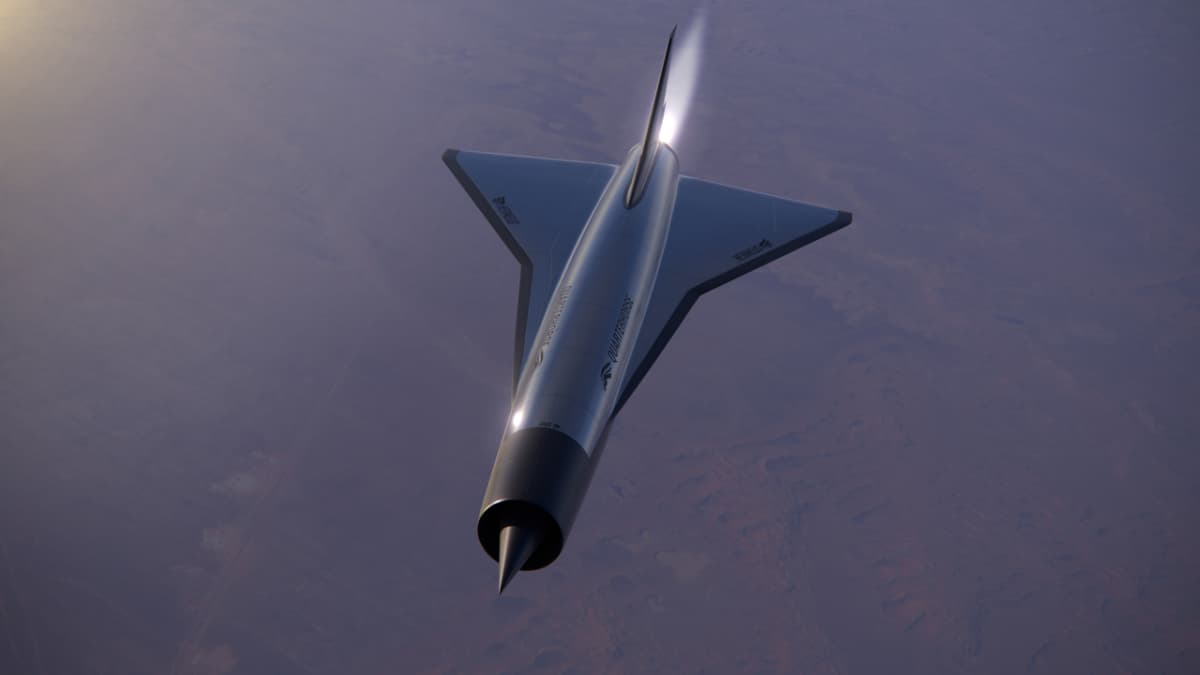
Last month, Hermeus successfully flew a demonstrator aircraft roughly the size of an F-16 fighter jet. The aircraft, known as the Quarterhorse Mk 2.1, has already received a Special Airworthiness Certificate from the FAA. The next iteration is targeting supersonic speeds, which would mark a significant leap forward. Reaching supersonic flight would bring the company closer to its ultimate vision of fielding autonomous hypersonic fighters capable of sustained high-Mach operations.
Piplica has drawn comparisons to SpaceX’s iterative build-test-learn methodology. He noted that this kind of rapid prototyping is extremely rare in aviation. Most traditional defense programs take years to move between design phases, but Hermeus aims to produce one new aircraft every year.
Still, the biggest challenge remains talent acquisition. Very few companies in the world are building new full-scale aircraft on an annual basis. Therefore, Hermeus must develop its workforce largely from the ground up. The new funding round will support continued hiring, with the company already approaching 300 employees. Defense Daily noted that Hermeus has also relocated its headquarters to El Segundo, California, where it is expanding its prototyping footprint. The growing demand for skilled talent in emerging tech sectors underscores just how competitive the hiring landscape has become.
Embracing Failure as Part of Building Autonomous Hypersonic Fighters
With two successful test flights completed, Hermeus is well aware that setbacks will inevitably occur during development. Nevertheless, Piplica views potential failures as essential learning opportunities rather than roadblocks. He stressed the importance of building multiple aircraft simultaneously to compress the innovation timeline. Without enough hardware in the pipeline, the development cycle can stretch out over decades rather than years.
This philosophy of calculated risk-taking defines how Hermeus approaches capital allocation for its autonomous hypersonic fighters program. By investing in volume and speed, the startup aims to stay ahead of both competitors and evolving national security needs. The company plans to expand to a fleet of three aircraft, each designed to push progressively closer to Mach 3 speeds and full payload integration.
What the Hermeus Raise Signals for Autonomous Hypersonic Fighters
The $350 million raise represents one of the largest single investments in the autonomous hypersonic fighters sector to date. It signals that both private capital and government stakeholders see high-speed unmanned platforms as a critical capability gap. As geopolitical tensions continue to shape defense procurement priorities, companies like Hermeus are well positioned to benefit from sustained demand.
Investor confidence in autonomous hypersonic fighters also reflects a broader shift in how venture capital views defense innovation. Traditional prime contractors are no longer the only option for cutting-edge military technology. Startups that demonstrate rapid iteration and hardware-first execution, much like Hermeus, are increasingly winning the confidence of both institutional investors and government buyers alike. With supersonic flight now imminent, Hermeus appears set to enter its most defining chapter yet.