

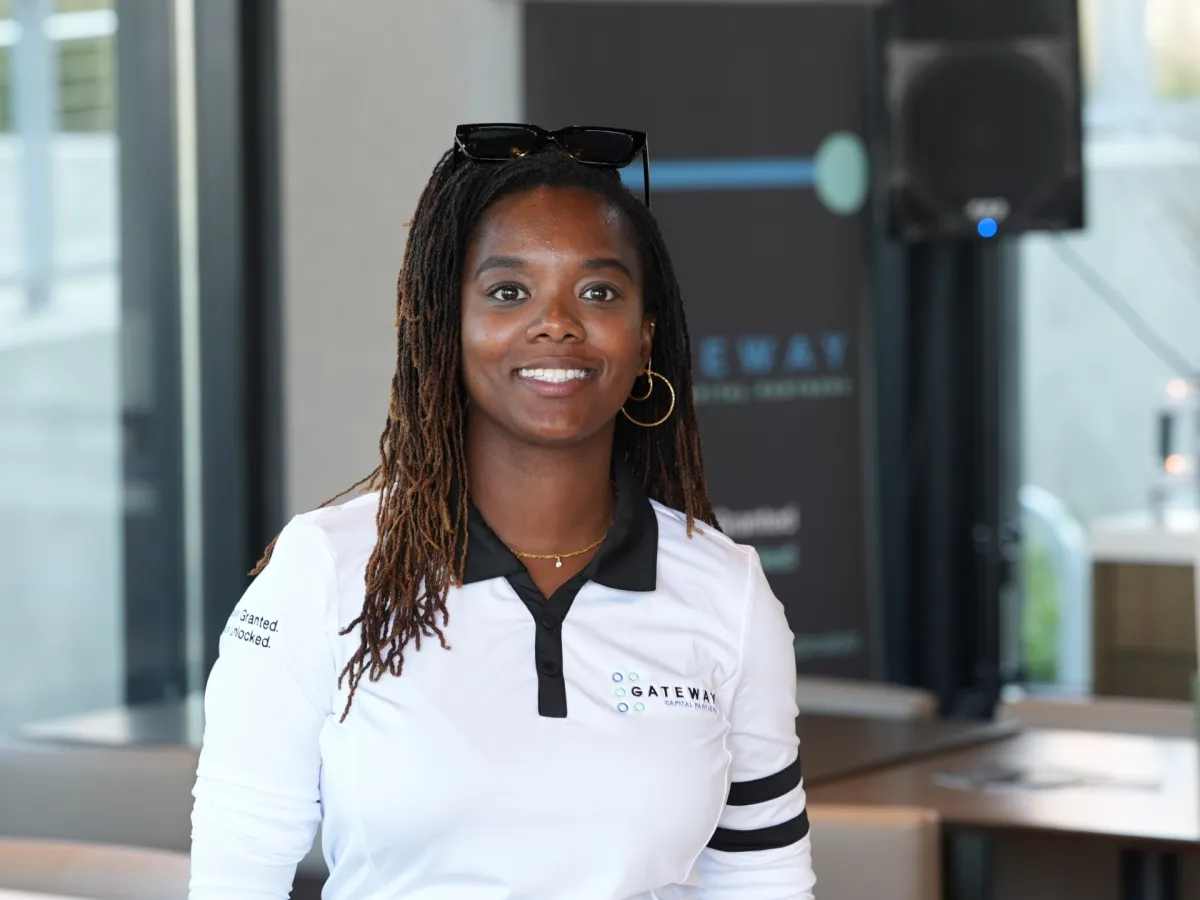
Gateway Capital Fund II has officially reached its first close, clearing the way for the Milwaukee-based venture firm to start backing its next generation of Midwest startups. Founded and managed by Dana Guthrie, the firm is targeting $25 million for its sophomore fund and now holds over $20 million in total assets under management.
The announcement signals growing confidence in a region that many coastal investors continue to overlook. Guthrie is doubling down on a thesis she first proved with a $13 million debut fund. That thesis is straightforward: the best early-stage founders often build in places where the venture capital crowd has not yet arrived.
Gateway Capital Fund II Opens for Investment
The first close of Gateway Capital Fund II allows the firm to begin deploying capital immediately. In venture capital terms, a first close is the milestone that lets a fund start writing checks while it continues to raise commitments toward its final target. TechCrunch confirmed the news this week, though the firm declined to share the exact dollar amount of the initial close.
Get fintech insights, deals, and updates before everyone else
Join 1,000+ fintech professionals
Guthrie told reporters that the firm began raising Gateway Capital Fund II in mid-2025. The average check size for this vehicle will range between $500,000 and $600,000. That positions the fund squarely in the pre-seed and seed investment territory where many Midwest founders struggle to find capital.
Moreover, Guthrie has set an ambitious goal. She hopes to back at least 20 companies through Gateway Capital Fund II, which would make it one of the more active early-stage funds in the region.
Midwest Industries Ripe for Disruption
While Gateway Capital Fund II will remain industry-agnostic on paper, the fund carries a deliberate bias toward Midwest sectors primed for innovation. Guthrie has specifically called out supply chain management, logistics, and manufacturing AI as target areas.
These sectors align well with the region’s industrial strengths. The Midwest houses a large share of American manufacturing, distribution, and agricultural infrastructure. As a result, founders building technology solutions for these industries can access customers, test products, and generate revenue far more efficiently than their coastal counterparts.
This focus also reflects a broader trend in venture capital. According to CB Insights’ State of Venture 2025 report, global VC funding rebounded to $469 billion last year. However, the overwhelming majority of that capital flowed to AI-focused startups in California. In fact, California raised 22 times the amount of venture capital compared to the entire Midwest in 2025. That multiple has never been so high. In 2024, the figure was 13 times, and over the prior 14 years, it averaged 7.5 times.
The numbers paint a clear picture. The Midwest remains deeply undercapitalised relative to its economic potential. Gateway Capital Fund II aims to close that gap, at least partially. By investing early in companies that operate close to their end customers, the fund offers a real cost advantage. Founders in San Francisco or New York simply cannot match the unit economics available in the Midwest.
There is also a structural opportunity in the region’s talent pool. Midwest founders tend to build with operational discipline and a focus on fundamentals. Those traits create advantages for both investors and the companies themselves. Unlike many coastal startups chasing growth at all costs, Midwest companies often reach profitability earlier and stretch their venture dollars further.
From Wisconsin to the Broader Midwest
One notable shift with Gateway Capital Fund II is its expanded geographic footprint. Fund I focused primarily on Wisconsin-based startups. Now, Fund II formally extends the firm’s reach across Illinois, Indiana, Iowa, Michigan, Minnesota, Missouri, and Ohio.
That expansion makes strategic sense. While Milwaukee remains the firm’s home base, the broader Midwest offers a deeper pool of founders and opportunities. According to WisBusiness, the firm’s conviction is that overlooked geographies produce outlier founders and that entering before consensus forms provides both a return advantage and a social responsibility.
Cities like Chicago, Minneapolis, and Indianapolis have developed genuine startup clusters in recent years. Chicago, in particular, has become a hub for fintech and enterprise software companies. Meanwhile, Michigan’s manufacturing corridor continues to attract founders building at the intersection of hardware and AI. By extending across these states, the fund can tap into ecosystems that are maturing rapidly but remain underserved by the broader VC community.
Furthermore, Gateway Capital Fund II builds on the track record established by Fund I. Since launching in 2020, the firm has assembled a portfolio of high-conviction early bets across promising Wisconsin pre-seed companies. Those investments have attracted follow-on capital from regional and national venture firms. Portfolio companies have also scaled revenue and expanded into new markets, validating Guthrie’s early-entry strategy.
Dana Guthrie’s Background and Investment Philosophy
The story behind Gateway Capital Fund II starts with Guthrie herself. A software engineer by training, she graduated from the Milwaukee School of Engineering before working at Johnson Controls and other Fortune 500 companies. Along the way, she founded Alchemy Angel Investors, an angel investment network focused on early-stage startups.
That experience gave her a front-row seat to the funding gaps facing Midwest entrepreneurs. Before launching Gateway Capital in 2020, Guthrie studied the data closely. She found that Milwaukee was heavily underinvested on a per capita basis compared to cities like Minneapolis, Indianapolis, and Chicago. She also noticed that most published Wisconsin deals involved large cheque sizes above $1 million, leaving pre-revenue startups with limited options.
Gateway Capital Fund II continues to address that gap. The firm targets founders at the earliest stages of company building and provides hands-on support through team development, customer acquisition, and groundwork for future fundraising rounds. Approximately 80% of the firm’s portfolio consists of minority-led startups, primarily Black and brown entrepreneurs.
That diversity commitment is more than a talking point. Studies consistently show that diverse founding teams deliver stronger financial returns and smarter decision-making. Yet minority-led startups remain significantly underfunded relative to their potential. The sophomore fund gives these founders access to capital at the moment they need it most, before other investors have formed a consensus about the opportunity.
The firm’s portfolio from Fund I includes companies like Geno.Me, a Madison-based biotech startup that relocated to Milwaukee after receiving seed funding, and Golgix, a manufacturing AI company working to make American manufacturers more competitive. Both companies have attracted follow-on investment, validating the early bets that defined Gateway Capital’s debut fund.
What This Means for the Midwest Startup Ecosystem
The launch of Gateway Capital Fund II comes at a pivotal moment for Midwest venture activity. Despite strong economic fundamentals across the region, data from Start Midwest shows that 2025 was a particularly weak year for startup investment outside of a few large outlier deals. The ratio of venture capital funding to GDP in the Midwest sits at just 0.19%, far below the UK (0.74%), France (0.33%), and even Canada (0.33%).
Those figures are striking when you consider the size of the Midwest economy. The combined GDP of the six core Midwest states dwarfs many national economies. Yet the startup funding flowing into the region represents a tiny fraction of its economic output. Part of the problem is structural. Limited partners and institutional investors have historically favoured coastal fund managers with established networks. Emerging managers like Gateway Capital must work harder to build credibility and attract capital in a system that rewards incumbency.
In that context, every new fund dedicated to the region matters. Gateway Capital Fund II provides founders with access to local capital so they can raise early-stage cheques without relocating to San Francisco or New York. When companies stay rooted in their communities, the resulting economic activity creates a virtuous cycle of job creation, tax revenue, and further investment.
At the same time, the venture capital environment nationally is shifting toward greater selectivity. A Harvard Law School analysis of VC trends found that 2026 will reward conviction and discipline over volume. VCs are writing fewer, more considered cheques. For a fund like Gateway Capital Fund II, that selectivity is already baked into the model. The firm has always prioritised deep founder relationships over spray-and-pray portfolio construction.
Building Regional Infrastructure Through Local Capital
The broader implications of the fund extend beyond individual startups. Regional funds help build the infrastructure that makes local ecosystems self-sustaining. They attract limited partners, generate case studies, and train the next generation of investors. This fund demonstrates that the talent and ambition exist in the Midwest. What has been missing is the patient, committed capital to match it.
Proximity to major industrial companies also creates natural partnership and exit opportunities for Midwest startups. A manufacturing AI startup based in Milwaukee can work directly with factory floors across Wisconsin, Michigan, and Ohio. Similarly, a logistics technology company in the region sits at the heart of American supply chain infrastructure. These advantages are difficult to replicate from a coastal office.
There is also an important ripple effect when firms like Gateway Capital succeed. When Fund I portfolio companies attract follow-on funding from national VCs, it draws outside attention to the region. Each successful exit or scale-up creates a new class of angel investors and experienced operators who reinvest locally. Over time, these cycles compound. Gateway Capital Fund II is both a product of that momentum and a catalyst for accelerating it further.
Outlook for Gateway Capital Fund II
As fundraising continues toward the $25 million target, Gateway Capital Fund II is well positioned to capitalise on opportunities emerging across Midwest industries. The firm brings a proven track record, an expanded geographic mandate, and a clear thesis around overlooked founders. That combination gives the fund a competitive edge in a crowded early-stage landscape.
For founders in supply chain, logistics, and manufacturing AI, the message is encouraging. Gateway Capital Fund II represents dedicated, local capital that understands the cash flow pressures and payment challenges facing early-stage businesses. Guthrie and her team are not just writing cheques. They are building alongside the companies they back.
With the first close now complete, the clock is ticking on deployment. Limited partners typically expect venture funds to invest their capital within three to four years. That timeline suggests Gateway Capital Fund II will move quickly to identify and support its next cohort of portfolio companies. Given the fund’s target of at least 20 investments, founders in the region should expect active outreach in the coming months.
The timing also works in the fund’s favour. Many founders who might have chased coastal capital in previous years are now reconsidering. The venture environment has shifted, and raising money takes longer than it did during the boom years of 2020 and 2021. For Midwest entrepreneurs, having a dedicated local fund with dry powder and a clear mandate changes the calculus entirely.
The firm’s sophomore fund is more than a fundraising milestone. For the Midwest startup ecosystem, Gateway Capital Fund II is fresh evidence that venture investment patterns are shifting and that the next generation of outlier companies may well come from places the industry has spent decades ignoring.