Emil Michael Discusses Government-Industry Tensions in New Podcast Interview
Emil Michael, a senior technology official at the Department of Defense (DoD), has recently re-entered the spotlight as the government grapples with its ongoing conflict with Anthropic. A newly released podcast interview provides an in-depth glimpse into Michael’s perspective on this dispute, as well as reflections on his time at Uber and the circumstances surrounding his departure from the company.
Unpacking Michael’s Departure from Uber
In the podcast, hosted by Joubin Mirzadegan of Kleiner Perkins, Michael discussed a wide array of topics, including both personal and professional history. The interview was recorded prior to the escalation of tensions between the DoD and Anthropic, but Michael’s comments about his exit from Uber revealed an underlying bitterness. When asked if he had been dismissed alongside then-CEO Travis Kalanick, Michael’s succinct response was, “Effectively.”
Repercussions of a High-Profile Exit
Michael’s resignation came just eight days before Kalanick’s departure, both following a workplace investigation into allegations of sexual harassment and gender discrimination within Uber. Although he was not personally implicated in those allegations, a subsequent inquiry led by former U.S. Attorney General Eric Holder recommended his removal. Kalanick’s exit followed amid what The New York Times described as a revolt among some of Uber’s major investors, including Benchmark.
Lingering Resentments over Strategic Decisions
When Mirzadegan inquired whether he still felt “salty” about the situation, Michael did not hold back, stating, “I’ll never forget that, nor forgive.” The ousting of both Michael and Kalanick is contentious not just for the reputational damage they suffered, but also because they believe this upheaval hindered Uber’s future in autonomous driving technology. Michael contended that the decision to remove them was driven by short-sighted financial strategies prioritizing immediate returns over long-term growth.
A Vision for Autonomous Driving
Michael stated, “They wanted to preserve their embedded gains, rather than try to make this a trillion-dollar company.” Kalanick echoed this sentiment at the Abundance Summit in Los Angeles, expressing regret over the cancellation of the autonomous driving program, which he believed was close to becoming competitive with Waymo’s offerings at the time.
The DoD’s Struggles with Anthropic
As the conversation shifted back to current developments, Michael touched upon the contentious negotiations between the DoD and Anthropic, which were faltering at the time of the interview. Michael characterized Anthropic as one of the few authorized large language model vendors for the DoD, citing concerns over the limitations the company sought to impose on their partnership. He explained that the DoD operates within a complex ecosystem of laws and regulations, emphasizing that external corporations should not dictate internal policies.
Concerns Over National Security
Michael raised alarm over potential vulnerabilities, highlighting that Chinese tech firms may be exploiting Anthropic’s models through a technique called model distillation, which could enable adversaries to replicate its capabilities. He warned that this would leave the DoD at a significant disadvantage, operating with a constrained version of Anthropic’s technology while adversaries could access the full capability. “It’s totally Orwellian,” he stated, augmenting his argument with a pointed question about whether American champions in the tech field should not support the DoD with optimal tools.
Escalating Legal Disputes
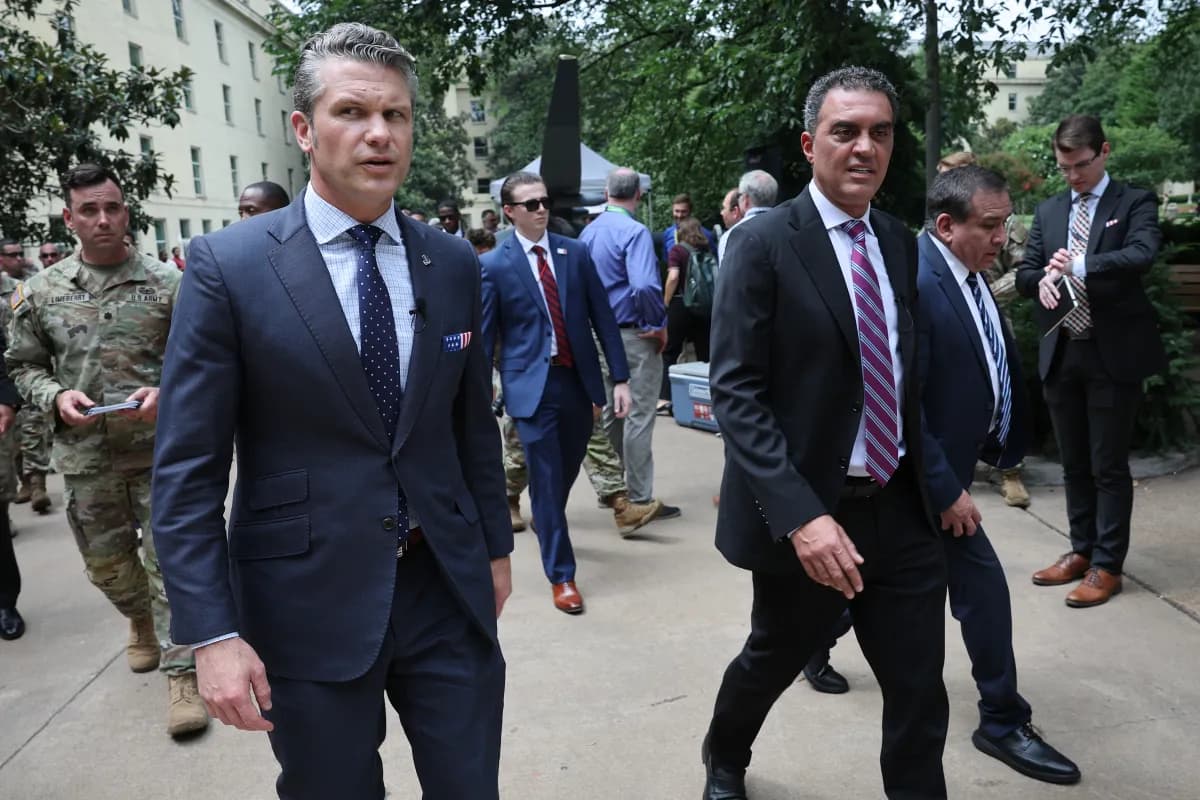
As industry observers have noted, the conflict has transitioned from negotiation to litigation. In late February, Defense Secretary Pete Hegseth labeled Anthropic a “supply-chain risk.” Recently, the government escalated its stance by filing a detailed brief in U.S. District Court for the Northern District of California, arguing that permitting Anthropic to interact with the DoD’s operational framework could present “unacceptable risks” to national security. This legal battle reached a new level when Anthropic refuted the government’s claims, asserting that its technology’s behavior could not be manipulated in ways that would compromise military operations.
A hearing is scheduled for Tuesday in San Francisco, where the next chapter in this unfolding story will take place.