Close Menu
Fintechbits
  • News
  • AI
  • Acquisitions
  • Trends
  • Insights
  • Rumors
  • Startups
  • finjobsly

Subscribe to Updates

Get the latest news from Fintechbits.

Trending Now

EY Analysis Reveals Potential for Open Banking to Generate £43 Billion Annually for the UK Economy

March 20, 2026

Cyberattack on Vehicle Breathalyzer Company Strands Drivers Nationwide

March 20, 2026

UK FinTech Deal Activity Declines by 61% Amid Five-Year Low in Investment

March 20, 2026

Ortec Finance Launches GLASS PRISM for Optimizing Insurance Portfolios

March 20, 2026
Facebook X (Twitter) Instagram
Trending
  • EY Analysis Reveals Potential for Open Banking to Generate £43 Billion Annually for the UK Economy
  • Cyberattack on Vehicle Breathalyzer Company Strands Drivers Nationwide
  • UK FinTech Deal Activity Declines by 61% Amid Five-Year Low in Investment
  • Ortec Finance Launches GLASS PRISM for Optimizing Insurance Portfolios
  • The Most Promising AI Investment Opportunity in Energy Technology
  • Burkina Faso Fintech in 2026: 5 Key Trends Driving Digital Finance Growth
  • CEO of Cloudflare Predicts Online Bot Traffic Will Surpass Human Traffic by 2027
  • Payaza CEO Emphasizes that Infrastructure Directness is the Key Competitive Advantage
Facebook X (Twitter) Instagram Pinterest Vimeo
Fintechbits
  • News

    EY Analysis Reveals Potential for Open Banking to Generate £43 Billion Annually for the UK Economy

    March 20, 2026

    Ortec Finance Launches GLASS PRISM for Optimizing Insurance Portfolios

    March 20, 2026

    Burkina Faso Fintech in 2026: 5 Key Trends Driving Digital Finance Growth

    March 20, 2026

    Global Markets Experience Energy Shock

    March 20, 2026

    Cloud Security Company Native Launches from Stealth with $42 Million in Funding

    March 20, 2026
  • AI

    Weaker Dollar and Diversification Enhance Appeal of Emerging Markets for Global Investors, According to Finnfund

    March 18, 2026

    Anna Money Achieves HMRC Approval for Making Tax Digital and Introduces Complimentary Auto Accountant Tool

    March 18, 2026

    DRC Fintech: 5 Essential Developments Transforming Digital Finance in 2026

    March 18, 2026

    Africa’s Fintech Future Highlights the Opening of IFF 2026 in Kigali

    March 17, 2026

    Algeria’s Fintech Ecosystem in 2026: Strategies for Building Momentum

    March 16, 2026
  • Acquisitions

    UK FinTech Deal Activity Declines by 61% Amid Five-Year Low in Investment

    March 20, 2026

    California Establishes Itself as the Leading US FinTech Hub with Over One-Third of Q1 2025 Deals

    March 19, 2026

    European FinTech Transactions Exceeding $100M Rise 2.6 Times Quarter-over-Quarter as Funding Recovers in Q1 2025

    March 18, 2026

    Californian Companies Lead US FinTech Transactions in Q2 with a 19% Year-Over-Year Growth in Deal Activity

    March 17, 2026

    Brazilian Companies Lead LatAm FinTech Transactions in Q3 with 54% Quarter-over-Quarter Growth

    March 16, 2026
  • Trends

    European FinTech 2025 Is Back and Means Business

    March 16, 2026

    Subscription Payment Fatigue Is Coming for Children’s Services

    March 16, 2026

    Green Fintech: 5 Proven Reasons It Goes Beyond a Compliance Checkbox

    March 16, 2026

    Claude overtakes ChatGPT as AI trust debate intensifies

    March 16, 2026

    Eleven companies, eighty-three days: the race for a federal crypto-banking license

    March 15, 2026
  • Insights

    Future of Payments 2025: Stablecoins, Virtual Cards, and the Race to Agentic Finance

    March 19, 2026

    Wedding Deposit Economy: 5 Shocking Gaps Every Vendor Must Know

    March 19, 2026

    AI in FinTech 2025: The Hype Is Real, But the Big Money Is Not Biting Yet

    March 18, 2026

    Warranty Claims Are Construction’s Hidden Financial Time Bomb

    March 18, 2026

    Regional Distributors Are Subsidising Construction’s Cash Flow Problem and Nobody’s Measuring It

    March 18, 2026
  • Rumors

    Gilead Snaps Up Arcellx in $7.8B Most cancers Drug Deal

    March 14, 2026

    Tilly’s Inventory Pops After This autumn Earnings Shock

    March 14, 2026

    Elliott and Jana Take Recent Actions Alongside Other Speculations

    February 22, 2026

    Hank Payments (TSX) Rises to CAD 0.26 on February 18, 2026: Catalyst Analysis

    February 19, 2026

    Abivax CEO refers to Eli Lilly acquisition speculation as a diversion.

    February 8, 2026
  • Startups

    Cyberattack on Vehicle Breathalyzer Company Strands Drivers Nationwide

    March 20, 2026

    The Most Promising AI Investment Opportunity in Energy Technology

    March 20, 2026

    CEO of Cloudflare Predicts Online Bot Traffic Will Surpass Human Traffic by 2027

    March 20, 2026

    Staff Intervene as Humanoid Robot Exhibits Erratic Behavior at California Restaurant

    March 20, 2026

    Jeff Bezos Aims to Invest $100 Billion in Acquiring and Transforming Legacy Manufacturing Companies Using AI

    March 20, 2026
  • finjobsly
Fintechbits
Home » Decentralised Finance(DeFi): Risk and Opportunities for Banks and Financial Institutions
Breaking News

Decentralised Finance(DeFi): Risk and Opportunities for Banks and Financial Institutions

3 Mins Read
Facebook Twitter Pinterest Telegram LinkedIn Tumblr Email Reddit
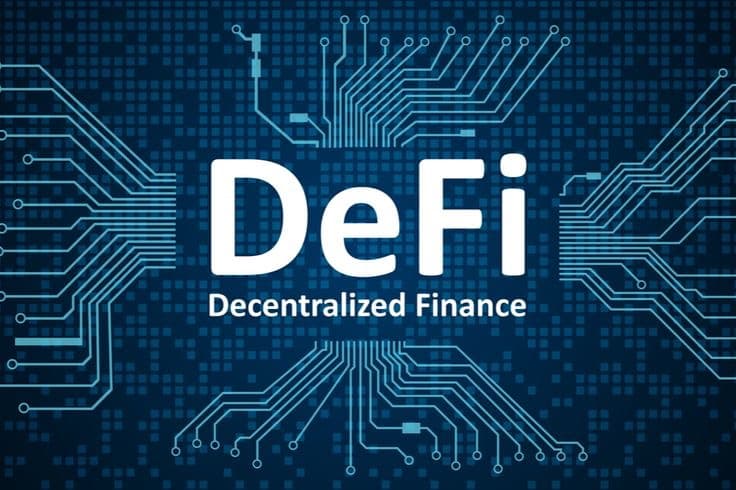
A digital illustration of the word "DeFi" (Decentralised Finance) with circuit-like lines extending from it, symbolizing decentralized financial networks.
Visual representation of decentralised finance (DeFi) systems showing interconnected digital finance pathways.
Share
Facebook Twitter LinkedIn Pinterest Email Copy Link

Decentralised Finance, or DeFi, has emerged as one of the most revolutionary innovations in the global financial system. DeFi is an economic system that uses blockchain technology to provide open, permissionless, borderless alternatives to traditional financial intermediaries like banks. DeFi platforms recreate and often even improve upon existing financial functions, from lending and borrowing to savings and insurance, using smart contracts and decentralised networks.

This transition creates both tremendous opportunities and serious challenges for conventional bankers. The fanfare of its widespread acceptance and mechanics, paired with its increasingly pervasive nature of adoption, are propping open a more extensive dialogue that continues to unveil itself as an ecosystem where institutions used to be staunchly in control and a regulator are now having to question their relevance, their strategies and their value add in a world of open, and now autonomous solutions.

Opportunities Available in DeFi

DeFi is not only a threat but also a new source of growth and a chance to reinvent itself. There are many opportunities for traditional banking; 

Financial Inclusion: Over 1.7 billion adults are still unbanked worldwide. Anyone with access to a smartphone and internet can use financial services on a DeFi platform. By partnering with or building on DeFi platforms, traditional banks can access these underserved markets and provide them with more straightforward access to savings, credit, and insurance.

Innovation and New Products: DeFi provides solutions like tokenised assets, decentralised exchanges (DEXs), and staking opportunities. Progressive banks are already pursuing pilot programs around digital asset custody, blockchain-enabled KYC processes, and asset tokenisation, all of which will create new revenue streams and open their doors to a new demographic of consumers.

Transparency and Auditability of Data: As a self-governing technology, blockchain’s built-in transparency ensures on-the-go data availability, audit trails, and trackable transactions. Banks can integrate such features to ensure complete compliance , build trust in the system, and prevent fraud.

The Risks to Traditional Banking

Illustration representing DeFi (Decentralised Finance) with digital circuit lines connecting to the central text.

Despite its promises, DeFi brings considerable disruption:

Disintermediation and Revenue Pressure: DeFi reduces reliance on intermediaries by enabling peer-to-peer transactions. As consumers migrate to direct, lower-cost channels for borrowing or investing, traditional banking products may suffer reduced demand, squeezing revenues from conventional products linked to balance sheet intermediation services of loans and deposits.

Security Vulnerabilities: Although Decentralised Finance (DeFi) platforms are generally open-source and more transparent than traditional financial market infrastructure, they are still susceptible to cyberattacks, code vulnerabilities, and flash loan exploits. Banks built on security protocols and customer trust may hesitate to open their operations to systems lacking a mature cybersecurity process.

Regulatory Ambiguity: Regulators worldwide are yet to figure out how to approach DeFi. For traditional banks, operating in a heavily regulated environment makes it hard to dive into a field and play by idiosyncratic rules where accountability under the law is still evolving. Compliance standards and consumer protection laws are still developing.

Reputational Damage: Partnering with or investing in troubled DeFi projects poses reputational risks for banks. Problems such as rug pulls, scams or governance failures could diminish customer trust and attract regulatory scrutiny.

Conclusion

DeFi is not only a form of trend but rather a philosophical movement that is changing the paradigm of the financial ecosystem. For banks, the secret to success appears to be to find the correct equilibrium between embracing the innovation of DeFi and managing its risks responsibly. The institutions that offer collaboration, innovation, and adaptability will emerge as the winners in this new era of finance.


Banking Innovation Blockchain Decentralised Finance DeFi Digital Banking Financial Inclusion Fintech Fintech Regulation Latest breaking news updates Smart Contracts Web3 Finance
Share. Facebook Twitter Pinterest LinkedIn Tumblr Email

Related Posts

EY Analysis Reveals Potential for Open Banking to Generate £43 Billion Annually for the UK Economy

March 20, 2026

Ortec Finance Launches GLASS PRISM for Optimizing Insurance Portfolios

March 20, 2026

Burkina Faso Fintech in 2026: 5 Key Trends Driving Digital Finance Growth

March 20, 2026
Leave A Reply Cancel Reply

Latest news

EY Analysis Reveals Potential for Open Banking to Generate £43 Billion Annually for the UK Economy

March 20, 2026

Cyberattack on Vehicle Breathalyzer Company Strands Drivers Nationwide

March 20, 2026

UK FinTech Deal Activity Declines by 61% Amid Five-Year Low in Investment

March 20, 2026
News
  • AI in Finance (2,166)
  • Breaking News (236)
  • Corporate Acquisitions (87)
  • Industry Trends (280)
  • Jobs Market News (338)
  • Market Insights (311)
  • Market Rumors (308)
  • Regulatory Updates (217)
  • Startup News (1,384)
  • Technology Innovations (236)
  • uncategorized (10)
  • X Feed (1)
About US
About US

FintechBits is a blog delivering the latest news and insights in fintech, finance, and technology. We cover breaking news, market trends, innovations, and expert opinions to keep you informed about the future of finance

Facebook X (Twitter) Instagram Pinterest Reddit TikTok
News
  • AI in Finance (2,166)
  • Breaking News (236)
  • Corporate Acquisitions (87)
  • Industry Trends (280)
  • Jobs Market News (338)
  • Market Insights (311)
  • Market Rumors (308)
  • Regulatory Updates (217)
  • Startup News (1,384)
  • Technology Innovations (236)
  • uncategorized (10)
  • X Feed (1)
Happening Now

November 28, 2024

“ Intentionally collaborative ”: how the Rotman school of U of T leads Innovation Fintech

February 6, 2025

‘1957 Ventures’ to Drive FinTech Innovation in Saudi Arabia

September 10, 2024
  • About FintechBits
  • Advertise With us
  • Contact us
  • Disclaimer
  • Privacy Policy
  • Terms and services
  • BUY OUR EBOOK GUIDE
© 2026 Designed by Fintechbits

Type above and press Enter to search. Press Esc to cancel.