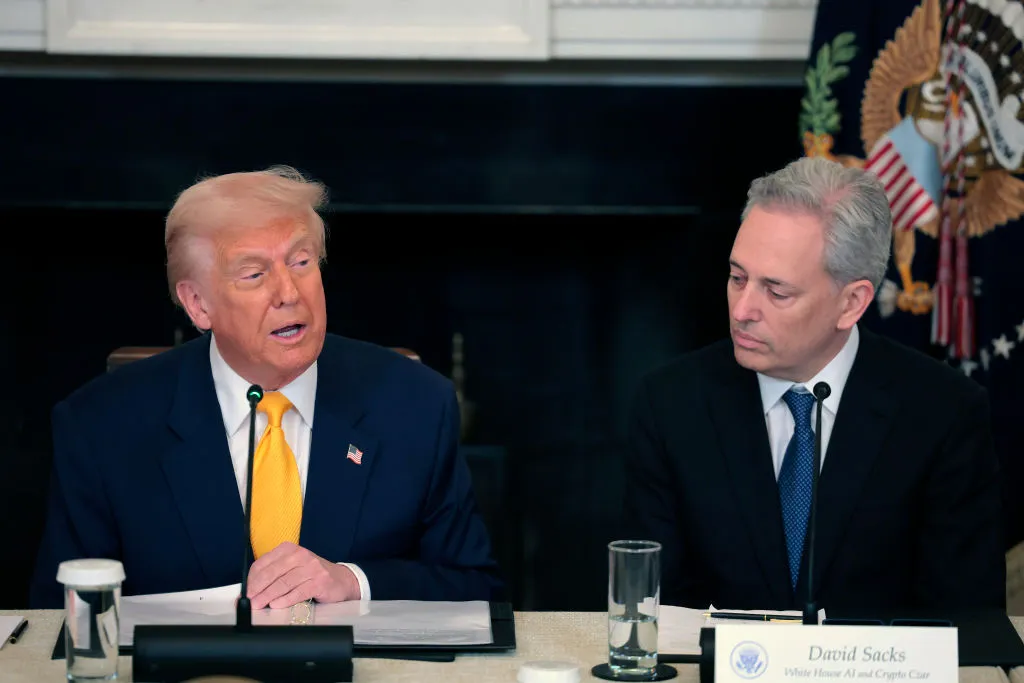
David Sacks Concludes Role as AI and Crypto Advisor to Trump
David Sacks has wrapped up his role as a special government employee tasked with overseeing AI and cryptocurrency initiatives under Donald Trump. During a recent interview with Bloomberg, Sacks confirmed that his non-consecutive 130-day tenure has come to an end, and he will now serve as co-chair of the President’s Council of Advisors on Science and Technology (PCAST) alongside senior White House technology advisor Michael Kratsios.
Transition to PCAST Role Brings Broader Focus
In his new capacity within PCAST, Sacks looks to expand his influence beyond just AI. “Moving forward, I can make recommendations on a broader array of technology topics,” he stated during the interview. This shift indicates a departure from the direct access he had as AI czar, where he played a significant role in policy formulation. PCAST, being an advisory body, won’t engage in policymaking directly but will provide insights and recommendations that could shape future directives.
A Council of Influential Tech Leaders
Historically, PCAST has existed in various forms since the Franklin D. Roosevelt administration. Sacks highlighted this particular iteration, noting it boasts “the most star power of any group like this” ever assembled. The initial 15-member roster includes key figures from the technology sector, such as Nvidia’s Jensen Huang, Meta’s Mark Zuckerberg, Oracle’s Larry Ellison, and Google co-founder Sergey Brin, among others, all indicating a formidable assembly of industry leaders.
Focus Areas for PCAST
In the coming months, Sacks indicated that the council would address significant topics such as artificial intelligence, advanced semiconductors, quantum computing, and nuclear energy. A primary focus will be on advancing Trump’s recently released national AI framework, which aims to streamline the current regulatory landscape that Sacks described as “a mess” due to varied state-level regulations. “Fifty different states are regulating this in fifty different ways,” he noted, underscoring the need for a more cohesive strategy to support innovation.
Speculation Surrounds Timing of Transition
While Sacks’ confirmation of his transition to PCAST marks a new chapter, it raises questions about the timing of this change. Earlier this month, during an episode of the “All In” podcast, he publicly called for the administration to seek a resolution to the U.S.-backed conflict in Iran. His comments outlined potential scenarios that could escalate tensions, prompting a response from Trump, who stated that Sacks had not communicated his concerns directly to him. When asked about this on Bloomberg, Sacks distanced himself from foreign policy discussions, asserting that his podcast remarks reflected his personal views rather than official policy.
Reflecting on the Influence of PCAST
The appointment of Sacks raises questions about PCAST’s historical influence. The council has varied in effectiveness across different administrations. Under President Obama, for example, PCAST produced 36 reports in eight years, resulting in concrete policy changes, including an FDA ruling that enhanced the market for over-the-counter hearing aids. In contrast, Trump’s first-term council struggled to find its footing, with nearly three years passing before its first members were appointed and minimal impactful outcomes. President Biden’s council leaned academically, yielding a modest number of reports.
Sacks Rejoins the Tech Sector
As Sacks transitions into his new role, he is also poised to resume his career as an investor and entrepreneur. Although a spokesperson for Craft Ventures, the firm he co-founded, has not responded to inquiries regarding his continued financial ties to AI and cryptocurrency ventures, previous reports have highlighted the ethics waivers he secured to maintain these interests while holding a position in government. This arrangement had raised ethical concerns among experts and lawmakers alike but underscores the complexities of intertwining government service with private-sector interests.