

Mikko Hyppönen’s Insights on Cybersecurity and Drone Defense
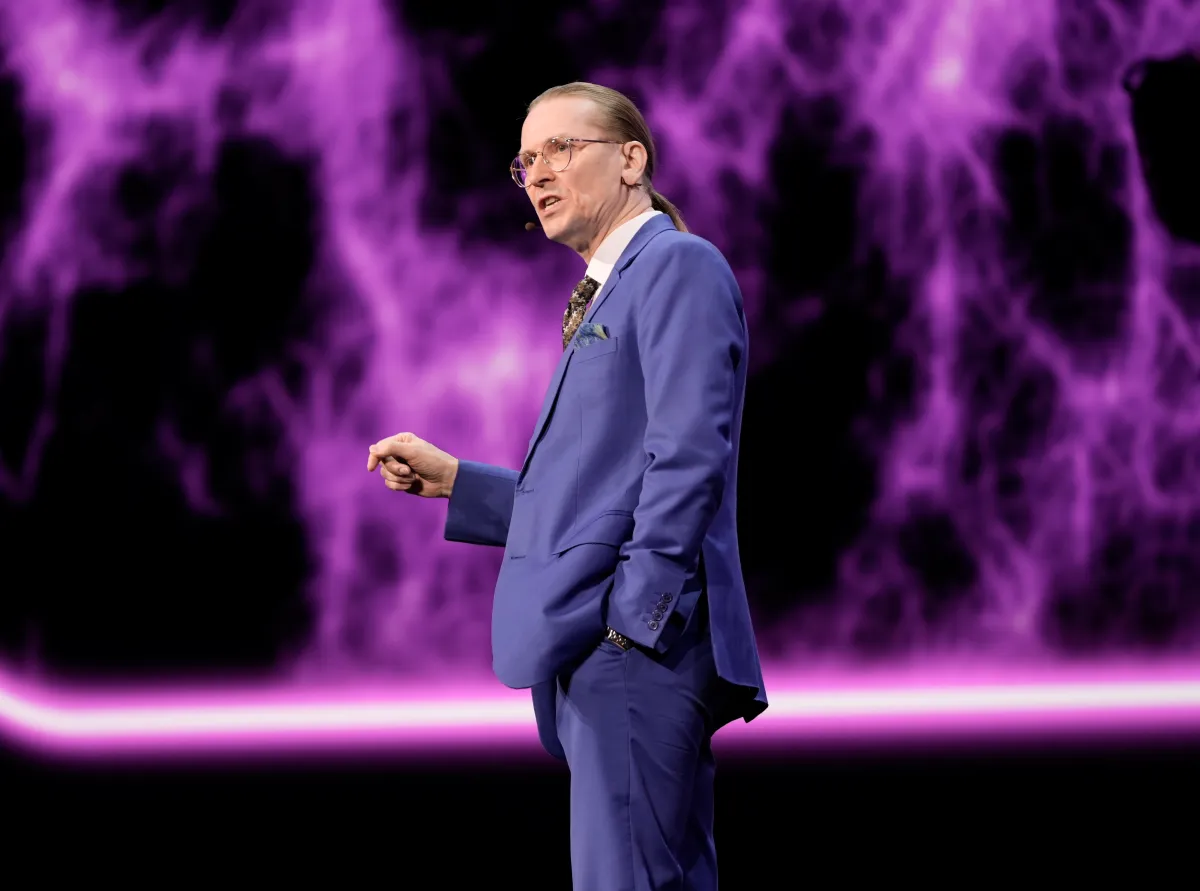
Mikko Hyppönen, with his signature dark blonde ponytail and crisp teal suit, commands attention as he paces the stage at one of the cybersecurity industry’s premier annual conferences. A seasoned speaker, he addresses fellow hackers and security researchers, aiming to convey a critical message in the ever-evolving realm of cybersecurity.
Hyppönen likens his profession to “cybersecurity Tetris,” where completed tasks fade away, leaving failures to accumulate. “The challenge we face is that our work is invisible; when you do your job perfectly, nothing happens,” he noted during his keynote at the Black Hat conference in Las Vegas.
His career, marked by over three decades of combating malware, has been anything but invisible. Since entering the field in the late 1980s—when the term “malware” was not yet commonplace—Hyppönen has witnessed the dramatic evolution of cyber threats. In those early days, the internet was still a novelty for most, and malware often spread through floppy disks.
Hyppönen estimates he has analyzed thousands of malware varieties, solidifying his status as a prominent figure in cybersecurity through his global speaking engagements. While he has dedicated his life to preventing malware from wreaking havoc, his focus has recently shifted to a new threat: drones.
Residing near Finland’s border with Russia, Hyppönen’s perspective has been shaped significantly by the geopolitical landscape, particularly in light of Russia’s 2022 invasion of Ukraine. He believes that by addressing the challenges posed by drones, particularly as they relate to warfare, he can make a meaningful impact. “The security of drones represents uncharted territory in cybersecurity, whereas advancements have been made in fields like smartphone security,” he explained.
Evolution of Malware: From Past to Present
Hyppönen’s journey into cybersecurity began when he hacked video games in the 1980s. His passion took root as he reverse-engineered software to remove anti-piracy protections from Commodore 64 games. He honed his coding skills by developing adventure games and later sharpened his malware analysis expertise at Data Fellows, which eventually became F-Secure.
Through the years, he has observed the motivations behind malware creation shift dramatically. Early hackers, often driven by curiosity and passion, have been replaced by cybercriminals and espionage actors who monetize their malicious activities. Ransomware, fueled by cryptocurrency, has established a troubling new normal.
One notable early virus, Form.A, spread through infected floppy disks during the early 1990s, merely displaying a message rather than causing significant damage. Hyppönen even recounted the notorious ILOVEYOU virus, which he and his colleagues discovered in 2000. This worm spread via email and infected over 10 million computers worldwide, demonstrating the vulnerabilities of early digital security.
The landscape of malware has changed considerably since then. Today, few venture into malware creation purely for the thrill, as cybercrime has become highly professionalized and lucrative. The cybersecurity industry has grown to be worth approximately $250 billion, necessitating advanced defenses against rising threats.
Transitioning from Cybersecurity to Drone Defense
In 2025, Hyppönen shifted his focus from traditional cybersecurity to the emerging field of drone defense as the Chief Research Officer at Helsinki-based Sensofusion. This new role is a response to the war in Ukraine, which has underscored the significant role of drones in modern warfare. Hyppönen’s connection to the military, along with personal family ties to historical conflicts, has further fueled his commitment to countering drone threats.
Hyppönen draws parallels between combating malware and drone threats. Just as cybersecurity employs signatures to identify malware, drone defenses rely on technology that detects and jams radio frequencies used to control autonomous vehicles. By recording these frequencies, defenders can build profiles that help identify unknown drones.
He emphasizes the potential for cyberattacks against drones, allowing defenders to disrupt their operations and bring them down. The strategies he employs echo the age-old challenge of cybersecurity: a constant cat-and-mouse game between defenders and adversaries.
Hyppönen reflects on his extensive career, noting that the identity of threats has changed but the core battle remains the same. “After spending years fighting Russian malware, I’m now engaged in countering Russian drone attacks,” he stated, underscoring the continuing relevance of his expertise in this new arena.