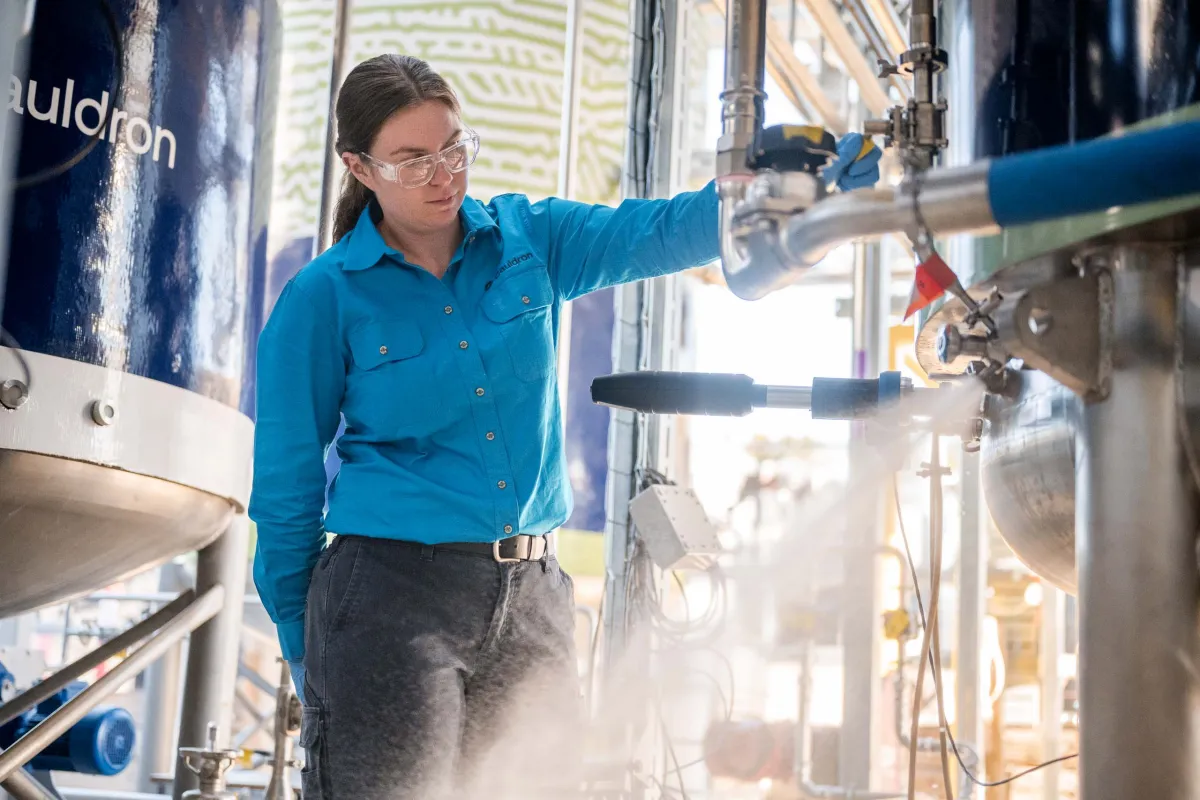
Cauldron Ferm’s Unconventional Journey in Sustainable Protein Production
Cauldron Ferm’s origins are anything but typical for a startup. The foundation of its core technology dates back to the 1960s or perhaps the 1970s, although exact timelines are somewhat obscure. What is clear is that David and Polly McLennan envisioned a future where the world could be fed through protein derived from microbial growth.
Challenges in Traditional Fermentation Methods
The McLennans recognized that existing fermentation processes were both costly and time-intensive. Traditionally, fermentation occurs in batches, with similarities to brewing or winemaking. Ingredients are introduced, and microbes work until the process halts to extract the final product. This model works well for alcohol, where margins are high, but when it comes to food production, cost efficiency is essential.
Transforming Microbial Fermentation
Despite these challenges, the McLennans persevered, launching a modest enterprise that has evolved over four decades. They have refined their approach to continuous fermentation, developing methods that transform microbial activity into an uninterrupted production system.
A Shift in Vision and Strategy
Michele Stansfield, a key figure in the company since 2012, remarked that the team initially underestimated the potential of their technology. Upon realizing the significant opportunities within continuous fermentation, she initiated a strategic shift, evolving the company from a service-oriented model to a dynamic startup. This led to raising a seed round and acquiring the intellectual property, tangible assets, and business framework needed for growth.
Securing Funding for Expansion
Cauldron Ferm recently completed a Series A2 funding round, raising $13.25 million, primarily led by Main Sequence Ventures, alongside contributions from Horizons Ventures, NGS Super, and SOSV. The company has previously raised $6.5 million in 2024. Stansfield indicates that these funds will be used to strengthen their technological advantages, ensuring a competitive edge in the rapidly evolving food production landscape.
Innovations in Fermentation Technology
The company has pioneered a process they refer to as “hyper fermentation,” which optimizes microorganisms’ productivity levels. This technology can be integrated into existing batch fermentation systems with minimal adjustments, allowing clients to use their own microbial strains while Cauldron fine-tunes the growing conditions to enhance yield.
Diversifying Beyond Protein Production
Currently, Cauldron is focusing on the production of fats and proteins, with whey protein as a key offering due to its seamless integration into the supply chain. However, Stansfield notes that the company is looking beyond just food. “Sixty percent of all inputs to the global economy can be derived from biological sources,” she stated. With a strong foundation in food production, Cauldron is now poised to diversify its product lines and expand its market reach.