

US FinTech Investment Activity Sees Significant Growth in Q4 2025
In the final quarter of 2025, the US FinTech sector experienced remarkable growth, particularly in investment activity. The total funding secured by FinTech companies reached $16.1 billion, reflecting a substantial 31% increase compared to $12.3 billion in the same quarter of the previous year. Despite this surge in funding, the number of deals carried out during Q4 2025 displayed a more tempered expansion, with 525 transactions—a 25% increase from 421 deals in Q4 2024. This indicates a possible shift toward larger deal sizes, as capital deployment intensified while the number of transactions dwindled in comparison to earlier quarters.
California Remains Dominant in FinTech Deal Activity
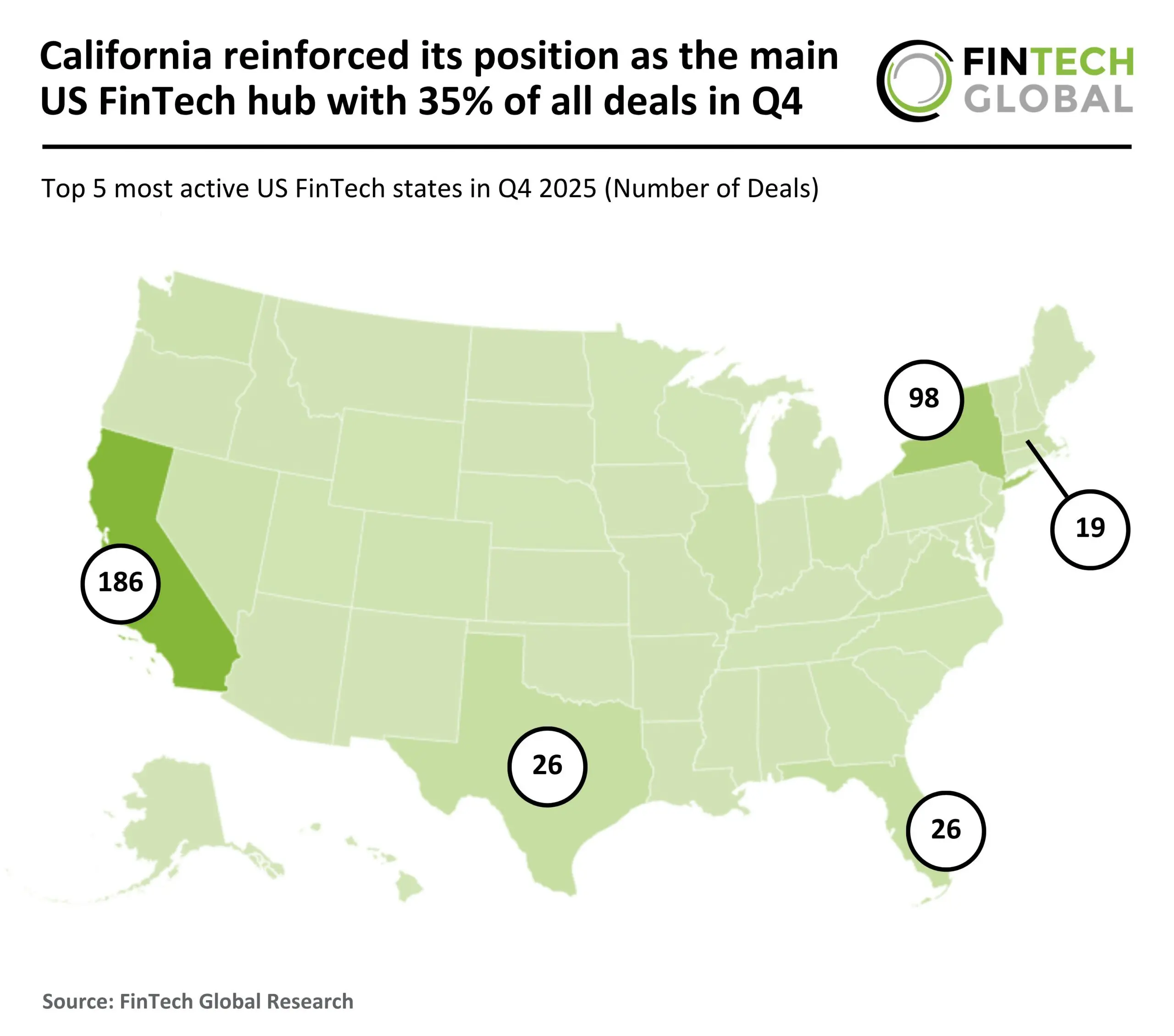
California solidified its status as the leading hub for FinTech activity in the United States, accounting for 35% of all deals in Q4 2025. The state recorded an impressive 186 deals, a 48% increase from 126 deals in the corresponding quarter of the previous year. New York followed, securing a 19% share with 98 deals—an 11% rise from 88 deals in Q4 2024. Florida and Texas each generated 26 deals; however, Florida’s deal activity saw a decline, dropping from 30 deals the previous year. Texas, in contrast, gained traction and emerged as one of the top states for FinTech transactions.
Armis Secures Major Funding to Fuel Growth
Among the standout transactions in Q4 was a significant $435 million funding round secured by Armis, a RegTech platform based in California specializing in cyber exposure management and regulatory-grade risk visibility. The funding round was spearheaded by Goldman Sachs Alternatives’ Growth Equity division, alongside contributions from CapitalG and Evolution Equity Partners. Founded in 2016, Armis has rapidly developed a unified platform that provides continuous asset discovery, compliance monitoring, and real-time risk intelligence across varied environments, helping organizations navigate complex cybersecurity and operational challenges.
Remarkable Revenue Growth and Client Base Expansion for Armis
Armis has managed to surpass $300 million in annual recurring revenue, marking an impressive 50% year-on-year growth. The platform now safeguards the operations of over 40% of Fortune 100 companies, including seven of the top ten. Its clientele stretches across key sectors such as healthcare, financial services, manufacturing, and government—all fields facing increased regulatory scrutiny. The newly acquired capital will be pivotal for further product innovation, international expansion, and strategic acquisitions, thereby bolstering Armis’s capacity as a crucial partner in the RegTech landscape.
Innovation and Market Positioning in a Regulated Digital Environment
The recent funding is expected to catalyze Armis’s initiatives aimed at enhancing its capabilities in cloud security and AI-driven defense. The company has already made notable strides through three acquisitions over the past two years, which have fortified its strengths in operational technology. As enterprises face heightened compliance, risk, and cyber resilience obligations in an increasingly perimeter-less and regulated digital landscape, Armis stands out as an essential ally in addressing these challenges.
Current Trends and Future Outlook for US FinTech
The overall trend in the US FinTech market showcases a pivot towards larger and more impactful deals, with substantial funding flowing into a select number of transactions. This could suggest a growing confidence among investors in the potential for high-value innovations within the FinTech sector. With California leading the charge and companies like Armis pushing forward with expansion and development, the future looks promising for the FinTech ecosystem in the United States.
Stay Updated with the Latest FinTech Developments
For those closely following financial technology innovations, the updates from Q4 2025 illustrate the dynamic shifts occurring within the sector. The substantial growth in funding coupled with California’s continued dominance indicates a robust environment for FinTech businesses. As the industry adapts to new challenges and opportunities, investment activity and regulatory fortifications will remain pivotal for shaping its trajectory in the coming years.