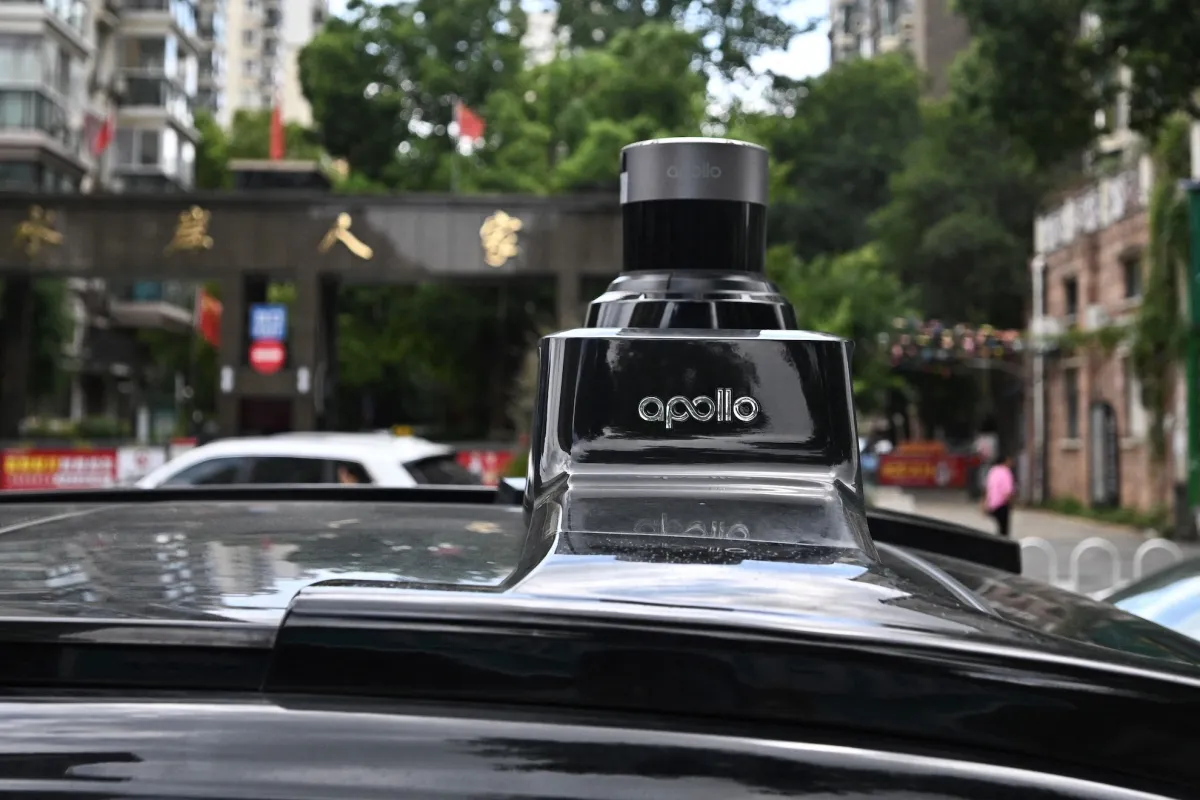
The Baidu robotaxi outage that hit Wuhan on the evening of April 1, 2026, has sent shockwaves through the autonomous vehicle industry. More than 100 Apollo Go driverless taxis froze in the middle of busy roads, trapping passengers in fast-moving traffic and triggering a flood of emergency calls to local police.
This is the first time a mass shutdown of robotaxis has been reported in China. And it raises hard questions about the readiness of autonomous fleets to operate at commercial scale in dense urban environments.
Baidu Robotaxi Outage: What Happened in Wuhan
The Baidu robotaxi outage began around 9 p.m. local time on Tuesday night. Passengers reported that their Apollo Go vehicles suddenly stopped mid-route without warning. In-car screens displayed messages about a driving system malfunction and told riders to wait for staff. But help was slow to arrive.
Get fintech insights, deals, and updates before everyone else
Join 1,000+ fintech professionals
According to CNN, Wuhan police confirmed that a “system failure” caused the outage. At least 100 Apollo Go vehicles were affected. Some came to a halt in the fast lane of elevated ring roads, where traffic moves at high speed and there are no traffic lights.
While vehicle doors could be opened, many passengers were hesitant to step out. Being stuck in the middle lane with vehicles passing on both sides left riders with few safe options. Some passengers sat inside their robotaxis for over 90 minutes before reaching a customer service representative. One college student told WIRED she waited roughly 30 minutes just to connect with someone.
Police responded to a surge of calls and helped passengers exit the immobilized vehicles. No serious injuries were reported, but the incident has reignited urgent conversations about safety standards in the robotaxi sector.
Why This Baidu Robotaxi Outage Is Different
Autonomous vehicle incidents have happened before. A widespread power outage in San Francisco in December 2025 caused Waymo’s self-driving fleet to stall and snarl traffic. An Apollo Go robotaxi carrying a passenger fell into a construction pit in Chongqing in August 2025. A Pony.ai vehicle caught fire on a Beijing road in May of that year.
But the scale of this Baidu robotaxi outage is what sets it apart. More than 100 vehicles shutting down simultaneously across an entire city is not a one-off glitch. It points to a centralized failure in the software or communications backbone that controls the fleet. That kind of vulnerability, when it shows up at scale, changes the risk calculus for regulators, insurers, and the public alike.
Wuhan is home to Apollo Go’s largest deployment in China, with over 1,000 fully driverless vehicles operating across the city. The Baidu robotaxi outage therefore did not affect a small pilot program. It hit the flagship operation of one of the world’s most ambitious autonomous driving companies.
5 Alarming Risks the Baidu Robotaxi Outage Exposed
The fallout from this Baidu robotaxi outage goes beyond one bad night in Wuhan. It highlights structural risks that the entire autonomous vehicle industry needs to address.
1. Single Points of Failure in Fleet Management
When more than 100 vehicles go down at the same time, the problem is not with individual cars. It is with the centralized system that manages them. A single software bug, server crash, or network interruption can paralyze an entire fleet. Traditional taxi and ride-hailing services do not carry this kind of correlated risk. If one Uber driver’s phone dies, the rest of the network keeps running. But a Baidu robotaxi outage can immobilize hundreds of cars in one stroke.
2. Passenger Safety During System Failures
The Wuhan incident showed that passengers have limited options when a robotaxi stops working. There is no driver to take manual control. Emergency buttons and customer service lines can be overwhelmed. And exiting a stalled vehicle in the middle of a busy highway is dangerous. The industry needs clearer protocols for how passengers should respond during a Baidu robotaxi outage or any similar fleet-wide failure.
3. Strain on Emergency Services
Police and first responders were flooded with calls during the Baidu robotaxi outage in Wuhan. As Bloomberg reported, authorities had to physically assist passengers out of stalled vehicles in active traffic. If autonomous fleets continue to grow without robust failsafe mechanisms, cities could face repeated surges in emergency service demand during outages.
4. Regulatory Gaps in Autonomous Vehicle Oversight
China has been relatively permissive in granting operating permits for robotaxi services. But the Baidu robotaxi outage in Wuhan will almost certainly prompt a regulatory rethink. Governments need frameworks for stress-testing fleet management systems, mandating redundancy in critical software, and requiring transparent incident reporting. The growing role of agentic AI in regulated industries shows just how fast the gap between technology deployment and regulatory oversight can widen.
5. Consumer Trust at a Fragile Tipping Point
The autonomous vehicle industry has spent years trying to build public confidence. One large-scale Baidu robotaxi outage can undo months of positive momentum. Social media in China has been flooded with videos and first-person accounts from the Wuhan incident. That kind of viral exposure shapes public perception far more than corporate press releases or safety statistics. Trust, once damaged, is expensive to rebuild.
Baidu’s Global Ambitions Face New Scrutiny
The timing of this Baidu robotaxi outage is especially uncomfortable for the company. Just days earlier, on March 30, Apollo Go launched fully driverless commercial operations in Dubai via the Apollo Go app. The company has partnered with Dubai Taxi Company and secured the emirate’s first permit for fully autonomous vehicle testing.
Baidu has also struck partnerships with Uber and Lyft to pilot robotaxis in London, and it recently entered the South Korean market. As of February 2026, Apollo Go had completed over 20 million rides worldwide, with weekly volumes peaking above 300,000 during Q4 2025.
That aggressive expansion makes the Wuhan Baidu robotaxi outage a reputational problem that stretches well beyond China’s borders. Regulators in Dubai, the UK, and South Korea will be watching closely. If the company cannot explain what went wrong and demonstrate that it has fixed the vulnerability, its international rollouts could face delays or additional conditions.
Baidu’s Silence Is a Problem
As of this writing, Baidu has not responded to requests for comment from multiple outlets, including TechCrunch and CNBC. The company has not issued a public statement explaining the cause of the outage or outlining corrective steps.
That silence is a strategic mistake. In the aftermath of a Baidu robotaxi outage this large, the absence of communication fuels speculation. It gives critics space to control the narrative. And it suggests the company either does not know what happened or is reluctant to share the answer.
Contrast this with how other technology companies have handled similar crises. Transparency and speed in post-incident communication are table stakes. Companies operating in the AI-driven automation space cannot afford to go quiet when their systems fail publicly.
What This Means for the Autonomous Vehicle Industry
The Baidu robotaxi outage in Wuhan is a wake-up call, but it should not be a death sentence for the industry. Autonomous vehicles have logged hundreds of millions of safe kilometers. Apollo Go alone has driven over 300 million autonomous kilometers, including 190 million without a human safety driver onboard.
But the Wuhan incident is a reminder that scaling a technology is not the same as perfecting it. Every additional vehicle on the road multiplies the consequences of a single systemic failure. The industry needs to invest as heavily in resilience engineering and incident response as it does in AI models and sensor hardware.
For fintech and insurtech companies watching this space, the Baidu robotaxi outage also raises important questions about liability, coverage models, and how AI-powered systems are assessed for risk. Autonomous fleets introduce correlated risk profiles that traditional motor insurance is not designed to handle.
Looking Ahead
The investigation into the Baidu robotaxi outage in Wuhan is ongoing. Authorities have not yet disclosed the root cause, and Baidu has offered no public explanation. What happens in the coming days and weeks will matter enormously, not just for Baidu but for every company betting on autonomous mobility.
If the company moves quickly to identify the failure, share its findings, and implement credible fixes, this episode could become a turning point in industry transparency. If it stays silent, the Baidu robotaxi outage will become a cautionary tale about what happens when ambition outpaces accountability.
Either way, the passengers who sat trapped in stalled vehicles on a Wuhan ring road will not soon forget the experience. And neither will the regulators, investors, and consumers who are watching.